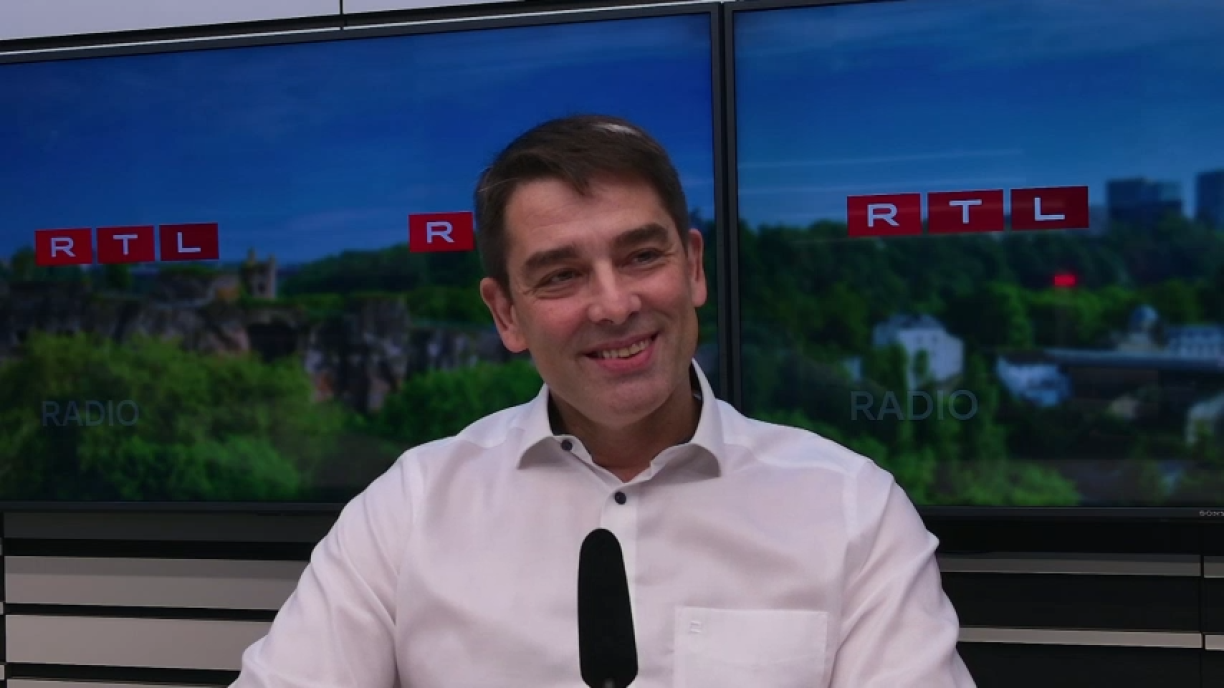
The push for digitalisation within Luxembourg’s public sector has accelerated significantly in recent years, according to Patrick Houtsch, Director of the Centre des technologies de l'information de l'État (CTIE). Speaking on RTL Radio on Friday morning, Houtsch explained that his teams are busier than ever as they work to keep pace with the growing need for digital services across government administrations.
Houtsch described the institution as a key engine behind the digital transformation of Luxembourg’s public sector. He outlined the CTIE’s two major responsibilities, both of which have the digitalisation of the state at their core. The centre provides platforms for ministries and administrations, ranging from purchasing equipment to developing websites and specialised applications.
Another core function is managing interfaces between citizens, businesses, and the state, mainly through platforms such as guichet.lu and its physical counterpart. Houtsch noted that these platforms document and facilitate over 2,000 procedures that can be completed online or in person. The CTIE is also responsible for other crucial areas such as the national persons’ register and the production of identity cards.
Houtsch highlighted the rapid evolution of the CTIE, from its beginnings as a very small administration in 1974 up to the celebration of its fiftieth anniversary, with 650 employees and an annual budget of €192 million. Houtsch emphasised that cost efficiency remains a top priority, which is why the centre strives to centralise and standardise processes wherever possible.
He stressed that the demand for digitalisation has accelerated notably, especially with the advent of artificial intelligence. The CTIE currently manages around 350 projects in parallel and has a backlog of about 90 more yet to be started, putting significant pressure on staff.
Houtsch believes AI can boost efficiency, make public servants’ work easier, and improve interaction between the state, citizens, and businesses. However, he cautioned that AI should be used in a controlled and sovereign way, insisting that the government should run AI systems in its own data centres, instead of depending on external providers.
This approach differentiates Luxembourg from countries such as the US, where large tech firms that offer AI often control the data and operate under American law. He welcomed the partnership with Mistral, a European company based in Paris, which enables Luxembourg to operate AI using models run on its own premises.
AI solutions have already been deployed in several state administrations. The technology is being used in three main areas, including a chatbot designed specifically for employees. This tool allows staff to access information while ensuring that the data remains securely within the workplace. According to Houtsch, 14,000 civil servants currently have access to this AI-powered chatbot. He stressed that the goal is to support rather than replace employees – ultimately allowing more work to be accomplished.
Houtsch also addressed data protection concerns, especially in the context of initiatives like “Once-Only,” which aims to ensure citizens do not have to provide the same information multiple times to different state entities. He emphasised that there is no free exchange of data between administrations and that, instead, only data that has already been shared in an administrative procedure can be used within the context of a procedure initiated by the citizen.
Asked about the impact of digitalisation and automation on state recruitment, Houtsch reckons that AI offers employees a tool that enables them to focus on their core tasks by automating time-consuming administrative duties, rather than necessarily reducing staffing levels. Hence, digitalisation and AI can be forces for positive transformation in Luxembourg’s public service, provided they are harnessed with care, oversight, and an emphasis on data sovereignty.
The full interview with Patrick Houtsch is available every weekday at 8am on RTL Radio Luxembourg, and can also be streamed live via RTL.lu and the RTL app (in both audio and video formats). Recordings of the programme are available to replay on RTL.lu and RTL Play after the broadcast.





