PM Luc Frieden's State of the Nation address came at a particularly sensitive moment this year.
Delivered shortly before the national tripartite talks, the speech was expected to give a clearer sense of how the government sees Luxembourg's economic and social situation, and how it intends to respond to weak growth, pressure on public finances, high housing costs, and renewed concerns over energy prices.
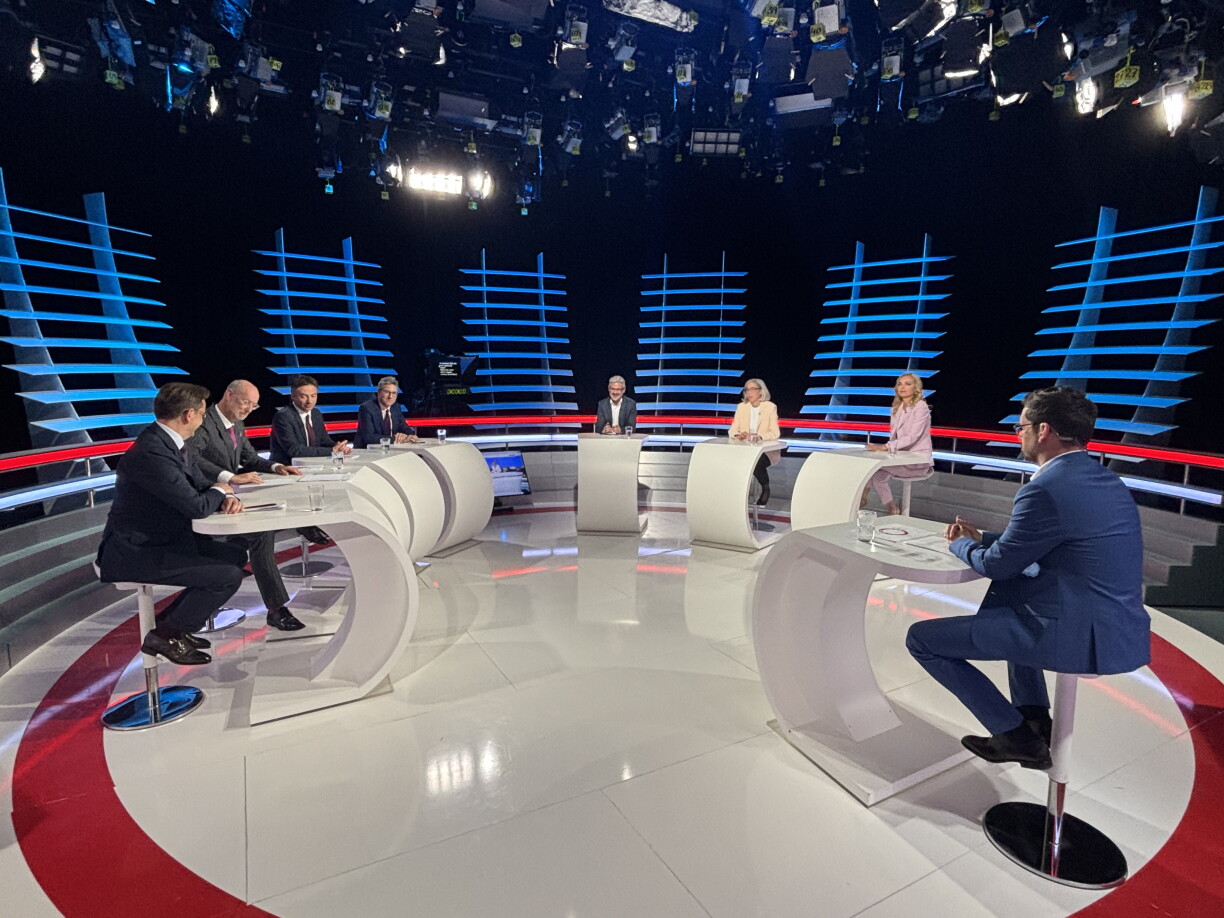
On RTL's special programme following the address, representatives of the parliamentary parties gave sharply different assessments.
The coalition parties Christian Social People's Party (CSV) and Democratic Party (DP) defended the speech as sober, responsible, and realistic. Opposition parties, however, criticised it as cautious, vague, and lacking the ambition needed to respond to the scale of the challenges facing the country.
CSV parliamentary group leader Laurent Zeimet defended the PM's approach, saying Frieden had given an honest assessment of Luxembourg's situation. He argued that the speech clearly acknowledged weak growth, international instability, and the fact that the country's economic engine had slowed.
Zeimet said Luxembourg could not act as though it were isolated from the wider world, pointing to the wars in Ukraine and the Middle East, global trade tensions, rising defence needs, and uncertainty over energy prices.
For Zeimet, the central message was that Luxembourg needs growth in order to maintain its social model. He stressed that pensions, healthcare, hospitals, schools, roads, and public services all depend on a functioning economy.
Without renewed growth, he argued, there would be little to redistribute. He also rejected opposition claims that the speech lacked a social dimension, pointing to measures already taken by the government to support purchasing power and fight poverty.
DP parliamentary group leader Gilles Baum also defended the address, describing it as calm, thoughtful, and delivered with a steady hand. He welcomed the focus on housing, which he said remains one of the biggest concerns for people in Luxembourg.
Baum argued that it was sensible for the PM not to make sweeping announcements before the tripartite talks, as many of the most important questions now need to be discussed with the social partners.
Baum also highlighted the parts of the speech dealing with innovation, renewable energy, artificial intelligence, cybersecurity, logistics, and the craft sector. He said Luxembourg must prepare for the future and strengthen its competitiveness, while also reducing its dependence on fossil fuels.
In his view, the current international situation underlines the need to move faster on heat pumps, photovoltaic installations, electric mobility, and energy transition.
The opposition was much less convinced. Parliamentary group leader Taina Bofferding of the Luxembourg Socialist Workers' Party (LSAP) described the speech as empty and technocratic. In her view, it did not sound like the address of a leader capable of guiding the country through a period of crisis.
She said Frieden had spoken repeatedly about trust, but had failed to create it. Above all, she argued that the government had not shown any real willingness to tackle inequalities or bring about major social change.
For Bofferding, the housing crisis remains the "mother of all crises". She criticised Frieden's statement that housing had to remain affordable, arguing that for many people in Luxembourg it is already unaffordable.
Housing, she said, affects everything else: purchasing power, poverty, the attractiveness of Luxembourg as a workplace, the situation of young people, and the ability of families to build a life in the country.
She also accused the government of avoiding the issue of speculation. In her view, land retention and speculation remain central causes of the housing crisis, yet the speech offered little on how to address them.
She pointed to tools already developed under the previous government, such as a mobilisation tax on unused land, arguing that instruments exist but that the current government lacks the political will to use them.
MP Sam Tanson of the Greens (déi gréng) said she had expected Frieden to offer a more honest picture of Luxembourg's public finances. She described the country's financial situation as worrying and said this should have been one of the starting points of the speech.
For Tanson, public finances are not a side issue, but the basis for everything else the state wants to do, from housing and healthcare to schools, infrastructure, climate policy, and defence.
Tanson also challenged the way taxation was discussed. She argued that taxes should not simply be portrayed as a burden on citizens, but as the means by which Luxembourg funds public services and invests in its future.
She warned that the planned tax reform could benefit very high earners as well as the middle class, while reducing the state's room for manoeuvre at a time when major investments will be needed.
The Greens also criticised the lack of concrete measures on the energy crisis. Tanson said households were already feeling rising costs directly in their wallets and called for faster support for climate-related investments.
She argued that measures such as pre-financing for heat pumps, stronger subsidies, and support for electric mobility should be rolled out quickly, rather than being delayed until after the crisis has already passed.
MP David Wagner of The Left focused on inequality and redistribution. He argued that Luxembourg remains a very wealthy country, but that this wealth is too concentrated. In his view, the problem is not only the pressure on the state budget, but the accumulation of private wealth among a relatively small group of people.
He pointed in particular to land ownership, saying that a large share of building land is held by a small number of owners, while many workers and young people can no longer afford to live in the country.
Wagner called for those with the broadest shoulders to contribute more. He questioned why very high incomes should not face higher tax rates and criticised plans to reduce corporate taxation further.
He also argued that the minimum wage remains too low for Luxembourg's cost of living, saying that many people cannot make ends meet despite working full-time. For The Left, a higher minimum wage, stronger action against speculation, and more investment in public services should be central priorities.
The minimum wage was another major flashpoint. Bofferding argued that people who serve coffee, clean offices, work in shops, or keep essential services running should not be forced to rely on social assistance because their wages are too low.
Zeimet warned that a sharp increase could put pressure on small businesses and risk creating more unemployment. Wagner countered that many larger companies could afford to pay more, while smaller firms could be supported through targeted measures.
MP Sven Clement of the Pirate Party (Piratepartei) accused the government of avoiding the word "crisis" despite the seriousness of the situation.
He said Luxembourg was facing stagnating growth, inflation, pressure on jobs, and high housing and energy costs, yet the speech had softened the language rather than confronting the reality directly. In his view, the government was trying to present a storm as a breeze.
Clement was particularly critical of some housing measures, arguing that reduced VAT for rental housing mainly benefits people who already own several properties. He said such measures do little for first-time buyers and instead support those with enough capital to buy additional homes and rent them out.
He also warned that debt-financed tools such as housing bonds may sound attractive in the short term, but ultimately create obligations that future generations will have to repay.
On artificial intelligence, Clement said Luxembourg risked falling behind. He argued that investing in Mistral AI or announcing new AI tools for ministries would not be enough if the state had not done its basic digital homework.
As an example, he pointed to administrative procedures and translations on MyGuichet, saying that if the administration still struggles with basic digital efficiency, Luxembourg cannot claim to be truly ready for an AI-driven future.
MP Fred Keup of the Alternative Democratic Reform Party (ADR) said the speech lacked realism, courage, and long-term vision. In his view, Frieden had painted too positive a picture of Luxembourg and had failed to say clearly where the country should be in 10, 15, or 20 years.
Keup said he had expected more than a list of individual measures. What was missing, he argued, was a broader vision for the country's future.
Keup linked many of Luxembourg's problems to its growth model. He argued that the country has entered a cycle in which it depends on constant population growth to finance its social systems, while that same growth creates more pressure on housing, infrastructure, and quality of life.
Instead, he called for qualitative economic growth, supported by digitalisation, artificial intelligence, and the financial sector, without relying on ever-increasing population numbers.
Housing remained one of the clearest dividing lines throughout the debate. Coalition representatives pointed to government measures intended to support construction, help the market recover, and assist first-time buyers.
Baum cited plans to purchase more VEFA – off-plan purchases – housing units, changes to completion guarantees and reduced registration duties on new builds. Opposition representatives, however, argued that these measures still failed to address the deeper causes of the crisis.
The public sector also came up, particularly in light of concerns about rising state expenditure. Coalition representatives argued that the growth of the public sector has to be seen in the context of Luxembourg's population growth and the need for more police officers, magistrates, teachers, and other staff.
Zeimet warned against pitting public and private-sector workers against each other, saying both are needed for the country to function.
Bofferding agreed, but said the government's priorities were questionable if it offered tax advantages to attract highly paid financial-sector profiles while hesitating to raise wages for low-paid workers.
The upcoming tripartite talks was widely seen as the decisive test. Zeimet said the talks should focus on purchasing power, energy costs, supply chains, jobs, and business competitiveness.
Baum stressed that compromise would require diplomacy and discretion, and said it was not the role of party representatives to predict in advance what would come out of the negotiations.
Opposition parties want the talks to go further. Tanson said the tripartite talks should mark a real relaunch of social dialogue after months of tension. Bofferding said short-term crisis measures were needed, but warned that structural issues such as housing, work, competitiveness, taxation, and financing could not be avoided.
Wagner said unions still had room to push for a higher minimum wage and warned that the government could face renewed mobilisation if it refused to listen.
The role of the unions also came under discussion. Asked whether they had become too confrontational, Bofferding defended them, saying their frustration was understandable after what she described as repeated failures in social dialogue.
She welcomed the fact that the tripartite meeting was now taking place and said the tone from the social partners appeared constructive, despite the anger that had built up.
The debate then shifted to the political consequences of recent polling, which showed losses for the governing coalition, particularly the CSV. Baum downplayed the figures, saying polls are only snapshots and that the only result that truly matters is the election.
Zeimet made a similar point, insisting that the coalition still has a parliamentary majority and remains focused on governing.
Opposition representatives saw the poll differently. Bofferding said the government was clearly losing public trust after a series of controversies, communication problems, and internal tensions.
She argued that the government did not appear united and that voters could sense this. Wagner said the CSV was being punished for policies disconnected from people's realities, while Clement said the poll suggested dissatisfaction with an economic approach that many saw as too economically liberal.
Keup took a broader view, arguing that the CSV may be facing a deeper identity problem. He said many voters no longer seemed to know what the party stood for, a trend he linked to wider difficulties facing traditional parties in several European countries.
Zeimet closed by insisting that the CSV and the government remain united. The coalition, he said, has two and a half years left to work, and its results will ultimately matter more than polling numbers.





