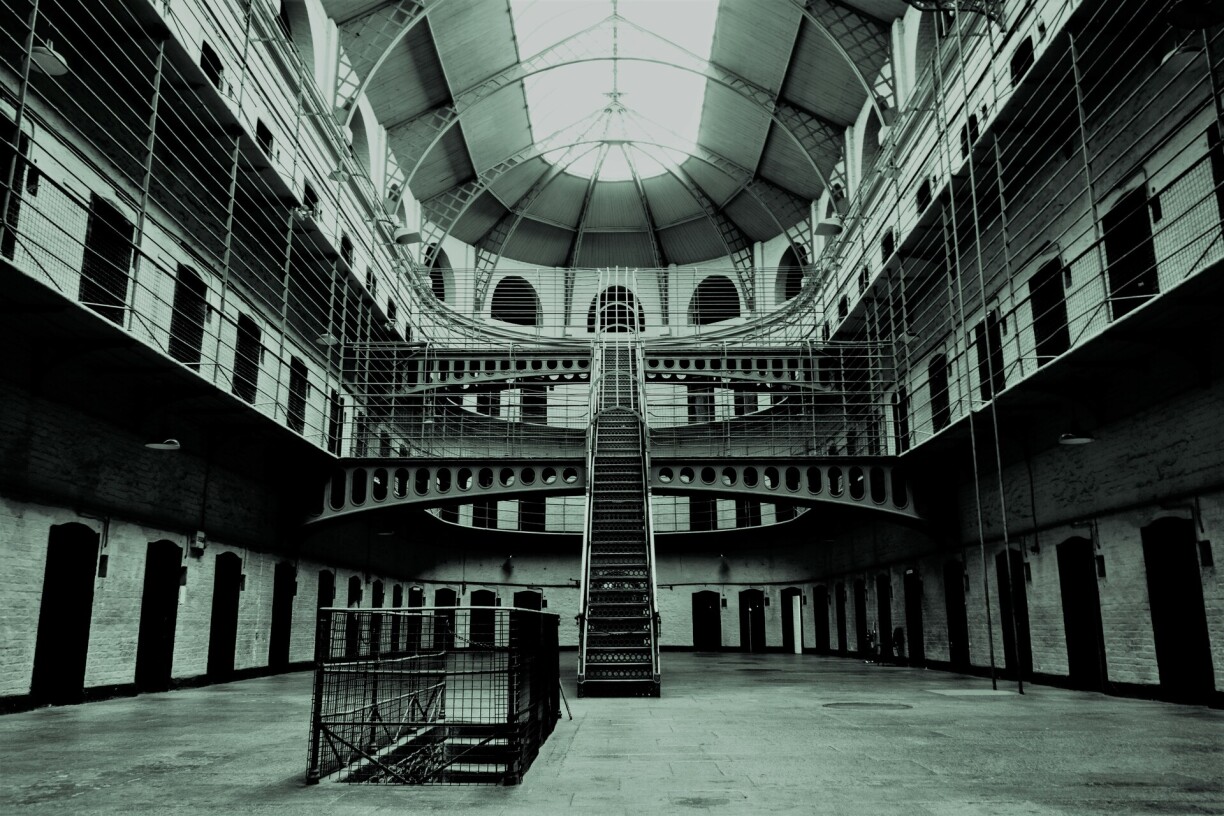
At 7pm on Thursday professional tour guide David O'Neill showed participants around Kilmainham Gaol. Following the 40-minute tour, there was a Q&A session.
Kilmainham Gaol opened in 1796 as the new County Gaol for Dublin; it closed its doors in 1924. Today the building symbolises the tradition of militant and constitutional nationalism from the rebellion of 1798 to the Irish Civil War of 1922-23.
Many Irish revolutionaries, including the leaders of the rebellions of 1798, 1803, 1848, 1867 and the 1916 Easter Rising, as well as members of the Irish republican movement during the War of Independence and Civil War, were imprisoned and in some cases executed in the prison by the orders of the UK Government.
Some of the most famous political and military leaders in Irish history were imprisoned there, including Robert Emmet, Charles Stewart Parnell and Eamon de Valera.
The Gaol also played a role during the harsh Famine times. It held thousands of ordinary men, women and children whose crimes ranged from petty offences such as stealing food to more serious crimes such as murder or rape.
Convicts from many parts of Ireland were held here for long periods before being transported to Australia. It is now a museum run by the Office of Public Works, an agency of the Government of Ireland.
The presentation covered various aspects of its history, including conditions at the gaol, political and social aspects, as well as children imprisoned there.





