
Here are five things you should know at the end of this week:

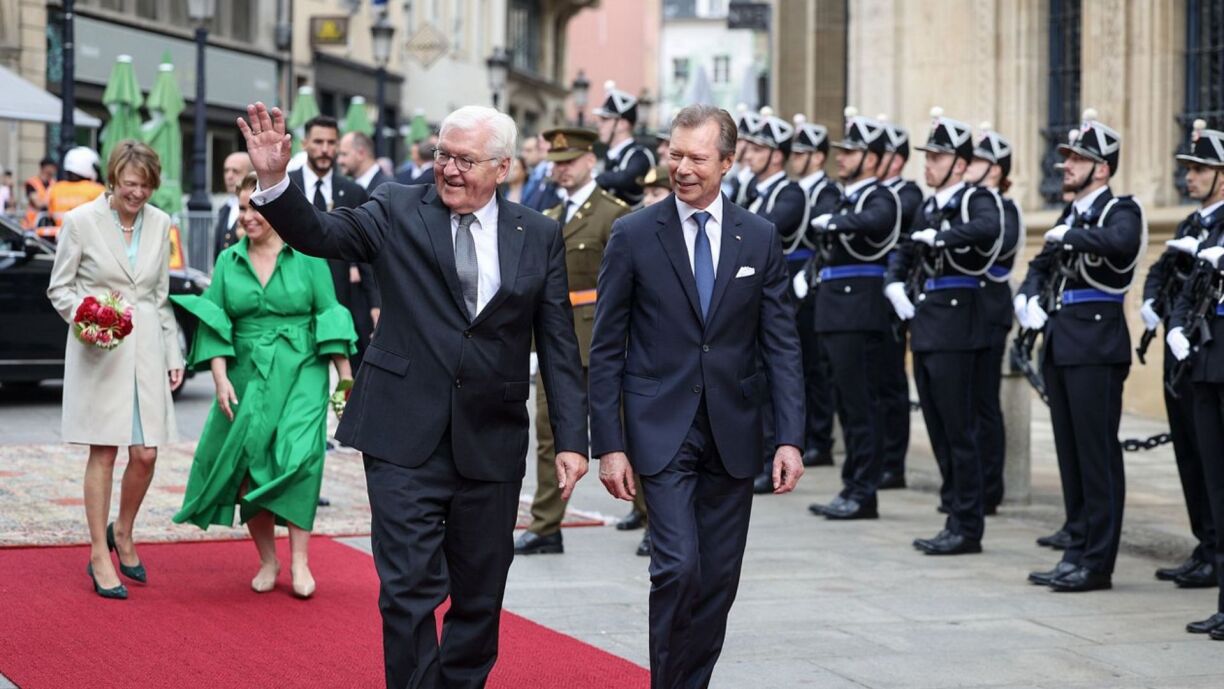
German President Frank-Walter Steinmeier was in Luxembourg on Monday and Tuesday at the invitation of the Grand Ducal Court.
A well-known guest - It was Steinmeier's first visit as Federal President. He thereby followed in the footsteps of his predecessor, Joachim Gauck, who travelled to the Grand Duchy for an official visit in 2014.
Nonetheless, Steinmeier had previously been to Luxembourg on various occasions during his time as German Foreign Minister.
Reliable partnership - After a reception by the Grand Ducal couple, President Steinmeier participated in a press conference in which he described Luxembourg as a "close and reliable partner".
Prime Minister Xavier Bettel, who also joined the briefing, agreed with this sentiment and pointed out that "if Luxembourg does well, Germany does well, and vice versa".
Luxembourg and Germany are currently looking to potentially finance joint projects in the border region, including the development of train connections in the area.

On Tuesday, Luxembourg's lawmakers voted to approve two new forms of leave for workers, awarding them additional time off to take care of relatives in need.
The draft bill, which was being worked on for a year, now turns a European directive into national law.
Workers will now be entitled to an additional day off for urgent family reasons as well up to five annual days of caretaker leave to look after a first-degree relative.
Requirements - It should be noted that a doctor's certificate is required for carer's leave. The new leave days will not be available to civil servants since they already have more advantageous social leave.
However, urgent leave is available without justification for both employees and civil servants.
Increased flexibility - In addition to the two forms of leave, the bill also retains access to "flexible working arrangements" for parents of a child under the age of nine or the carer of a first-degree relative who needs "care or assistance".
This gives people who have been with the same employer for at least six months the option to request the use of teleworking, flexible working hours, or a reduction in working time for up to one year.
Once filed, employers have one month to respond to a request, which they can accept, refuse, or postpone.

The Grand Ducal Court announced on social media that the Grand Duke's second son and his wife are expecting their third child.
Prince Félix, who is second in line for the throne, and Princess Claire already have two children.
The palace declined to announce the due date for the new arrival.
Third child - The Grand Ducal Court on Thursday announced a new edition to the family as Princess Claire, wife of Prince Félix, is expecting another child.
Prince Félix and Princess Claire already have two children: Princess Amalia Gabriela Maria Teresa, born 15 June 2015 at the Luxembourg City maternity hospital, and Prince Liam Henri Hartmut of Nassau, born in Geneva on 28 November 2016.
No timeline - Despite announcing the arrival of a new baby, the Court has not yet provided any details on when to expect the birth of the child.
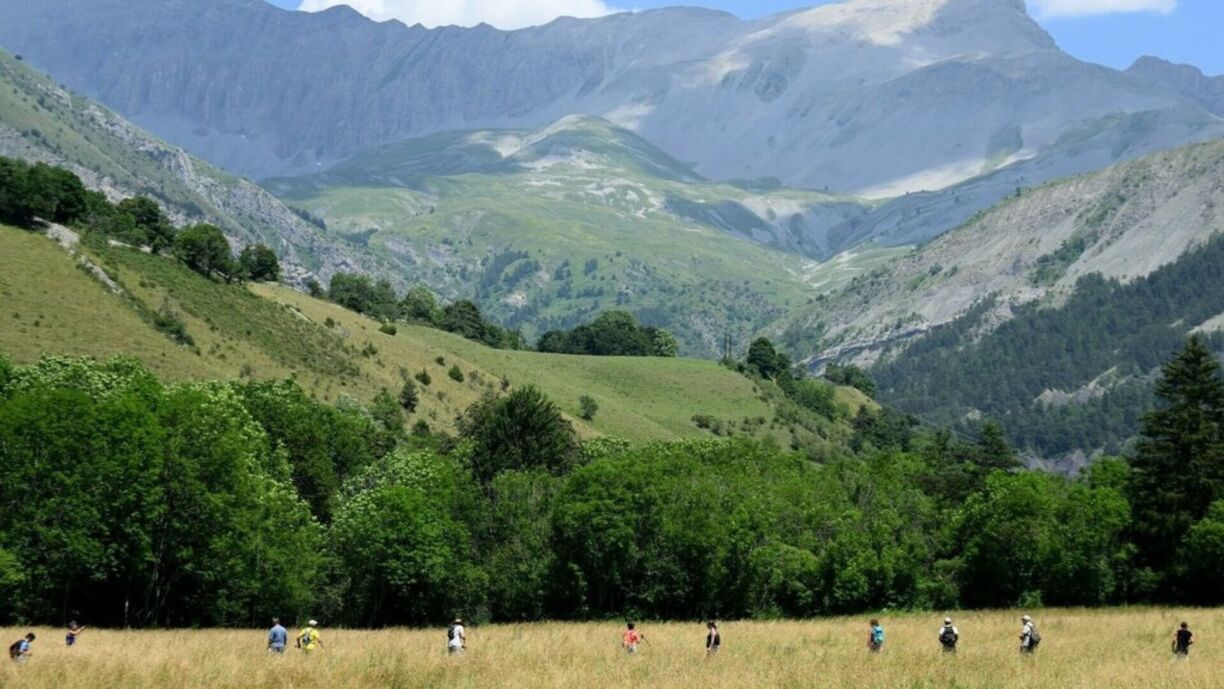
Two-and-a-half-year-old Emile went missing after wandering away from his grandparents' supervision in Vernet, a village in Alpes-de-Haute-Provence, on Saturday.
Extensive search efforts were carried out over the following days, but remained without success.
The search for the toddler was called off by Friday, authorities will however conduct a further investigation.
What happened? - The young boy was playing in the garden of his grandparents' house when he went missing on Saturday around 6pm in a rugged area. The grandparents reside in the specific hamlet of Haut-Vernet, which has 25 residents and is situated over a kilometer away from the village itself.
According to initial information from two witnesses, the child left "his grandparents' place of residence" and was seen "on a downhill street by two individuals. That is where we subsequently lost track of him," stated Rémy Avon, the public prosecutor of Digne-les-Bains, during a press conference in Vernet on Sunday.
Targeted search efforts - After 48 hours of combing through the area without success, the search became "more targeted" and "more selective", the local prefect, Marc Chappuis, told reporters late Monday.
Specialist forensic units were called in and more locals interviewed in the hope for clues as to the whereabouts of the boy.
Search called off - By Friday morning, the search teams had still not found any trace of young Emile and called off the wider effort. According to local authorities, a judicial investigation into the boy's disappearance will be now conducted.

A brutal heat wave is gripping parts of Europe, China, and the United States this weekend as record temperatures have been forecast.
Extreme heat advisories have been issued for more than 100 million Americans with the National Weather Service forecasting particularly dangerous conditions in Arizona, California, Nevada and Texas.
At the same time, several European nations, including France, Germany, Italy, Spain and Poland, are also baking in searing temperatures.
El Nino - A contributing factor to the higher temperatures this year may be the climate pattern known as El Nino.
El Nino events, which occur every two to seven years, are marked by warmer-than-average sea surface temperatures in the central and eastern Pacific near the Equator, and last about nine to 12 months.
New 'normal' - Last month was already the hottest June on record, according to the US space agency NASA and the European Union's Copernicus Climate Change Service.
Extreme weather resulting from a warming climate is "unfortunately becoming the new normal," warns Secretary-General Petteri Taalas of the World Meteorological Organization (WMO).
Excessive heat is one of the deadliest meteorological events, according to the WMO. One recent study estimates over 61,000 people died from heat during Europe's record-breaking summer last year.
Global impact - The mercury may soar as high as 48 degrees Celsius (118.4 degrees Fahrenheit) on the islands of Sicily and Sardinia, the European Space Agency said - "potentially the hottest temperatures ever recorded in Europe."
North Africa has also been sweltering and the Moroccan meteorological service issued an extreme heat red alert for southern parts of the country.
Some regions of China, including the capital Beijing, are also experiencing sweltering temperatures and a major Chinese power company said its single-day power generation hit a record high on Monday.
Meanwhile in the US, temperatures in the notorious Death Valley might equal or surpass the record for the hottest air temperature ever reliably measured on Earth.
Business & Tech - A US federal judge on Tuesday resurrected Microsoft's $69 billion buyout of video gaming giant Activision Blizzard by refusing to allow a temporary suspension of the long delayed deal.
Science & Environment - NASA marked a year of discovery by the James Webb Space Telescope Wednesday with a spectacular new image of Sun-like stars being born.https://today.rtl.lu/news/world/a/2066108.html
Entertainment -Tens of thousands of Hollywood actors have gone on strike at midnight Thursday, effectively bringing the giant movie and television business to a halt as they join writers in the first industry-wide walkout for 63 years.
74% - Close to three quarters of secondary school students passed their final exams this year, the Education Ministry has revealed in a statement.
Precision farming - The Grand Duchy has a new summer attraction in form of a vast corn maze in Lintgen, spanning across a whopping 20,000 m², equivalent to two large football fields!https://today.rtl.lu/news/world/a/2066108.html
Construction - Luxembourg has enough building land to accommodate up to 370,000 individuals, according to a recent study conducted by the Luxembourg Institute of Socio-Economic Research (LISER).

Your Weekly Recap is published every Friday at noon. Read earlier versions.





