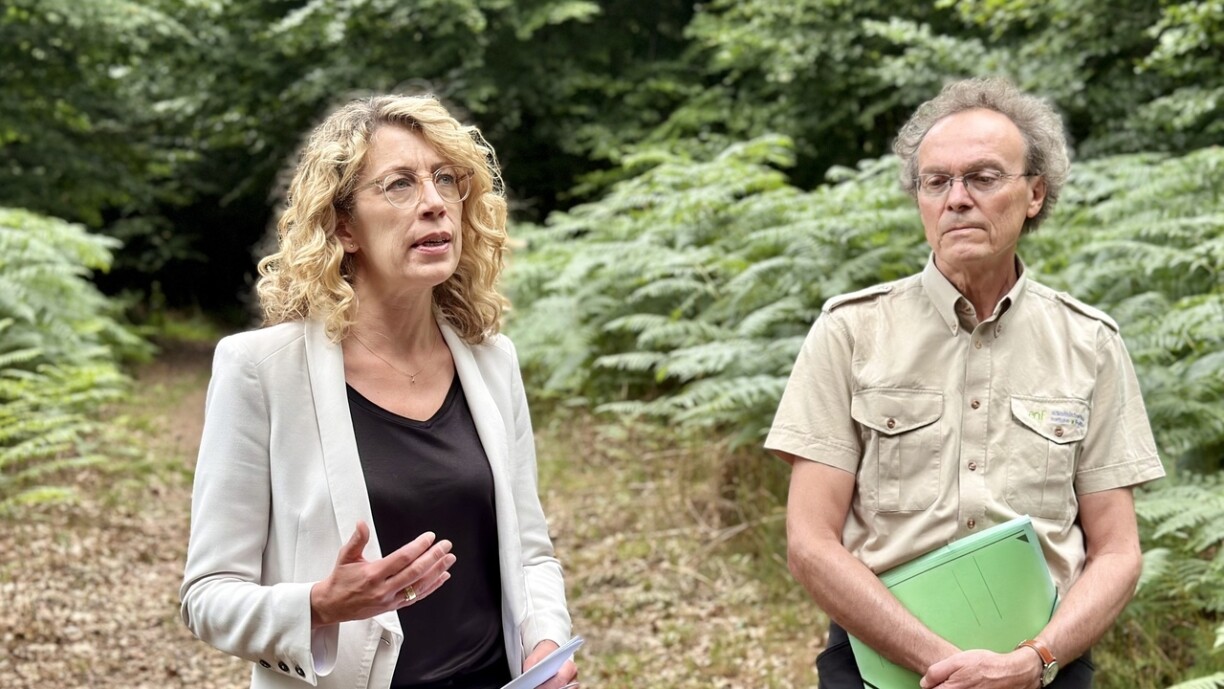
The previous law lacked precision regarding the definition of a forest and the permitted activities within its boundaries.
The newly adopted law establishes a legal framework for activities in Luxembourg's approximately 92,000 hectares of forest, with half of the land belonging to private individuals and the rest owned largely by municipalities.
Frank Wolter, the director of the Nature and Forest Agency, clarifies that an area can be considered a forest if it contains at least 25 ares (2,500 square meters) of trees. Exceptions exist, and additional features, such as forest trails, are considered part of the forest unless they are public roads.
Distinctions are made between paths and trails, with trails being less than one meter wide and not permitting the passage of horses, for example. The law also outlines rules for small fires.
The new law expands citizens' rights, allowing the legal collection of mushrooms and fruit from forests in small quantities for non-commercial purposes.
Previously, access to forests was not a right, and landowners had the authority to expel individuals from their property. The new law grants residents the right to walk through the country's forests.
Minister for the Environment Joëlle Welfring stresses that while the law grants increased access, individuals assume responsibility for their actions in the forest. If an incident occurs, the owner of the plot is not automatically held liable.
Forest management practices have also undergone changes to adapt to climate change. Prohibited activities now include the use of pesticides, forest drainage, fertilisation, and the removal of entire trees with branches and leaves.
Clear-cutting is now limited and technically prohibited, with exceptions available through permits.
Private forest owners have an additional responsibility to provide a two-day notice before large-scale logging operations, which typically involve a significant volume of timber.
This change aims to ensure the Ministry of the Environment receives comprehensive data, as previous information was primarily available from public forests.
The latest forest inventory in Luxembourg showed a significant portion of trees affected by disease, with 60% experiencing severe stress.
Native species, such as beech trees, are increasingly vulnerable to the impacts of climate change. Protecting Luxembourg's forests is of utmost importance, according to Wolter.
Full report by RTL Télé (in Luxembourgish):





