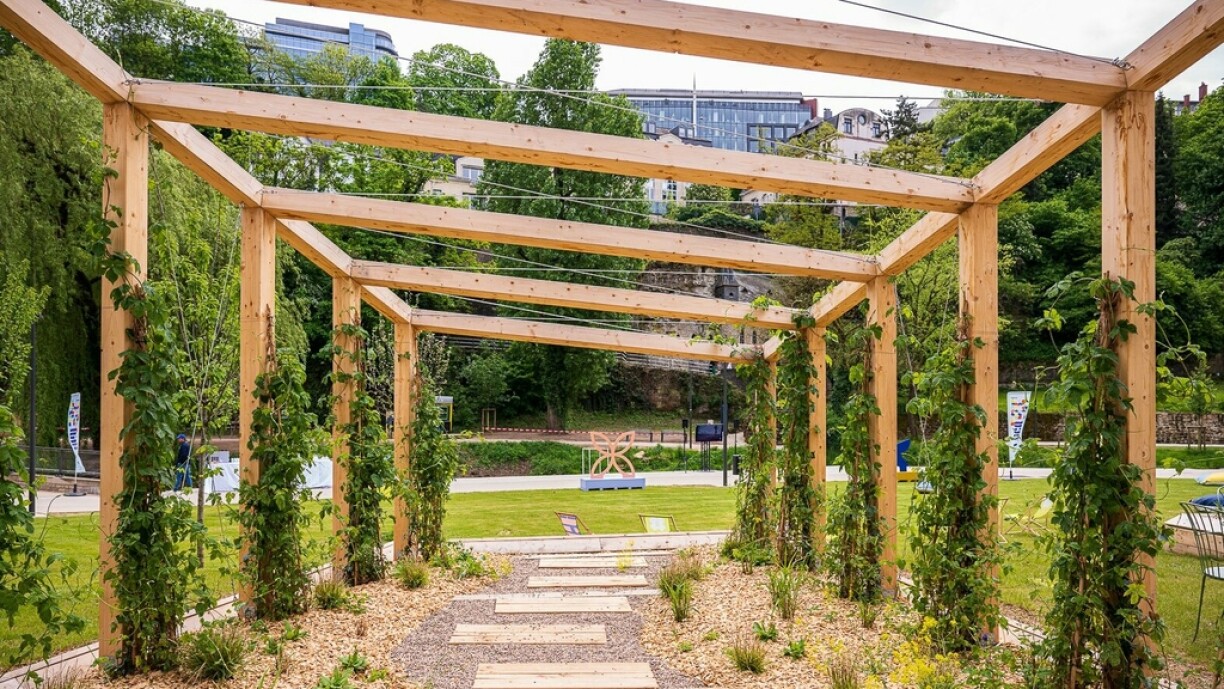
Mysterious and dimly lit, the Aquatunnel connecting Pfaffenthal and the Pétrusse is usually not accessible to the public. For LUGA, however, it has been opened and transformed into a space for art.
Once used for wastewater, the tunnel now hosts an installation titled The Lower World, created by Scottish artist Susan Philipsz and featuring a haunting soundscape inspired by the siren-like figure of Melusina, accompanying visitors on their journey through the tunnel.
Another highlight of the exhibition, created in collaboration with Mudam, is the Living Pyramid – a towering structure made of over 200 native plant species.
Bettina Steinbrügge, director of Mudam, explained that the aim is to make contemporary art more approachable by integrating it into public outdoor spaces. Many people, she noted, still feel hesitant or excluded when it comes to modern art, but an open-air setting allows them to engage with it casually and without pressure.
The visit also reinforced a broader message: art and nature should be more present in urban spaces. Prime Minister Luc Frieden described the experience as a refreshing change from political life and added that for him, agriculture, culture, and urban planning are essential when thinking about how to shape a country.
He stressed that cities and towns – whether in Luxembourg City or Ettelbruck – must feel alive, and integrating nature into urban life does not always mean structured parks. Playful, creative projects like LUGA can also bring vibrancy and inspiration.
Frieden further praised the exhibition's scope, noting the impressive collaboration between Luxembourg-based companies and public bodies, and expressed hope that the energy and ideas behind LUGA would continue to inspire action beyond its scheduled end in October.
For Agriculture Minister Martine Hansen, supporting projects like LUGA is also about reconnecting people with farming. She emphasised the importance of showcasing agriculture to the wider public.
In Luxembourg City, the focus is more on gardening and art, while in Ettelbruck, agriculture takes centre stage, according to Hansen. She also highlighted ongoing efforts to bring consumers closer to food production, including through events like the Agricultural Fair and school visits to local farms.
These initiatives, she noted, will continue beyond the LUGA programme.
Luc Reis, Managing Director of sightseeing.lu, confirmed that LUGA has already had a tangible impact on tourism. He reported a noticeable increase in visitors specifically coming for the exhibition. Some had even returned after a previous visit months earlier, curious to see how the gardens had developed, he stated.
According to Reis, this kind of repeat tourism shows the added value of the exhibition. He explained that tour guides have spoken with visitors who said they came back to witness the site's full bloom, now that the gardens are in peak condition.
LUGA, he added, is especially successful in boosting day tourism and supporting local producers by giving their products visibility throughout the exhibition.





