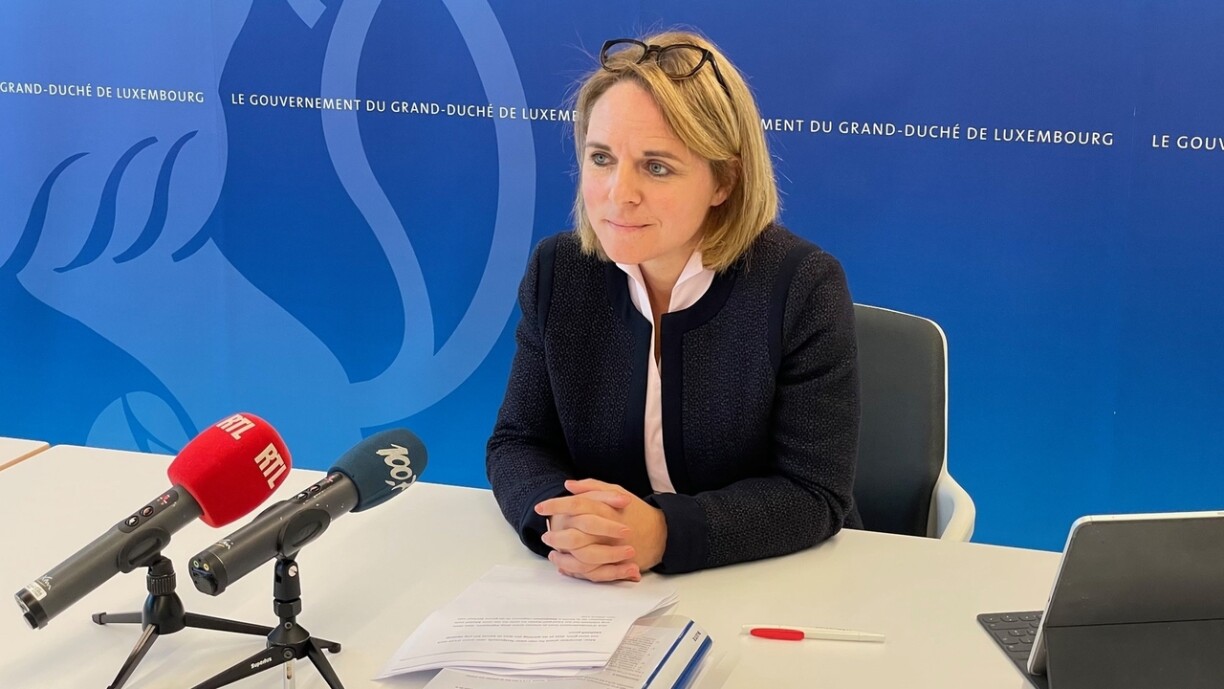
On Thursday, Cahen presented five amendments that take into account previous assessments and remarks, notably by the Consultative Commission on Human Rights, the Ombudsman, and by experts in the Waringo report.
One of the amendments will introduce contact persons for hygiene matters. In the future, all facilities will be required to have a contact person who will be in charge of internal hygiene rules. If a facility has more than 60 beds or over 100 FTEs (Full Time Equivalents) in a network, there will have to be two contact persons. The Minister also confirmed the creation of ethics committees, which will have "more precise missions and tasks". A committee will have to be composed of at least three people, including a doctor and a person with training in palliative care. The committees can be approached by residents, family members of residents, but also staff members.


A mediation service will also be set up for the entire sector. The Standing Committee for the Elderly will be given a legislative basis. It was set up after the publication of the Waringo report and began its work immediately at the request of the Chamber of Deputies.
Cahen explained that "criteria and measuring instruments" have been established. They will be evaluated in the context of quality management.





