Every year, Luxembourg ranks among the worst ecological performers in Europe and even globally, as was the case again on February 17. This date marked the point at which the country would have consumed all the natural resources it is capable of producing in a year. This is certainly not good news, but as mentioned in the “Earth Overshoot Day” report, the calculation methods do not favour a country like the Grand Duchy, which is heavily impacted by cross-border transit and fuel tourism.
Until now, this was not a surprise, as the effect of this phenomenon on the country’s carbon footprint has long been suspected. However, on Friday, 16 May, Vincent Hein, director of the IDEA Foundation, published an analysis (in French) focusing on the decarbonization of the Greater Region.
The analysis reveals that greenhouse gas (GHG) emissions in Luxembourg have decreased by one-third since 1990, even though the population has grown by 70% over the same period. But this is no miracle – the drop is largely due to the decline of industrial activity in the region.
So, rather than an ecological miracle, the country has undergone a transformation in its activities over the past 35 years. Hein points out that if the Greater Region was an European state, it would rank 4th in terms of emissions intensity per capita.
The issue, therefore, goes beyond Luxembourg’s borders. Transport is clearly the main stain on the region’s carbon record. Emissions from this sector alone account for a quarter of the total, and they have barely declined in 30 years – from 2.8 tonnes per person to 2.7.
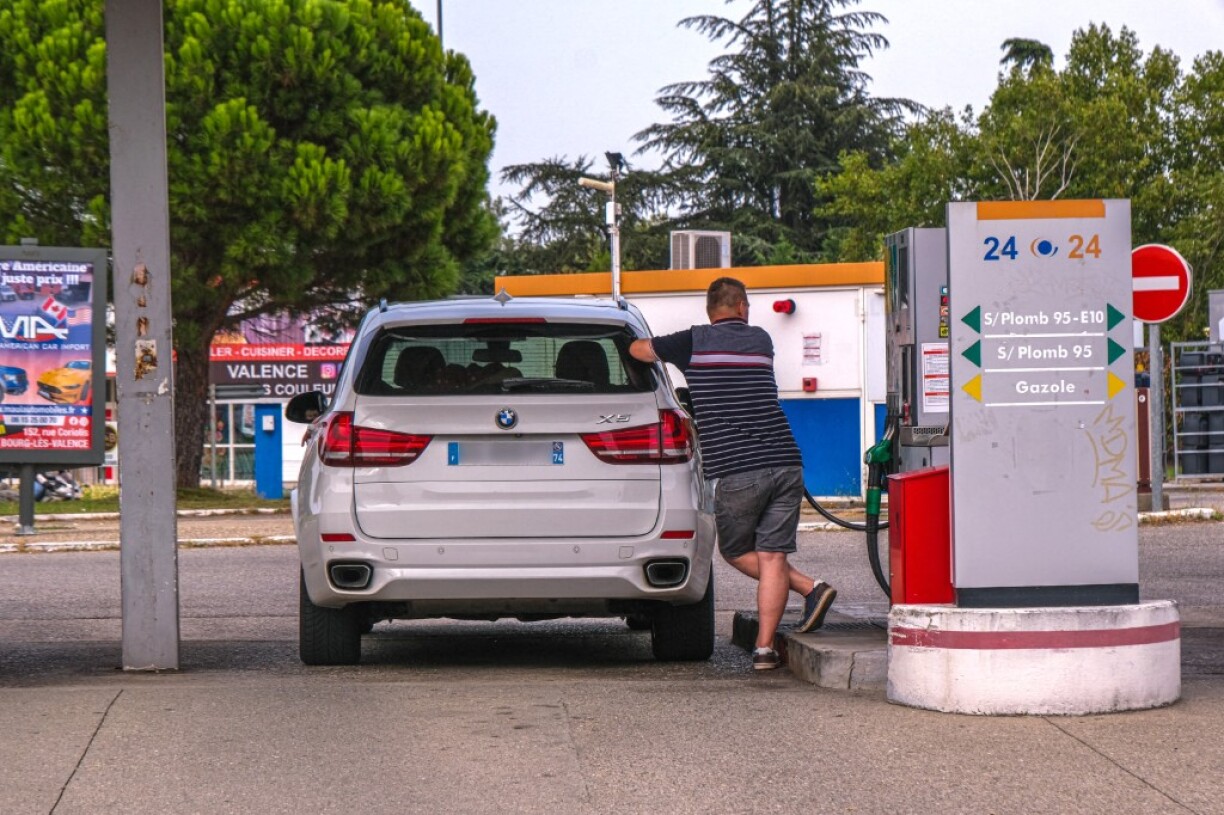
For Luxembourg, the effect is even more severe due to the country’s long-standing attraction of drivers and truckers with its lower petrol prices. The impact of the so-called fuel or petrol tourism was estimated at 2.55 million tonnes of CO₂ (in 2022), which accounts for 60.9% of emissions from the road transport sector and 31.2% of Luxembourg’s total GHG emissions.
If those emissions were subtracted, Luxembourg’s carbon footprint would drop from 13.1 tonnes of CO₂ per person to 9, according to the IDEA director. This would move Luxembourg from first to eleventh place in the European emissions-per-capita ranking.
However, Hein emphasizes that the carbon footprint of Luxembourg residents remains “relatively poor” due to their “lifestyle.” Luxembourgers are often criticized for the large amounts of waste they generate, their frequent air travel, and their high meat consumption.
It’s worth remembering that Luxembourg is aiming for a 55% reduction in greenhouse gas emissions by 2030 and climate neutrality by 2050 at the latest. At the current pace, these goals are unlikely to be met.





