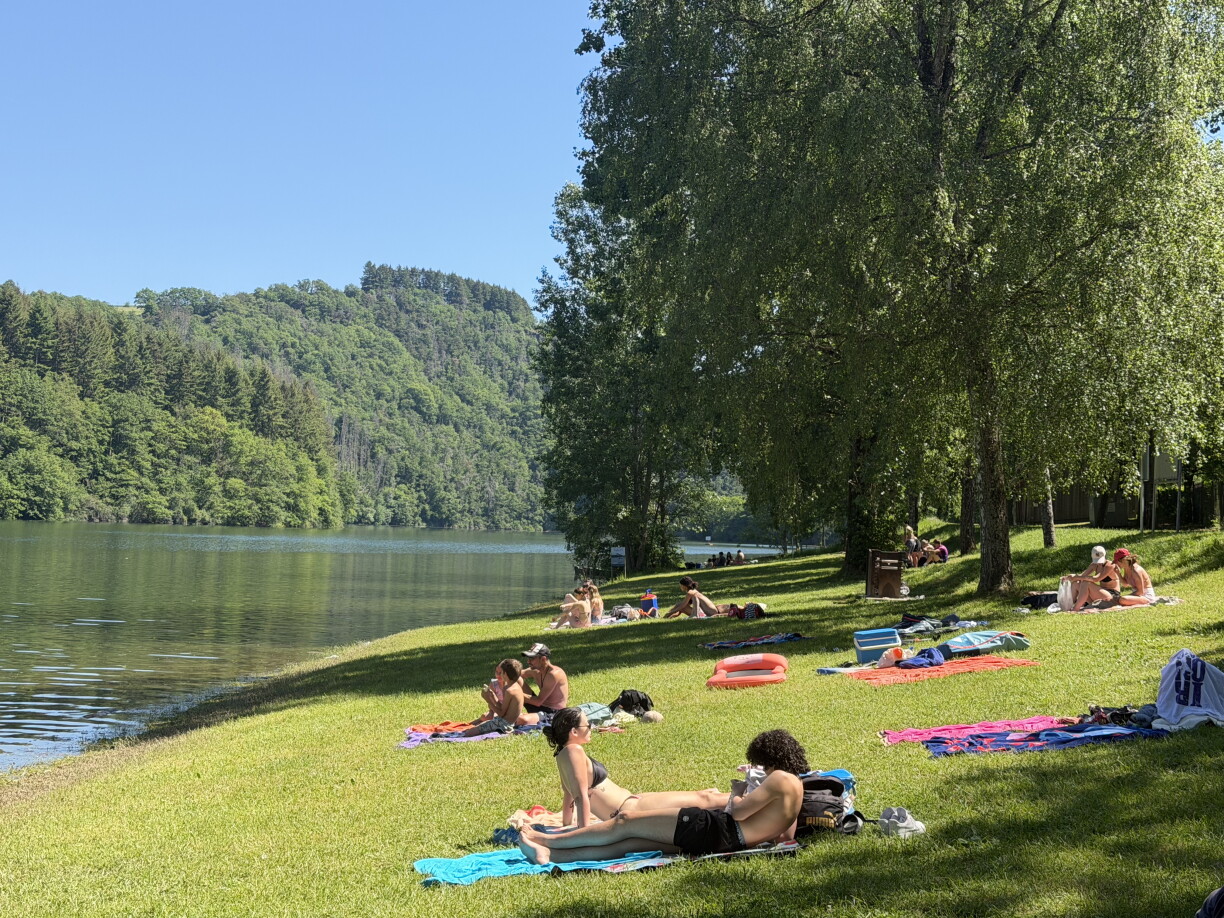
Luxembourg has secured 5th place among European countries with the cleanest bathing waters, according to the latest annual assessment.
The report, published on Friday by the European Environment Agency (EEA) and the European Commission, shows that the vast majority of bathing sites across Europe – from Atlantic beaches to Mediterranean shores – enjoyed excellent water quality in 2025.
Of the monitored sites, 85% achieved the highest "excellent" rating, the most stringent standard set by the European Union. In total, 96% of the areas assessed met at least the minimum quality requirements, while only 1.5% were classified as "poor". These figures remain broadly stable compared to the previous year.
The top-performing countries are Austria, Bulgaria, Cyprus, and Greece, where at least 95% of sites received the top rating. Coastal waters continue to be the most reliable, with 88% of marine bathing areas deemed excellent, compared to 78% for rivers and lakes.
Luxembourg ranks 5th overall, with 94.1% of its waters rated as excellent. Germany follows in 7th place, while France sits further back in 21st. Belgium ranks 24th, with 67.9% of its sites achieving the top classification.
The analyses focus primarily on the presence of bacteria capable of causing severe infections.
The high quality observed across Europe is the result of several decades of targeted policy measures. The EU's Bathing Water Directive, together with other water-related legislation, has helped improve monitoring, site management, wastewater treatment, residual water collection, and the tracking of potentially dangerous algal blooms.
Thanks to these efforts, areas that were once heavily polluted – including some in urban settings – are now safe for bathing. However, European institutions caution that protecting water resources remains an ongoing challenge, particularly in light of chemical pollution and the effects of climate change. Improving water quality for the benefit of both citizens and ecosystems is a key pillar of the European strategy for water resilience.
The report is based on data from more than 22,200 sites monitored during the 2025 season, covering all EU Member States, as well as Albania and Switzerland.





