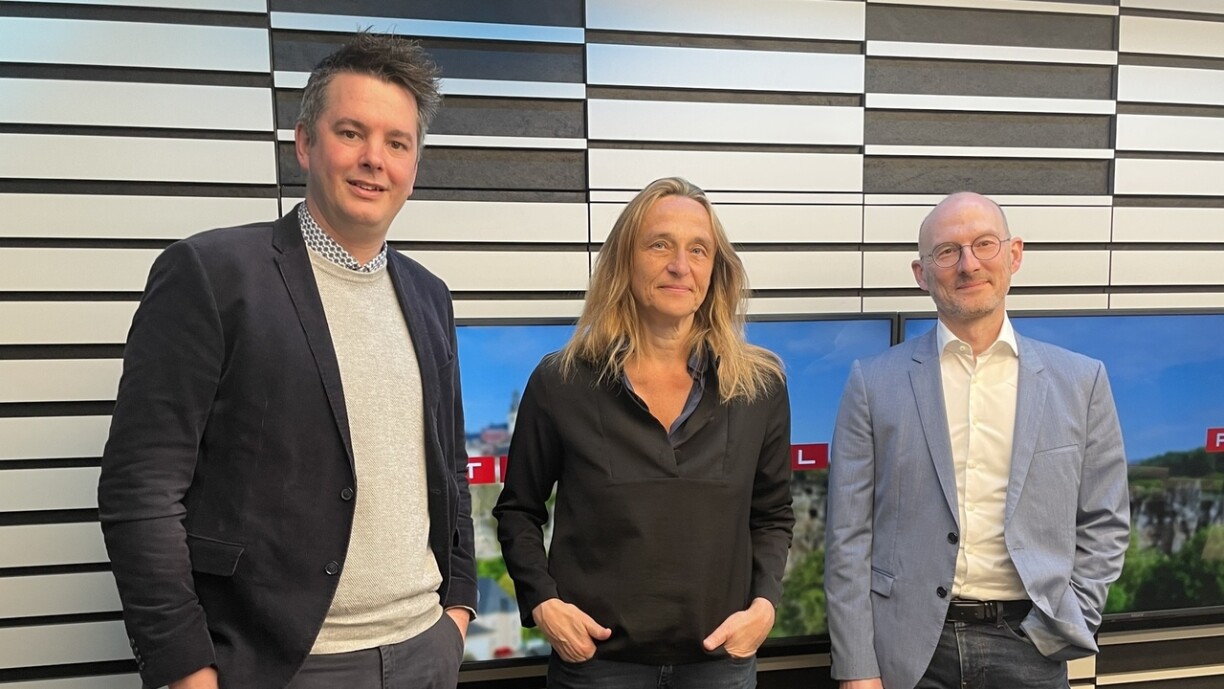
On Saturday, our colleagues from RTL Radio hosted a roundtable discussion on Luxembourg's energy transition, featuring Minister of the Economy, SME, Energy, and Tourism Lex Delles, Encevo director Claude Seywert, and Ecological Movement president Blanche Weber.
Seywert emphasised that it is normal that the shift to renewable energy cannot happen overnight. Minister Delles echoed this, describing the transition as "a complex issue" requiring careful communication to avoid public resistance. Weber, meanwhile, underscored the urgency of electrification, calling it "necessary".
Minister Delles highlighted a proposed bill to revise the pre-funding model for photovoltaic (PV) installations. The legislation, currently under parliamentary review, would adjust subsidy calculations. The minister assured that aids would not be cut and that larger projects would benefit from higher funding.
Under the new system, state pre-funding could cover more than 50% of a project's total cost. Delles also advised residents to obtain multiple quotes, as the updated model factors in pricing variations.
"Thanks to solar power's success, we're moving toward energy independence", Delles said, noting benefits for both national sovereignty and household electricity bills.
The discussion followed a landmark year for solar energy, with Luxembourg adding over 8,000 new PV installations in 2024. Last year also marked the first time that solar generation surpassed wind power output.
Weber acknowledged solar power's benefits but emphasised that transitioning from fossil fuels remains an environmental imperative. She urged policymakers to sustain public support for solar energy while expanding acceptance to other sectors.
Weber was more critical of Luxembourg's progress on heating systems, noting that many households still rely on gas. Heat pumps, she argued, have faced "bad publicity" due to high electricity and grid costs. In response, Minister Delles announced plans to establish a new entity tasked with expanding and decarbonising heating networks to accelerate household electrification.
Seywert stressed that while the energy transition requires significant investment – particularly in grid infrastructure – the goal is to prevent rising costs for consumers using electricity generated from solar and wind.
Currently, stakeholders are working to optimise the balance between production, consumption, grid expenses, and pricing. Seywert highlighted the importance of smart energy systems, which not only manage large-scale plants but also help households with photovoltaic installations optimise their energy use. "The priority is keeping power bills low", he added.
All three guests agreed on two key points: Luxembourg still has untapped potential for solar expansion, and the complexity of the transition should not deter participation – especially among lower-income households.





