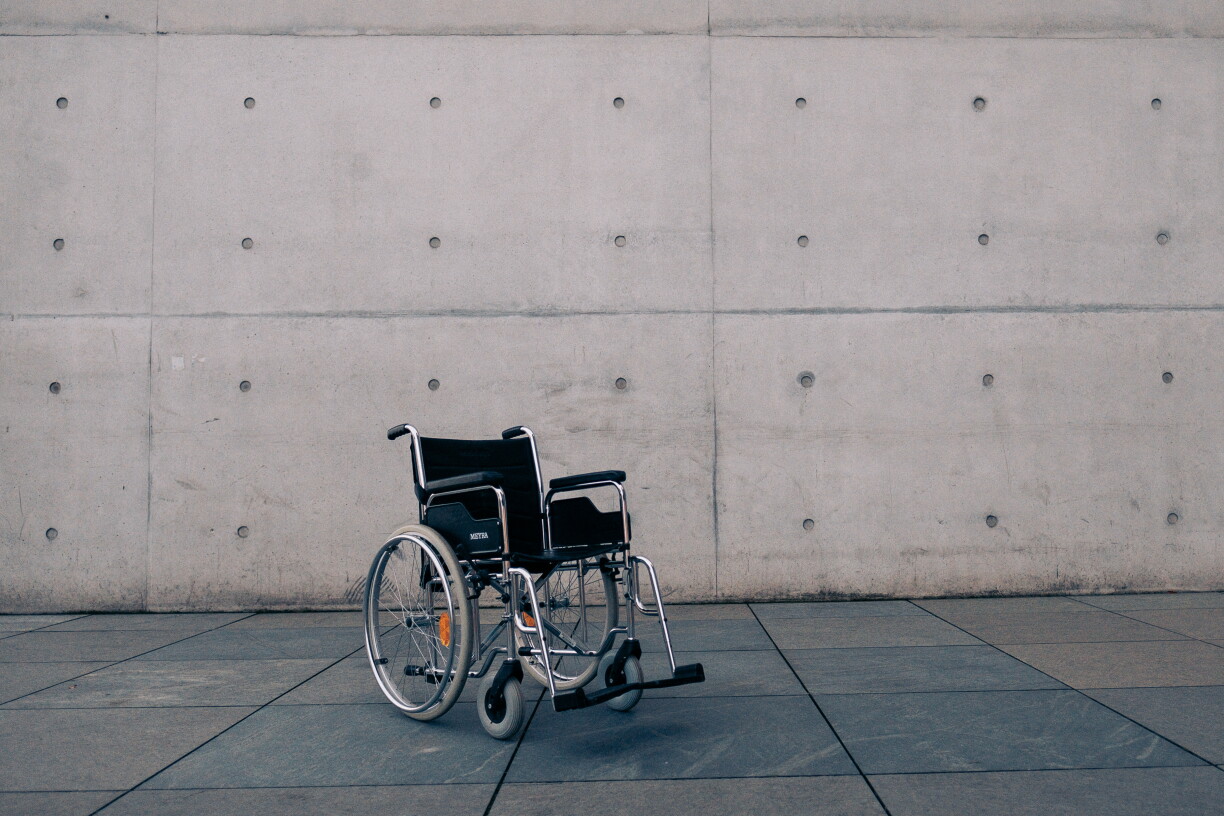
People with disabilities should be able to decide where and how they live, a right enshrined in Article 19 of the UN Convention on the Rights of Persons with Disabilities. Article 19 rests on three pillars: the freedom to choose one's place of residence, personal assistance and access to services. The CCDH analysed how they are applied in Luxembourg and made recommendations to the government.
A shortage of suitable, affordable housing is one of the main problems, closely linked to the wider housing crisis. Adapting a home is often complex and bureaucratic. A person who needs a lift installed must pay upfront, then go through a lengthy process to be reimbursed, with no guarantee of success. Tenants must also get approval from landlords and, where relevant, co-owners.
As a result, some people with disabilities have no choice but to live in institutions, which limits their autonomy and deepens their isolation, said Laura Carocha of the CCDH.
The central issue, the CCDH says, is the lack of a legal basis for personal assistance, which covers services from hygiene and mobility to communication, health management and community life.
"At present, Luxembourg is one of only three countries in Europe, alongside Hungary and Belarus, with no legal basis for personal assistance," Carocha said. There are no binding controls, no formal training for assistants and too little support for people who need help. Assistants themselves work in precarious conditions, with staff shortages and little recognition of the profession.
Support currently comes mainly through long-term care insurance and an interministerial platform, which do not cover all needs, especially for people requiring round-the-clock support. The system is also neither flexible nor transparent enough. The CCDH wants a legal framework that lets people with disabilities hire their own assistants under employment contracts, backed by a national service for administrative tasks, with proper training, fair pay and professional support for assistants.
The CCDH also reviewed the government's new national action plan to implement the UN Convention. It welcomed a national deinstitutionalisation strategy, an analysis of housing needs and plans to reform guardianship (tutelle) and curatorship (curatelle).
On personal assistance, however, the plan lacks concrete commitments. "In the chapter on autonomy and self-determination, personal assistance is mentioned, but unfortunately no specific measures are provided," Carocha said. The difficulties in organising assistance are therefore likely to persist.
The commission also criticised the lack of a defined budget and end date, and the lack of transparency on how far people with disabilities were consulted in drafting the plan.
Guardianship and curatorship are not among Article 19's three pillars, but the CCDH says they greatly affect autonomy. It considers the current law, dating from 1982, incompatible with the UN Convention, as people under these arrangements may lose the right to decide on finances, health or housing.
In 2017, only 15 of 420 cases ended without a guardianship or curatorship order, and no more recent figures are available. The commission wants a reform that helps people make their own decisions rather than having a guardian or curator decide for them. The action plan includes a draft bill on the issue for next year.
Implementing the Convention remains a major challenge, CCDH president Noémie Sadler said at the end of the press conference. Much remains to be done "to ensure that Article 19 of the UN Convention on the Rights of Persons with Disabilities becomes a reality in Luxembourg, and not just words on paper."


