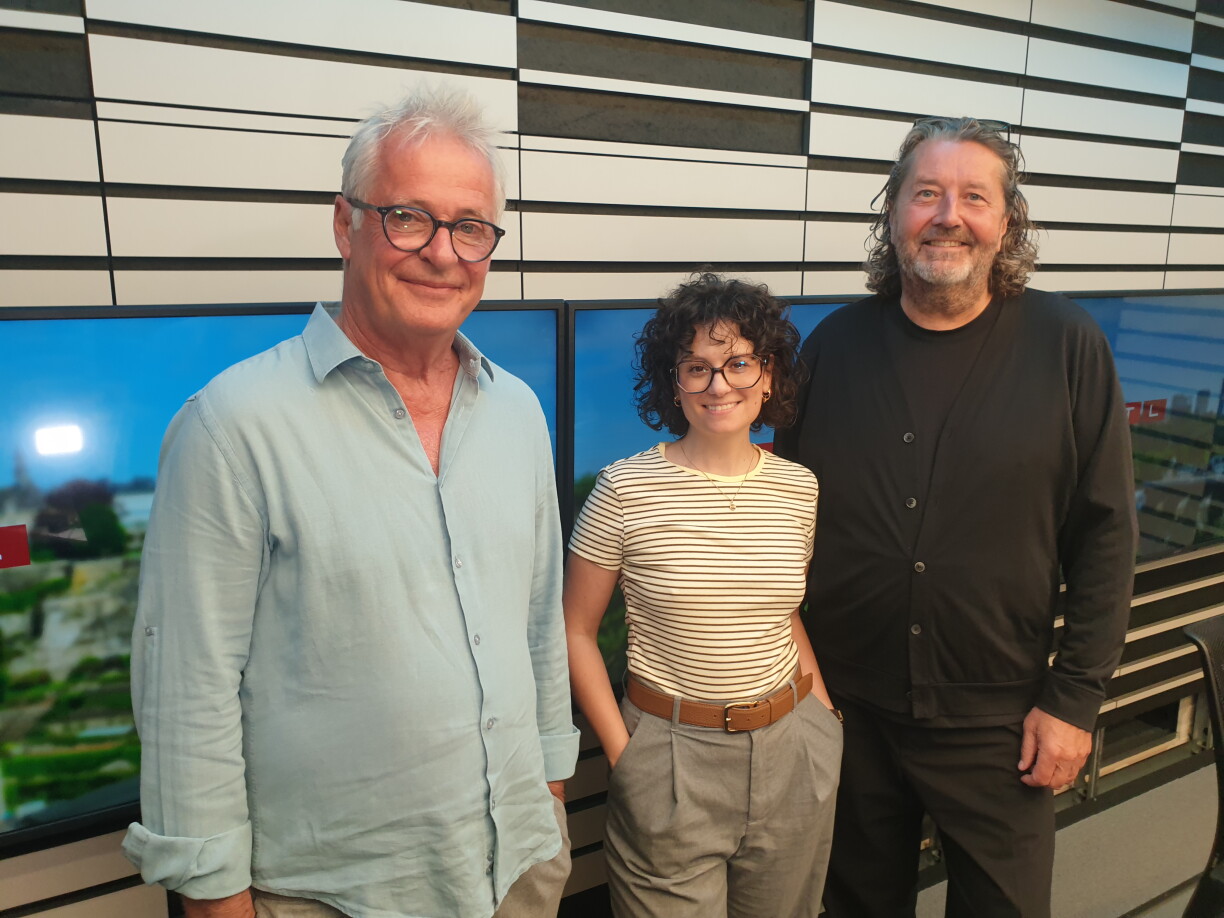
On Saturday, RTL Radio hosted a discussion on the Luxembourg film sector with several guests.
The panellists were film producer Jani Thiltges, actress Magaly Teixeira, and Film Fund director Guy Daleiden. Excerpts from an interview with Carlo Thiel, who represents film technicians, were also played.
According to Daleiden, the film sector is not in a structural crisis, though challenges do exist. Thiltges agreed, arguing that the issue is primarily a matter of funding.
Teixeira noted that there is less work for actors today than ten years ago. She added that Luxembourg is highly dependent on co-productions and that budgets have been cut in neighbouring countries.
Teixeira explained that when neighbouring countries have smaller film budgets, the volume of available work in Luxembourg also decreases. This means either fewer projects are made, or those that are made are significantly smaller in scale, she said.
According to Teixeira, Luxembourg also lacks a culture of casting directors. As a result, actors do not get to know producers and find it harder to secure work, she explained.
Even with the status of "intermittent worker" – a status covering artists, technicians, and other cultural professionals who work on short-term projects –, actors struggle to make ends meet, according to Teixeira.
Unlike technicians, who also face reduced work opportunities, actors are not hired on fixed-term contracts (CDD) and cannot unionise, she said.
Daleiden emphasised that the Luxembourg film industry is entirely dependent on state funding. Although the Film Fund's budget has increased by 10%, he said this is not enough to sustain the sector.
Daleiden added that making films today is more expensive than before the Covid-19 crisis, while available funding has remained the same. The Film Fund is currently in talks with the sector to find solutions, he said.
Daleiden hinted that the Film Fund might attempt to allocate more money per project in the future, including for productions with smaller budgets. At the same time, he noted that in return, the Fund could demand and ensure that more technicians, more actors, and more local services benefit from this support.
However, this would also mean that fewer projects could be funded, according to Daleiden. Producer Jani Thiltges welcomed the proposed new system but also called for additional state support in the form of tax benefits.
Thiltges highlighted what he perceives as a paradoxical development: Luxembourg was the first European country to offer a form of economic aid to the film sector, known at the time as a "tax shelter."
Today, however, Luxembourg is "most likely the only country left in the European Community without such support", Thiltges said.
Nothing could be done to save the Filmland film studio, according to Thiltges, whose production company Samsa was a tenant at the site. He explained that he had contacted both the Film Fund and the Ministry of Culture in search of solutions, but the response was that nothing could be done.
Thiltges noted that every film studio in Europe, whether in Germany or France, receives very strong regional aid. Such support is necessary, he said, due to the irregular nature of the sector, where months can pass without any filming taking place.
With the closure of Filmland, Thiltges explained, his production company will have to revert to its previous practice and look for studios abroad.
Daleiden pointed out that the European Commission sets the framework, meaning neither the Film Fund nor the Ministry could intervene. In the specific case of Filmland, the issue was that a private initiative could not be supported with public funds.
Instead, Daleiden advocated for further discussions with Minister of Culture Eric Thill to explore whether there is a possibility to jointly find another form of investment at some point to stabilise the Luxembourg sector.
"Because I think it is of benefit to production in Luxembourg, but also to our foreign partners, if we had such studios", Daleiden said.





