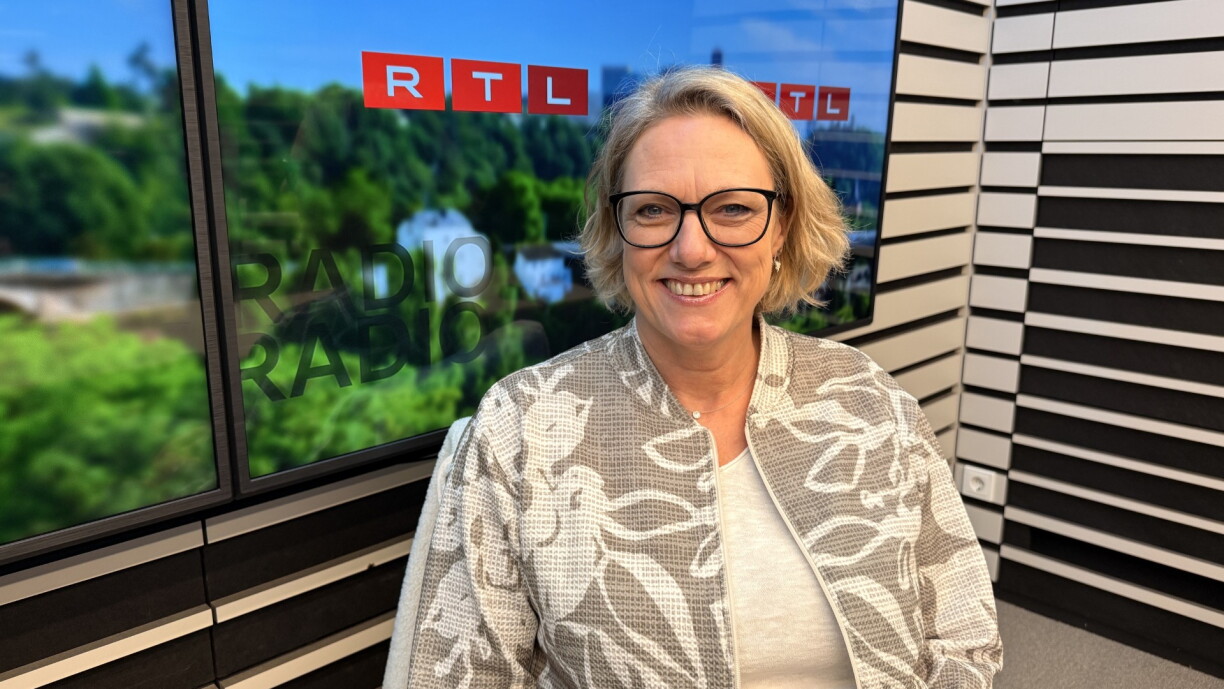
In a Western consumer society, people are exposed to a great deal of sources that can lead to addiction, according to director of the National Addiction Prevention Centre (CNAPA) Anouk Hinger, speaking to RTL on Thursday morning.
Alcohol, tobacco, and drugs are the most commonly consumed legal substances in our society, followed by cannabis, she added.
When it comes to cannabis, the psychologist warned against the term legalisation.
The word may convey the misleading impression that use is generally permitted and therefore also harmless.
It had not, she pointed out, been "legalised" in that way at all. People do however, falsely carry the impression that because it is legal, it is also harmless.
This is false, as illegal does not automatically mean harmful, nor does legal automatically mean something is not harmful, she explained.
On drug use, Hinger drew particular attention to psychotropic drugs, including sleeping pills and sedatives.
These substances are reaching a global peak, but the Grand Duchy is at the top of the list when it came to the consumption of these drugs.
All in all, around 355,000 prescriptions for psychotropic drugs are being written every year, including antidepressants, anti-anxiety medications, and even sleeping pills and sedatives.
The Dry January campaign was a good way to encourage people to reflect more consciously on their alcohol consumption and to take a break, Hinger shared.
Alcohol, she said, remained strongly anchored in our society and continued to be seen as a cultural asset.
For CNAPA, it was therefore not enough to just appeal to citizens’ sense of personal responsibility.
Legal adjustments are also needed, including on the age of sale, sales pitches, and advertising. The visibility and availability of these products also has to be tackled.
At petrol stations, for instance: "You walk in and you are really almost overwhelmed by the range of vaping, e-cigarettes, alcohol and voilà, how can you resist?", the director of CNAPA said.
When it comes to addictive behaviour, men are more at risk. In recent years, however, there has been a tendency for women to increase their consumption.
On alcohol, men often start drinking earlier than women, Hinger explained.
There is a development phase in which patterns of behaviour for later life can be set. As a motive for men, sociability also plays a role.
In a 2023 Luxembourg cannabis survey, almost 70% of respondents who had used cannabis in the previous 30 days cited relaxation as a motive.
More than a fifth also reported feelings of depression or anxiety.
That, according to the psychologist, should be taken with some caution.
If a person was using cannabis because they felt bad and had no other strategies for coping with their burdens, consumption could become problematic.
What mattered, therefore, was also the role that the substance played in that person’s life.
Not everyone who uses a substance automatically becomes dependent. To assess use, we need to consider the frequency, the quantity and the motivation.
On top of that, there are situations in which no use should take place at all, such as during pregnancy, in traffic or when operating machinery.
Addiction, Hinger pointed out, is a medical diagnosis. Consumption, however, could already do harm, whether to the person themselves, to their relationships or to their performance in daily life.
The shift from a habit to problematic use was not always easy to spot for those involved, the psychologist explained.
Screens and social media are taking up more and more space in everyday life, Hinger says regretfully.
The problem does not only affect children and teenagers, but adults too.
It is quite remarkable, she says, just how much space and time the use of these screens have gained in everyone’s lives.
On the one hand, we need all of it to get through our days.
On the other, when looking at the figures from international studies, the impact on well-being or unhappiness is enormous.
For children and young people, the director of CNAPA believes a ban on social media is necessary, as a matter of youth protection.
The operators of the platforms, too, would have to take on more responsibility and carry out more checks.
A ban on its own, however, would not be enough. Children should be prepared for a healthy use of the digital world through education and guidance.
These questions are also at the heart of CNAPA’s resilience forum on Friday, held as part of the Mental Health Weeks.
If a person is worried about the substance use of a family member or a friend, the psychologist advises raising the matter.
The aim is not to make a personal diagnosis, but rather to address the specific behaviours that are causing concern.
Throughout that process, respect and appreciation are important by carefully listening, staying in touch, and offering support.
If need be, reaching out to a specialist service together with the person concerned is also always a possibility.





