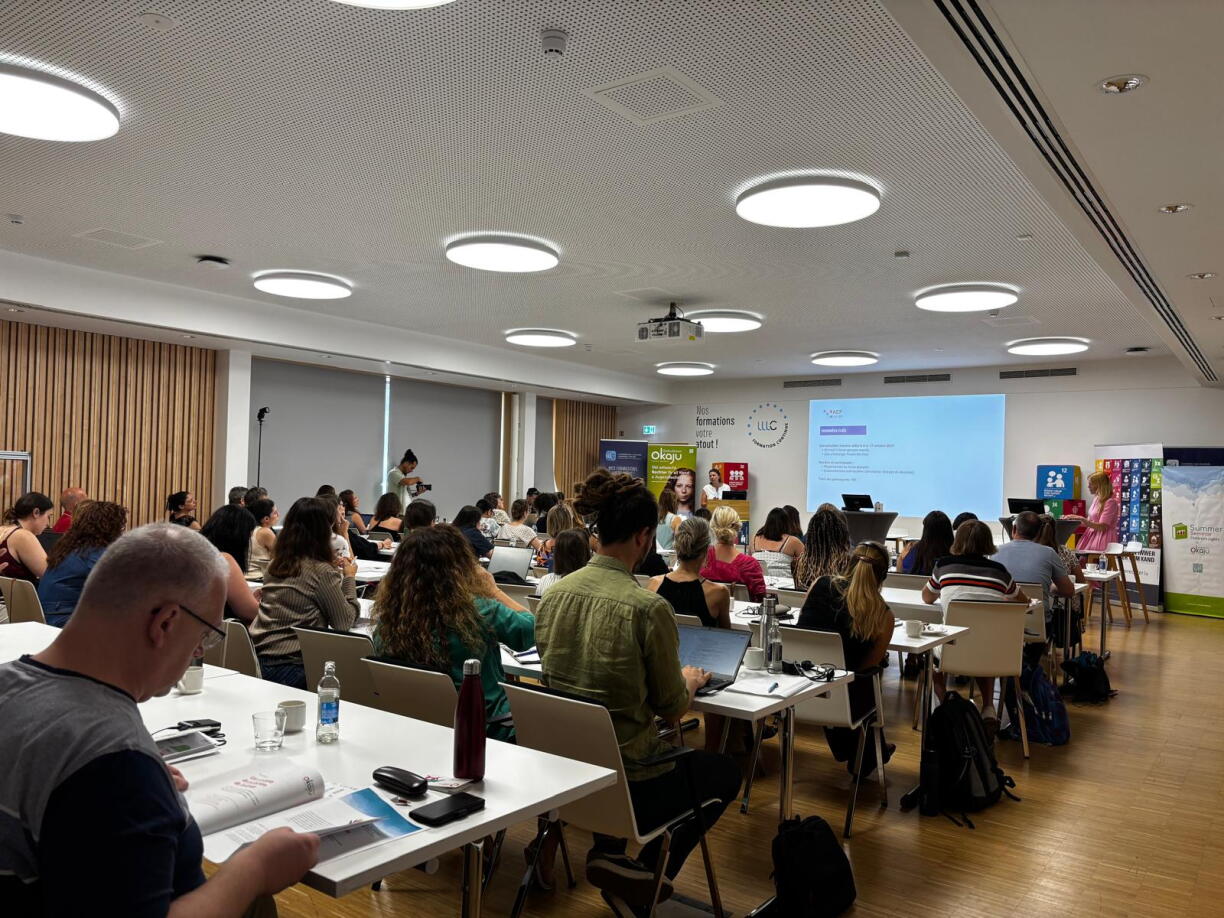
Where do we stand today when it comes to children's rights, and how well are they upheld in reality? Those were some of the questions on the table over three days at the summer seminar organised by the Ombudsman for Children and Young People (OKaJu). The OKaJu held its gathering with stakeholders from the sector at the Chamber of Employees in Bonnevoie last week, with young people themselves also given a chance to have their say.
For the past three years, young people have been represented at OKaJu through the so-called Young Advisors. Natasha Lepage, now 23, was a Young Advisor herself and now co-coordinates the project. She explained that the project had been set up so that young people between the ages of 13 and 17 were not just asked for their opinions, but were also brought into the discussion of the topics that matter to them and shape their daily lives, and made part of the process. "It is extremely important to create a genuine space for participation, in which young people are not merely brought in once but are involved throughout the process."
This is the sixth edition of the OKaJu's summer seminar, and coordinator Flore Schank pointed out that what makes it special is the breadth of the audience it brings together. Those in attendance come from both formal and non-formal education, from the justice sector, from social-pedagogical work and from healthcare. Students also attend, alongside young people with an interest in children's rights. Each year the seminar picks up on themes that emerge from the ombudsman's own work and from the everyday realities they observe.
This year's edition also focused on the protection of children. International experts joined the discussion, among them the head of Family Lab France, who works on so-called "ordinary educational violence". She observed that such acts of violence have always, in truth, been known to be harmful. What has changed is that they used to be regarded as educational methods, whether spanking, punishment or putting a child in the corner, alongside other forms of physical or verbal violence, which were once part of everyday life for many children and still are for many today. The representative explained: "Today, neuroscience confirms that such acts are genuine violence and they damage the development of a child's self-esteem and personal fulfilment."
The seminar is not intended to remain an exchange among practitioners alone. The input gathered will feed into the OKaJu's annual report, so that the reflections raised during the three days ultimately reach the wider public and political leaders.





