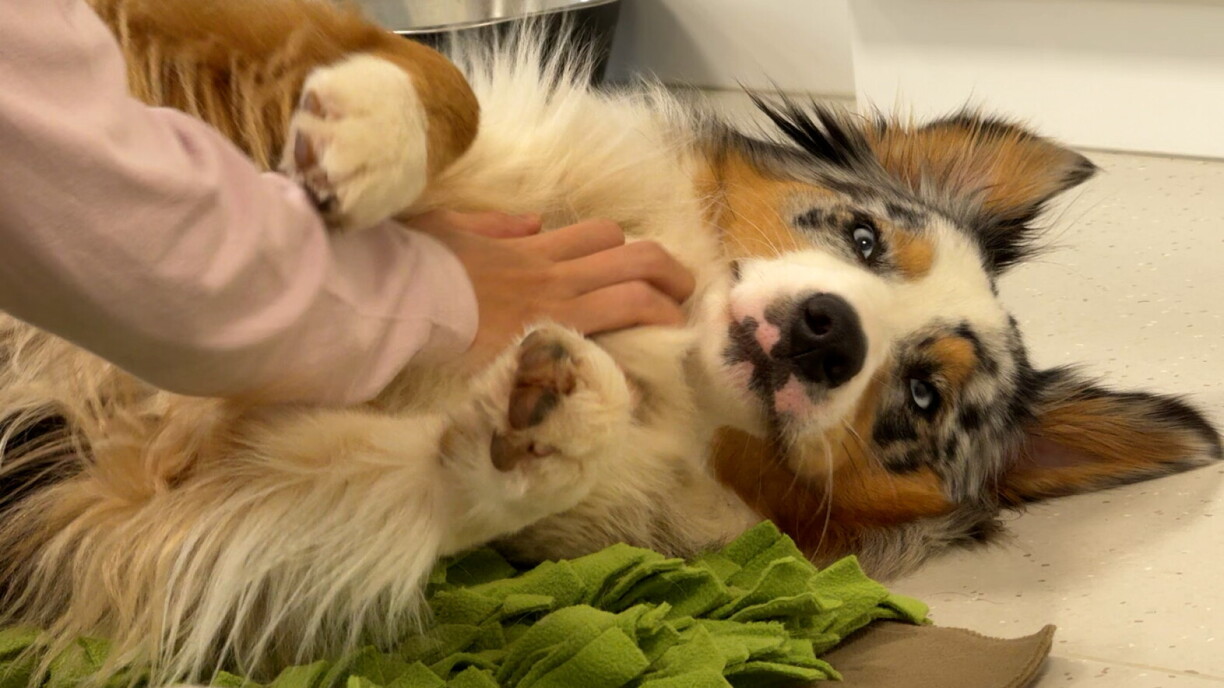
At the Centre Hospitalier de Luxembourg (CHL), animal-assisted therapy is offering an alternative approach to treating young patients in the child and adolescent psychiatry department. Every Monday, a group of children participates in sessions designed to use the presence of trained therapy dogs to facilitate psychological and emotional development.
The participating patients, aged five to 13, interact with three specific therapy dogs: Jo-Jo, a lively Australian Shepherd; Floke, an affectionate Goldendoodle; and Elfi, a calm Toy Australian Shepherd whose steady demeanour helps balance the group's energy. Once the initial greetings conclude and the animals settle, the structured session begins. The morning's activities include interactive games designed to help the children understand both the dogs' behaviours and their own emotional responses.
"They are asked to consider how to handle certain situations involving the dogs, and the emotions those situations evoke," explains Marjan Van Der Loo, a psychologist and animal-assisted therapy specialist. "But it is important not to make it frustrating for them," she stressed.


During the sessions, the dogs remain close to the children. The physical act of petting the animals provides a sense of calm and comfort, creating a safe environment that encourages the children to open up. This non-judgmental companionship is the core mechanism of animal-assisted therapy.
"Dogs never judge children. It doesn't matter where they come from, or if they find it harder to speak than others; the dog values the person within," Van Der Loo notes, adding that this brings children "a great deal of joy, confidence, and self-esteem."
Van Der Loo, who founded the animal-assisted therapy organisation Dogs4Success in 2015, has led these sessions at the CHL for several years. She brings a team of specially trained dogs to work with patients dealing with attachment issues, behavioural disorders, and, in some cases, suicidal ideation. The therapy is highly structured and strictly monitored. For instance, a child with a history of aggression toward animals was not be permitted to participate in the sessions.
By asking questions such as, "How could you help a dog if it struggles with a task?", the therapist helps children articulate the challenges they face in their own daily lives. The dog acts as a neutral intermediary, bridging the gap to deeper conversation while providing immediate emotional support.
"The sessions are both educational and psychological. We play games with the dogs and involve the children by asking them about what they observe. It has to remain fun," the psychologist explains.
The therapy dogs are specifically selected for their expressive nature. Their clear emotional displays allow the children to analyse and compare the animals' feelings with their own. "What I love about my dogs is how expressive they are. Jo-Jo was agitated at first, for example, and I showed the children that this was normal and that they shouldn't get upset. We show them ways to calm the dogs that they might also use themselves," Van Der Loo adds.
The programme is supervised by Dr Ghazi Dali, the child and adolescent psychiatrist leading the unit. While he did not originally implement the programme at the CHL, he is a strong advocate for its clinical benefits.
"Some children are closed off to certain types of therapy, but are more open when they work with a dog," Dr Dali observes. He attributes this success to the fact that the child is not interacting directly with another person, allowing them to self-regulate their behaviour and emotions in response to the animal.
When asked why such an effective programme is not universally available, Dr Dali notes that implementation depends on an institution's specific therapeutic framework. "I wouldn't say it's indispensable, but it is necessary. It varies depending on each institution's therapeutic approach. But I would strongly recommend it," he says. He also points out practical limitations, such as patients with a phobia of dogs, for whom the therapy would be counterproductive.
While the department offers other workshops, primarily art-based activities like drawing and clay modelling, Dr Dali emphasises the unique value of the animal-assisted sessions. "They bring something other than humans into the interaction," he notes.
As the session draws to a close, saying goodbye to the dogs is often the hardest part for the young patients. For one girl whose hospital discharge was imminent that day, a few final moments with Jo-Jo, Floke, and Elfi provided a comforting end to her treatment.