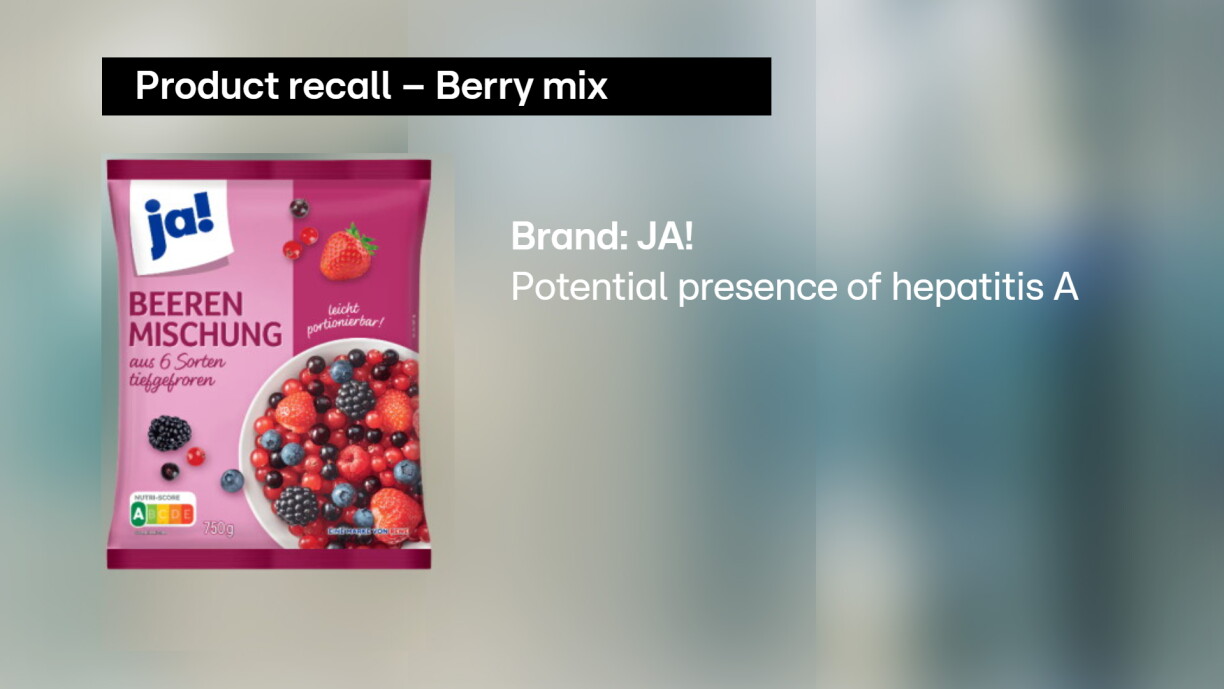
On Tuesday, the Luxembourg Veterinary and Food Administration (ALVA) announced a recall of a frozen fruit mix from the JA! brand. This raises questions about how hepatitis A virus can be detected in frozen fruit and what dangers this could present for consumers.
RTL contacted ALVA and received the following responses to our questions from Patrick Hau, Deputy Director of the Administration:
“Hepatitis A virus is a widespread pathogen that occurs in the digestive tract of infected individuals and can spread through faeces and wastewater.”
Food can become contaminated in two ways:
Symptoms of hepatitis A can range from mild to more severe. Possible symptoms include:
Symptoms usually appear 14 to 28 days after infection. In elderly or immunocompromised people, they can be more pronounced. Anyone who has consumed the product and develops symptoms should consult a doctor and mention their consumption of the product.
It cannot be ruled out, since the virus genome was detected in the product. This does not automatically mean infectious viral material is present, but it cannot be excluded.
No. ALVA currently has no information about specific cases of illness abroad or in Luxembourg that are linked to this product. The recall is a precautionary measure because the virus genome was detected.
Cooking is an effective hygiene measure, as the hepatitis A virus and other pathogens are inactivated by heat. For children, elderly people, or those with weakened immune systems, this can be a sensible preventive step.
When travelling to countries with less developed hygiene infrastructure, you should:
This principle is often summed up as: “Cook it, peel it, wash it or leave it.”
ALVA has also published a leaflet on this topic:


ALVA provides the public with a central, transparent, and up-to-date information platform at www.securite-alimentaire.lu. Here you can find all official recalls, warnings, notifications, as well as explanations of food safety risks. The information is updated immediately when new developments arise.
Additionally, the LU ALERT application allows consumers to receive rapid, proactive notifications about food recalls. The app is free and offers a direct alert function to quickly notify the public if a risk is identified.
Editor’s note: A vaccination against hepatitis A is available; for more information, consult your doctor or the Travel Clinic at CHL.





