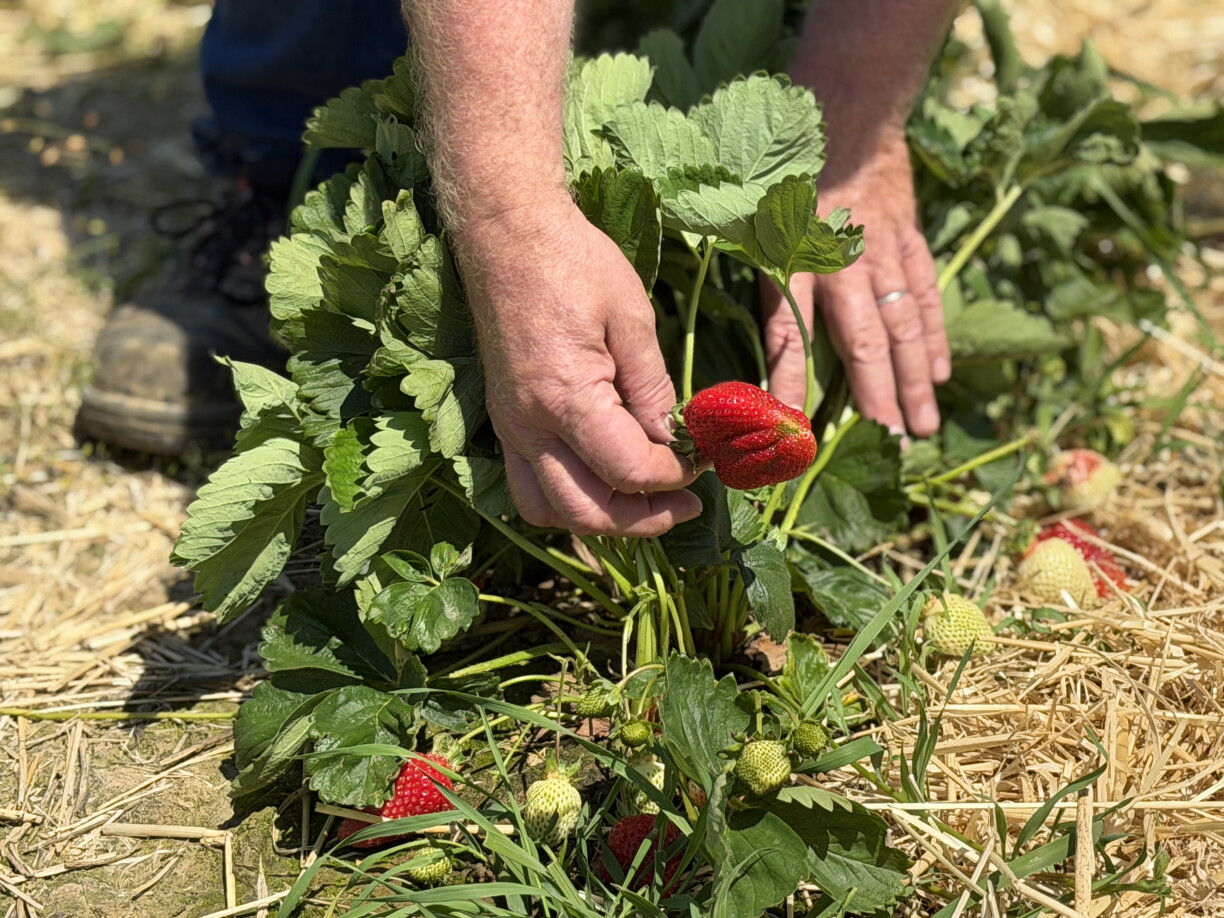
The sun and high temperatures are currently affecting not only the general population but also the agricultural sector.
Warm weather plays an important role in the growth of fruit and vegetable crops. However, excessive heat and sudden weather fluctuations can also be problematic. RTL spoke to a fruit and vegetable farmer about how the recent heatwave has affected his produce.
Jean-Claude Muller, a fruit and vegetable farmer from Contern, said that sun and high temperatures primarily have a positive influence on fruits and vegetables. He explained that some varieties cope better with heat than others, with certain crops even benefiting from sunny conditions. Salad, for instance, did not grow well during the colder period in early May but has since thrived, he said.
Muller also cited apples as an example, noting that they have just finished blooming and are now undergoing cell division. During this phase, he said, unsuitable temperatures would slow the process and prevent the apples from growing to full thickness.
In that sense, Muller described the current conditions as quite favourable, as long as temperatures do not exceed 35 to 36 degrees Celsius. He stressed that growth begins to stall around the 30-degree threshold.
For this reason, Muller also welcomed the forecast drop in temperatures on Friday night, stating that this would help ensure that the recent heat does not necessarily harm fruits and vegetables. However, warmer temperatures also increase the risk of thunderstorms.
According to Muller, frequent weather fluctuations are unwelcome in fruit and vegetable farming. While water is important, severe storms, particularly those with hail, tend to cause substantial damage, he noted.
Muller said he would prefer temperatures to simply drop slightly below 30 degrees, not only for his produce but also for his staff. He acknowledged that working outdoors all day in scorching heat is unpleasant and that precautions are necessary.
One such precaution is to start work in the fields earlier in the morning, when it is still cooler, before the heat arrives in the afternoon. The soil is relatively dusty and hard, making proper irrigation essential.
Muller explained that in terms of water management, it is important to work the soil – notably by using hoes – not only to remove weeds but also to open up the soil. This allows oxygen to enter and helps slow evaporation while mitigating capillary action, he said.
This ensures that water reaches the plants rather than evaporating, according to Muller. He added that irrigating compacted soil is like pouring water onto asphalt: the water simply disperses and evaporates.
For fruit and vegetable farmers, this means continuously adapting to the weather while hoping for the right balance between sun, rain, and heat. How the weather develops over the coming weeks will therefore be a decisive factor in the quality of this summer's harvest.





