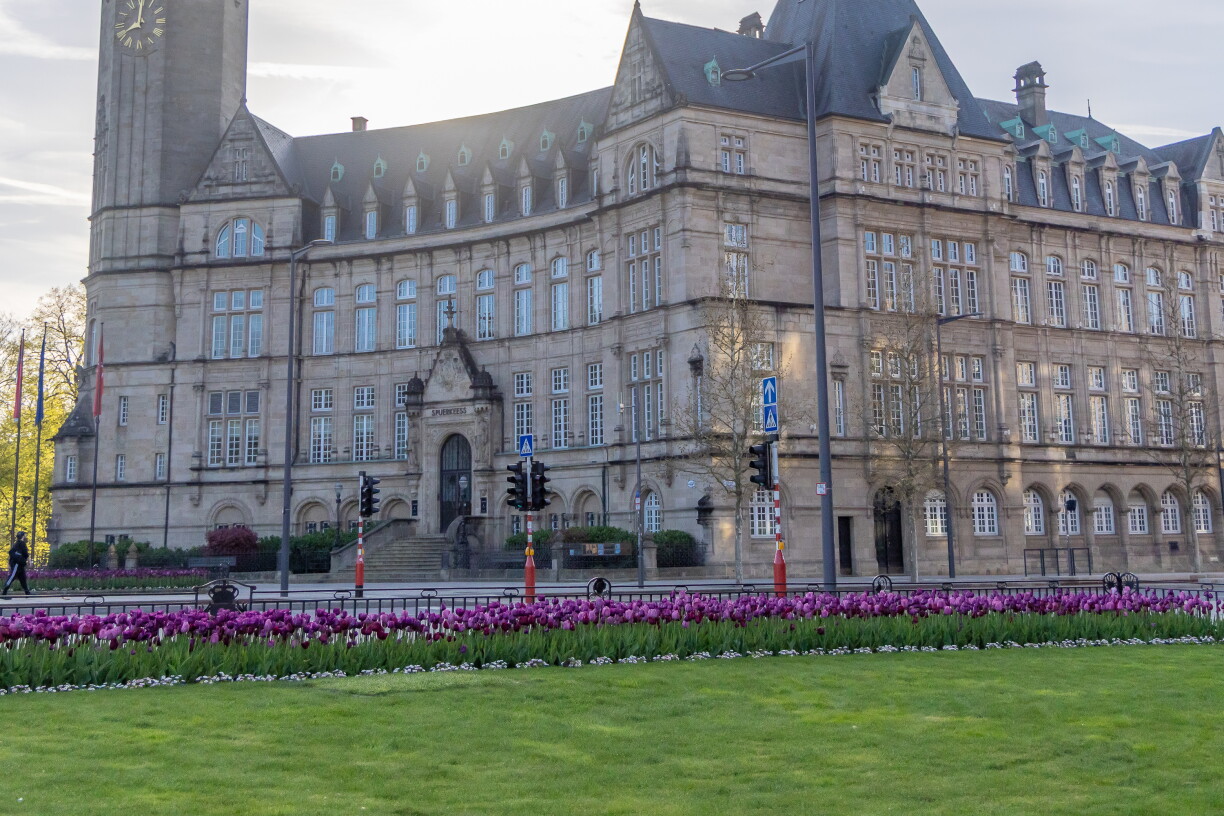
The government has rejected the accusation that it failed to back the International Criminal Court (ICC) sufficiently on the matter of the frozen Spuerkeess accounts.
Speaking to the relevant Chamber committee on Monday, Foreign Minister Xavier Bettel described the issue as an administrative one.
Last year, US President Donald Trump decided to impose sanctions on staff of the ICC in The Hague. The trigger was the arrest warrant issued against, among others, Israeli Prime Minister Netanyahu over the war in Gaza. The fallout, however, has reached European judicial soil. Twelve judges are now caught up in the sanctions and have been designated as "enemies of the United States." They can no longer travel to the US and, more worryingly, can no longer pay by credit card, since Mastercard and Visa are American, nor shop online through Amazon, Apple or Google, since American service providers and individuals are barred from doing business with them.
Spuerkeess then closed the ICC's accounts in Luxembourg in February 2025, fearing that it might otherwise lose its business in the US. Green (déi Gréng) MP Sam Tanson criticised the government for being slow off the mark, noting that the ICC had already raised its concerns in the summer of 2024.
Tanson said it took a full five months for the letter from the ICC, sent via Luxembourg's ambassador to the Netherlands, to reach the Foreign Minister and then the Finance Ministry. It then took another two months for the Finance Minister to reply to the Foreign Minister. To her, this showed that the priorities clearly did not lie with supporting the ICC. The file, she said, had been dragged out, and its importance had not been recognised, which is deeply regrettable.
Bettel said the government stood behind the ICC, but that the government does not interfere in a bank's operations, otherwise the government would be endangering itself to a different kind of problem.
For David Wagner of the Left (déi Lénk), however, this is not a routine banking matter. He argued that the ICC is not just any client but an institution, and that Luxembourg is bound, by its international obligations, to protect the court. He said this was precisely what the ICC had been asking, namely what the Luxembourg authorities intended to do with regard to their state-owned bank in order to guarantee a certain level of security.
Luxembourg Socialist Worker's Party (LSAP) MP Franz Fayot was also critical of the government. He spoke of a case of over-compliance, or overtly eager obedience, by a bank that is fully owned by the Luxembourgish state and which, he said, does not operate in a political vacuum. He argued that someone should have spoken to Spuerkeess and told them that closing the accounts was a bad idea. Luxembourg, he insisted, has an obligation to support the ICC, even against American sanctions.
That would matter all the more, Fayot added, for a small country like Luxembourg, which depends more than any other on respect for international law, on multilateralism, and on the proper functioning of institutions such as the ICC.
The two ICC accounts in The Hague had held some €17 million. The money has since been transferred to a Dutch bank, where the court evidently had no such qualms, as the Dutch government has been unambiguous in its support for the institution.





