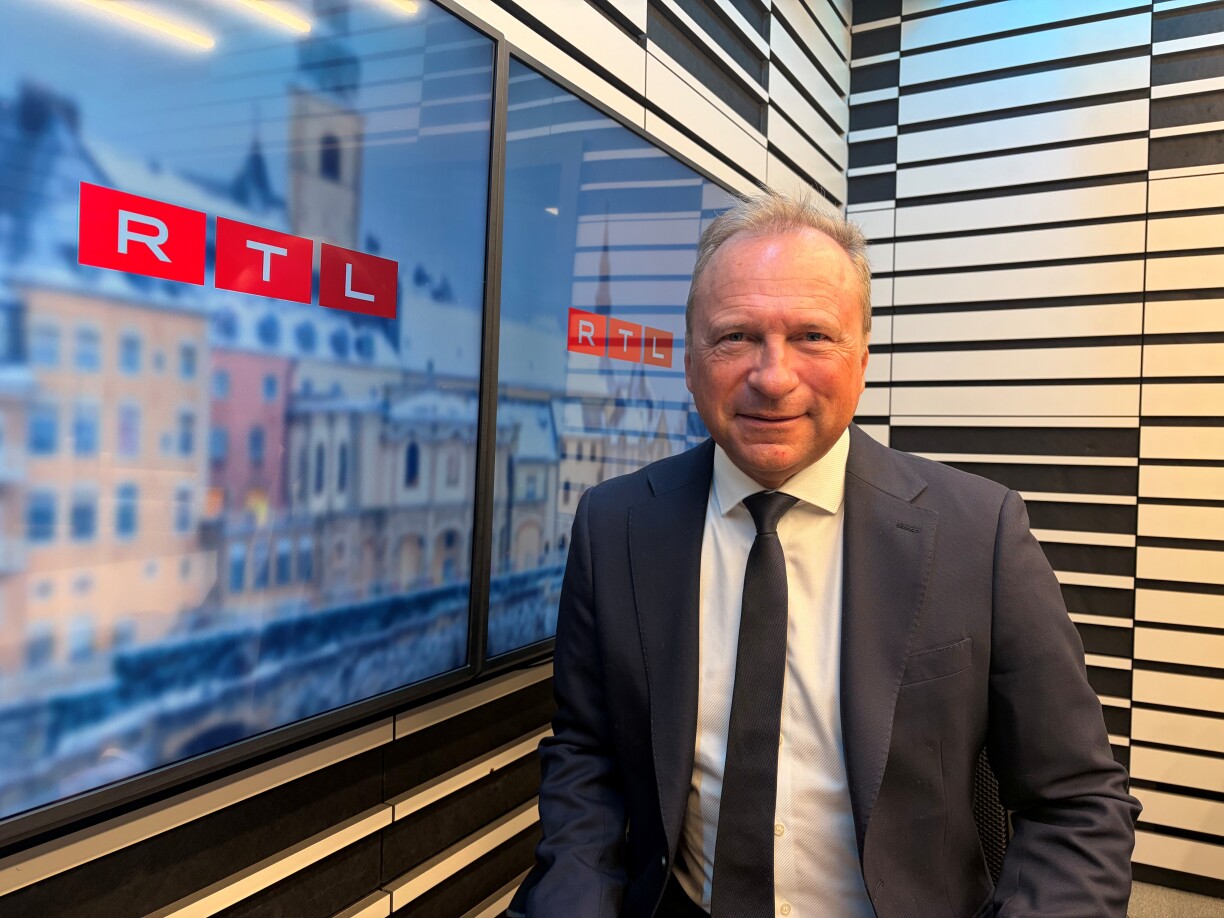
In a Wednesday morning interview with our colleagues from RTL Radio, Finance Minister Gilles Roth characterised the government's newly presented tax reform – which will introduce a single tax class – as a societal reform that "takes into account today's realities."
"The State will no longer meddle in citizens' personal situations, not even when it comes to taxes," Roth said of the reform, which is planned for 2028.
The minister emphasised the reform is a response to modern economic life, noting that 75% of couples are now dual-income households. "The State will support couples where both partners work," he stated, adding, "Work must pay off. That is why this tax reform aims to lighten the tax burden on working people."
A central feature of the current system is the tax advantage for married couples where one partner is the primary earner. Roth explained that Luxembourg's tax framework is based on a model from the 1960s, designed for a time when the single-earner family was the norm.
"The current system mainly benefits couples where one works and the other stays at home," the Finance Minister noted. He assured that the reform is designed not to disadvantage these couples. To that end, a 25-year transition period is planned to phase out tax class 2 in favour of the new single class U.
To further ensure no one loses out, Roth said he is open to removing the time limit for abolishing class 2 altogether. "I would not oppose an unlimited duration if a legal route is found," he stated, adding he would welcome such a measure. He acknowledged, however, that its legal feasibility must first be examined.
The finance minister confirmed the reform carries a substantial annual price tag of approximately €850 million, which will not be fully offset by other measures. "I can't pull that off," Roth admitted. He defended the expenditure as a necessary and courageous political decision.
"This tax reform has been considered for a long time. The last three governments had it in their manifestos. […] In that sense, we are delivering," said Roth. "It comes at a cost, but it's not as if we're throwing money out the window. We are investing this money in citizens' purchasing power and in social cohesion. We are supporting people who work," the minister stated.
Finance Minister Roth also addressed the government's decision not to raise the top tax rate, a departure from his previous position. In 2022, while in opposition, Roth had spoken in favour of a higher rate.
Today, he stated, "I am a minister in a government and I must respect the government's programme." He clarified that the coalition agreement explicitly ruled out changes to the top tax rate. Consequently, Roth explained, his personal views have yielded to what he termed "reasons of government."
Read Also:
End of distinction between singles and couples: Government unveils transition to single tax scale





