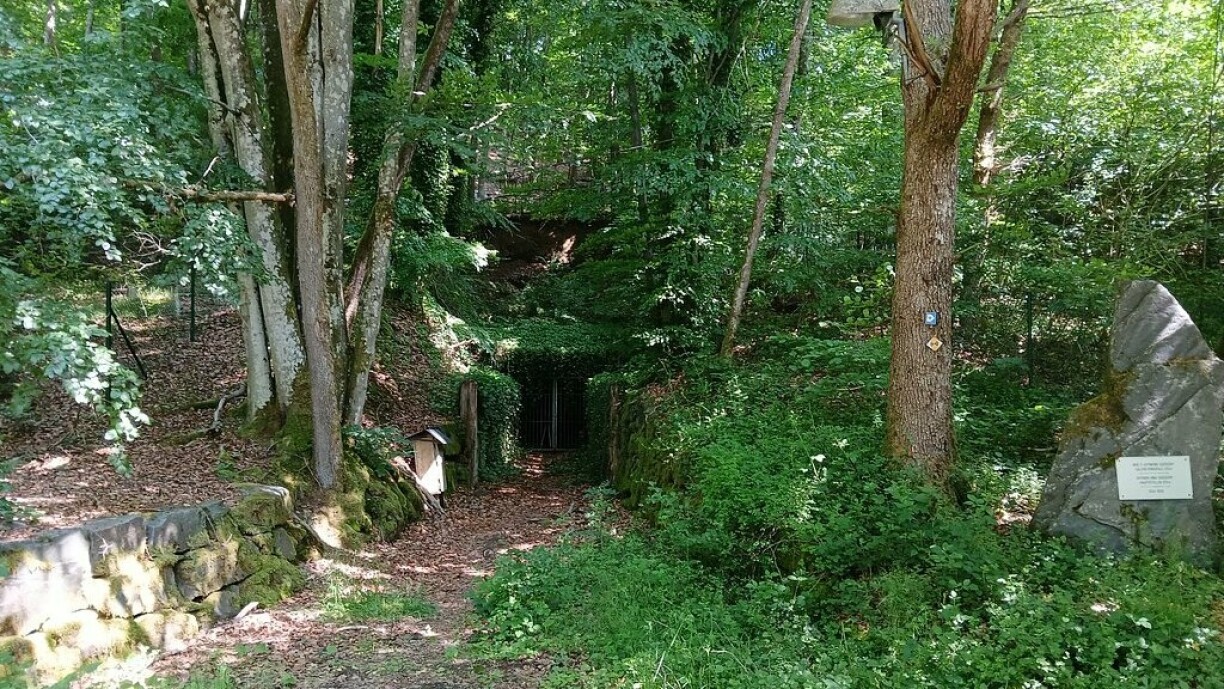
As global powers scramble to secure rare minerals, Luxembourg's dormant antimony mine in Goesdorf could soon gain renewed strategic relevance. The mine is among several European sites under consideration as the EU enforces new rules to reduce dependence on foreign sources of critical raw materials.
The European Union's Critical Raw Materials Act, adopted last year, mandates that a minimum share of strategic materials must be sourced from within Europe. Antimony – a flame-retardant element used in plastics and batteries – is on that list.
And Goesdorf is one of the few known locations in Luxembourg where antimony is found.
"Antimony is found in every car on the road", explains Simon Philippo, geology and mineralogy curator at Luxembourg's National Museum of Natural History. "It's used in the plastic components as a flame retardant. In the event of a fire, it slows down how quickly plastic burns; it's essentially a fire inhibitor. Thousands of tonnes are used globally. Just think about how many cars are out there and how much plastic is in each one – it's massive."
Despite this potential, officials caution that mining operations in Goesdorf remain a distant prospect.
"There's a whole series of steps to be taken and we're still a long way off", said one expert. "Before any site can be exploited, we first need to understand exactly what resources are present, particularly how many tonnes of antimony could realistically be extracted".
Authorities thus need to conduct economic studies, environmental assessments, and resource evaluations – a first at the site in question. Initial steps would involve test drilling to determine the feasibility of extraction – a process likened to searching for a needle in a haystack.
Still, other locations across Luxembourg are being assessed for strategic mineral potential. One promising avenue includes the possible extraction of lithium from geothermal water, though experts stress that such prospects remain speculative.


The renewed focus on Europe's mineral resources follows a broader shift in global geopolitics.
Since Donald Trump returned to the US presidency, international dynamics have grown more complex. The US has made access to rare earth elements a condition for continued military support to Ukraine, and tensions over Greenland also involve competition for mineral reserves.
Luxembourg's contribution to Europe's mineral autonomy is modest but historically rich. The Goesdorf mine – known as Géisdref in Luxembourgish – has a mining legacy that dates back to at least 1354. The name itself likely stems from the German word for casting or pouring, pointing to its industrial past.
The site remained active for centuries before being deliberately destroyed by locals in 1938 to prevent its use by German occupiers. Today, around 100 different mineral types are known to exist in Luxembourg, and more than 50 have been identified at the Goesdorf site.
The mine is also part of the inter-regional project 'Sous nos pieds' ('Under our feet'), an initiative involving the Upper Sûre and Mullerthal nature parks. The project aims to raise awareness of the region's geological and industrial heritage and promote its preservation.
As part of this effort, the municipality of Goesdorf is expected to join the Upper Sûre nature park in the near future.
The situation highlights how little is known about Europe's deep underground structures, especially layers beyond 100 metres below the surface. Yet understanding these subsurface flows is increasingly vital – not only for resource extraction but also for monitoring environmental impacts and managing pollution.





