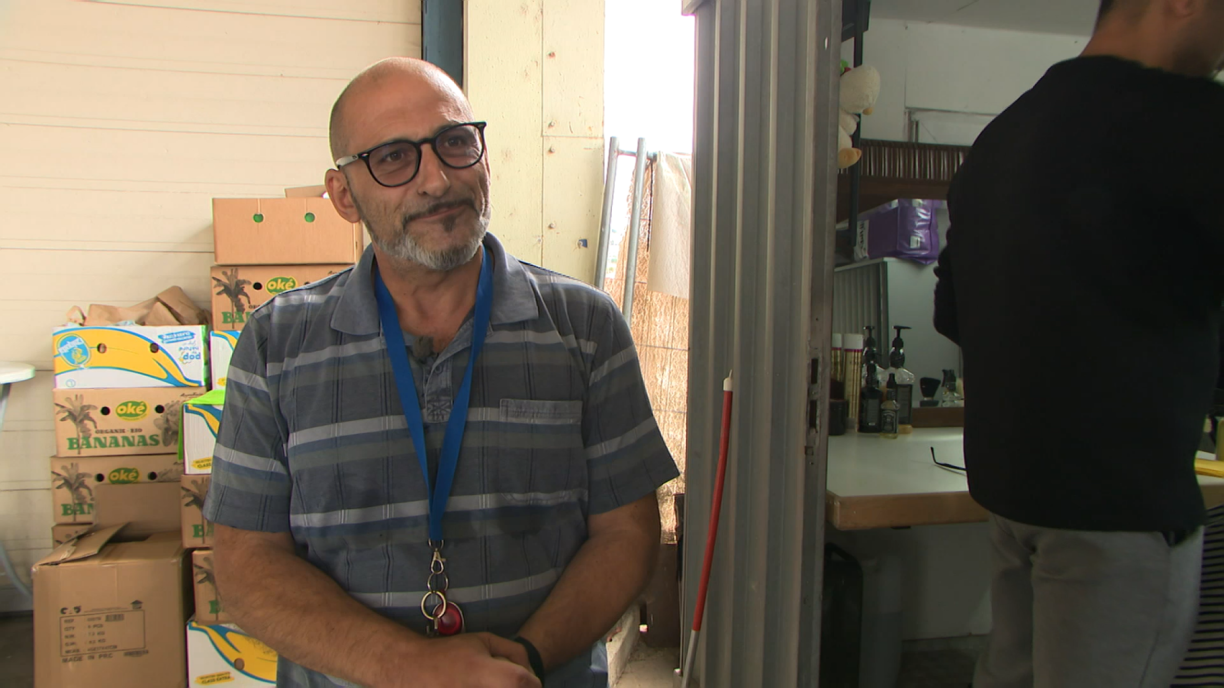
Franco Settanni, explains that he inherited his actual first name, Francesco, from his grandfather, but he'd much rather go by Franco. "Francesco was the old one. Franco is the new one," says the Italian-born Luxembourg resident.
By "the old one" he doesn't mean his grandfather, but rather his former self he has since left behind. As a young man, Settanni lived on the streets, severely addicted to drugs, weighing just 40kg, and dependent on a wheelchair. Mentally, he says, he was "completely gone". Eventually, surviving on the streets became impossible.
At just the right moment, Settanni met someone who would change his life: a priest who offered him support. "I needed a helping hand. I could not have done it alone", Settanni recalls. This assistance allowed him to accept the help he needed to begin recovery.
Therapy in Italy followed, but the greatest challenge, Settanni says, was returning to society after treatment. "I always wanted to be honest, but I noticed that people immediately kept their distance. That was tough." Even after coming back to Luxembourg, the police were waiting at his door. He quickly realised that in official documents, he was still labelled a "drug addict", never an "ex-drug addict". The stigma, he explains, does not vanish just because someone has completed therapy. It was a difficult period.
Today, charity Stëmm vun der Strooss operates the Post-therapeutic Centre in Schoenfels, a place crucial to supporting people as they transition from therapy back into everyday life. The centre provides a safe environment for those who need protection and guidance as they re-enter society.
Settanni found his way back, in part through his work as a volunteer in the social sector. Grateful for the help he once received, he wanted to give back to others in need. He trained and got qualified to work professionally in this field, starting with support services for people with addictions. He accompanied residents at the Schoenfels centre, and helped those struggling with addiction to access therapy in Italy. Settanni knows first-hand the challenges of rebuilding one's life after addiction – especially in a society that judges and stigmatises former drug users. He has also helped others build new networks and find fresh environments after therapy.
Over time, Settanni admits, the work in drug support became disheartening. Seeing people relapse despite significant effort was difficult to accept. He is also sceptical about the current system, which allows people with addictions to receive the Social Inclusion Income (REVIS) under certain conditions. Through his work, Settanni has seen how essential it is that people have opportunities to engage in meaningful activities, helping them feel valued. This, he believes, is true not just for those with addiction, but for everyone in the social sector.
At Stëmm vun der Strooss, he can put these ideas into practice. For example, he initiated a free hairdressing service: a Syrian hairdresser currently offers his services there while awaiting the recognition of his diploma, which would allow him to find a job on the regular labour market. Projects like these, sometimes unconventional, are what Settanni and his team in the north of Luxembourg aim to develop.
Settanni has now worked for Stëmm vun der Strooss for six years. In Esch, just before the pandemic, he helped set up the social restaurant. Services in the north also needed expanding, prompting him to return to Ettelbruck a year and a half ago – back to the train station, a place closely associated with his former life on the streets. Before the restaurant opened, the charity distributed bread rolls and soup at the station, but demand quickly outgrew supply. When the owner of a small kebab shop retired, he handed his premises over to the organisation. The restaurant now has just 19 seats, and people must finish their meals within ten minutes so that the next guests can have their warm lunch.
Although Settanni runs the restaurant with great dedication, he says that food is just one way of helping. With larger premises, it would be possible to hire a social worker to address people’s underlying problems, and to have time to talk to clients at the table – without having to ask them to eat quickly and make way for others.
Settanni approaches his work with passion and a strong sense of idealism. He helps people, but says that people also help him in return. His life is very different now, and his work in the social sector remains a vital part of it. "I used to be an empty bottle. [...] Now I have my wife and children. I have built a family." Today, he knows exactly what he wants and is happy each day to do what he does. Franco Settanni has now been drug-free for 30 years.





