
Some debates are harder to navigate than others, and pension reform is a prime example. Started in October 2024 and still unresolved as of early June, the conversation has exposed sharp divisions over the future of Luxembourg’s pension system.
With projections showing a chronic deficit starting in 2026, proposed solutions for restoring long-term sustainability are numerous, and often conflicting. Below is an overview of the key issues that warrant a closer look.
Given how unpopular pension reform has become, it’s perhaps no surprise that the government has grown reluctant to re-open direct consultations. But if there’s one question worth revisiting, it’s how citizens envision their own professional futures.
The recent public debate was meant to serve as a broad consultation on this issue. Yet its open-ended format made it difficult for many to follow, and ultimately left citizens more confused than informed. Unlike Switzerland, Luxembourg lacks a robust framework for public referendums or direct-choice mechanisms. But that shouldn’t stop the government from going a step further: offering citizens a clear set of options to consider and choose from.
At the very least, this would help demystify a highly technical reform with serious long-term consequences for hundreds of thousands of workers. And since the pension system must be funded, it’s not unreasonable to ask those most affected how they would prefer to carry on.
Should it be through longer working lives, beyond 40 years as the government has proposed? Through higher monthly contributions, as trade unions suggest? Through a compromise between the two? Or perhaps through alternative funding sources altogether?
According to projections from the General Inspectorate of Social Security (IGSS), the number of pensioners in Luxembourg is set to more than double: from 225,000 in 2024 to over 507,000 by 2050. In contrast, the working population is expected to grow by just 50,000, reaching 661,000.
Mathematically, this means pension expenditure will outpace revenue growth. The current system, based on a pay-as-you-go model, depends on today's workers financing today’s retirees, not saving for their own pensions.

To preserve this principle, the government has proposed lengthening working years to help sustain monthly pension payouts. But it has refused to ask current pensioners to contribute more, effectively placing the burden on future generations. This position is becoming increasingly difficult to defend as demographic pressure builds.
So why not ask pensioners to share part of the load?
Yes, today’s retirees spent their careers contributing to the pensions of those who came before them. But as their numbers swell, and with younger workers facing careers stretched to 45 years, it may be time to reassess. One option would be a modest, progressive contribution from pensioners themselves: one that exempts smaller pensions but applies to the more comfortable ones.
The idea is gaining quiet traction. The Christian Social People's Party (CSV), for instance, has asked the IGSS to evaluate how much revenue a 1% contribution on pensions could generate. Alone, the measure won’t resolve the system’s imbalances. But it could help share the load more fairly and reduce the disproportionate pressure placed on today’s, and tomorrow’s, workforce.
Could this new system help support Luxembourg's demographic trajectory? As previously mentioned, the number of pensioners is set to increase faster than the number of workers, so the funding necessary to pay out pensions must be found elsewhere.
The IGSS's forecasts show that even if the contribution percentage was increased to 33% from 24% as it currently stands, the system will fail to support itself within around two decades. Even the highly contested lifting of the contribution cap without a pension increase would not be enough to balance the books.
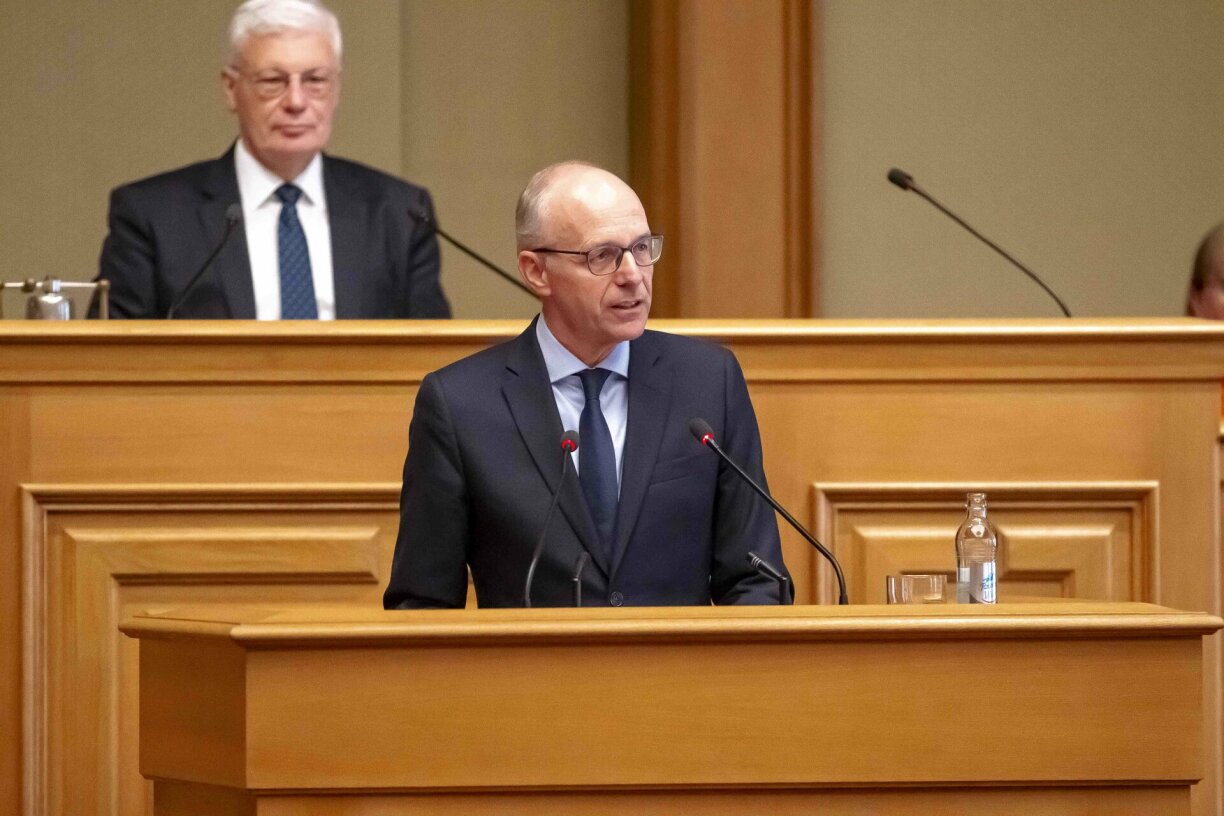
Prime Minister Luc Frieden himself has outlined the possibility of using part of the revenue from the CO2 tax, resulting in incomprehension among some of his fellow politicians. The Greens put forward the option of "taxing capital", while the Pirates briefly suggested a "robot tax", with no greater success.
It is worth mentioning the principle, in no small part because working years cannot simply be extended indefinitely; nor can contributions, for that matter, as employers want to maintain these at their current level.
Luxembourg has been able to rely on its economy and demographics to keep the system going so far, but will it really be able to rely solely on work to make it last? Doubts are beginning to creep in.

Today, the operating costs of the National Pension Insurance Fund (CNAP) are paid by workers' contributions. The expenses for its civil servants could however be covered by the State's accounts.
According to the latest IGSS report on the pension debate, the measure would have only a very limited impact on spending and it would not change the need for reform. But it would have the merit of being symbolic and of showing that the State is ready to take on this funding instead of relying on contributions.





