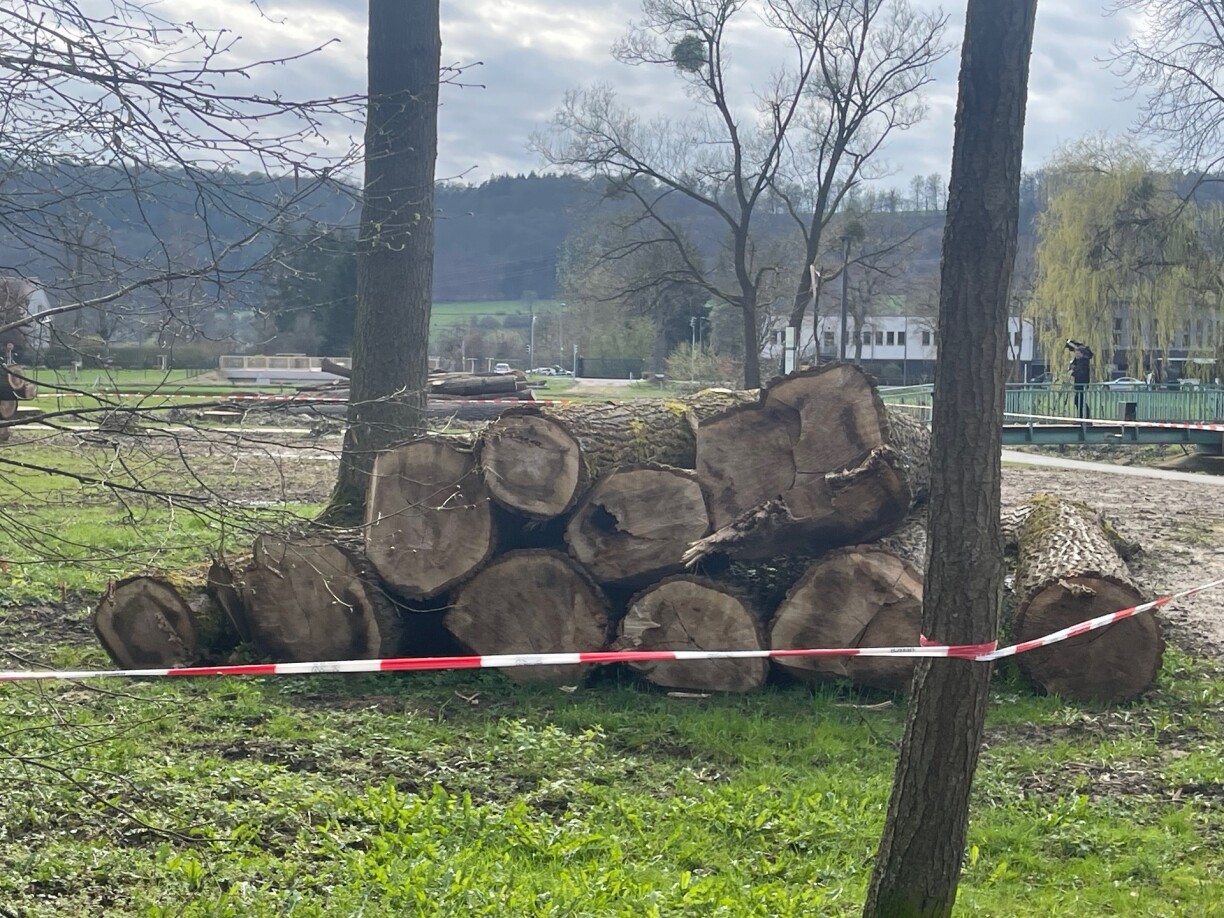
However, experts argue that this happens at the expense of the environment in the first stages, as a number of trees fall victim to deforestation.
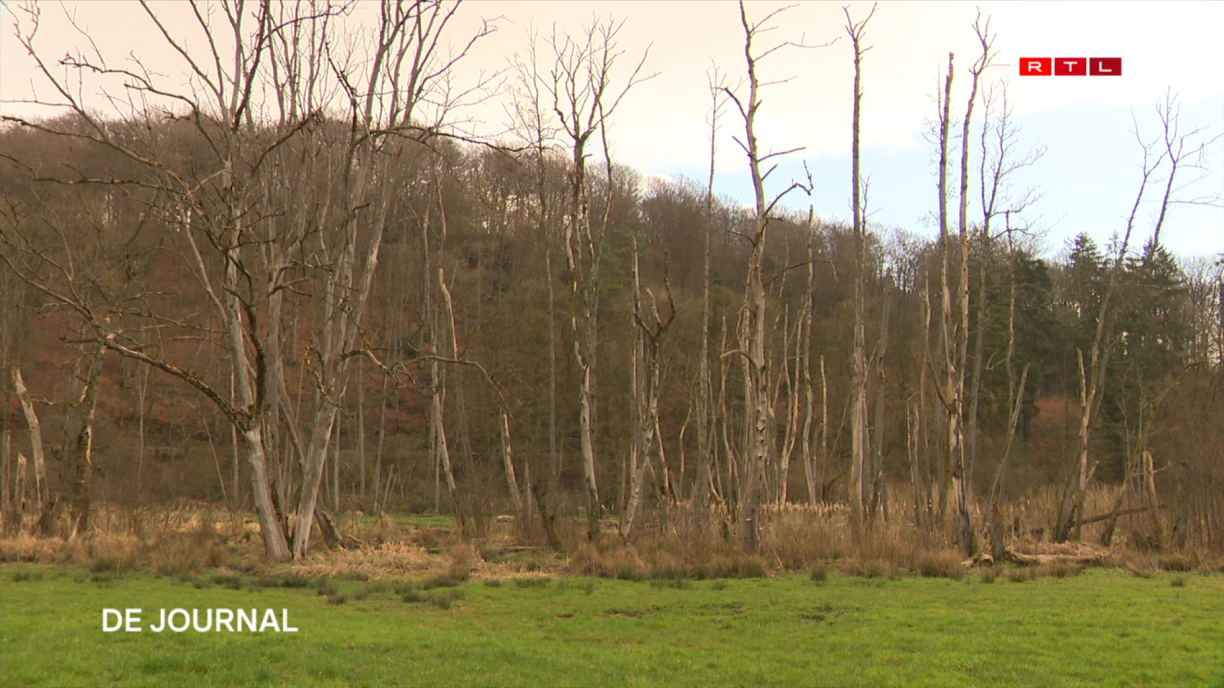
You'll find shocking images, as recently captured in Mersch, where 80-year-old trees were chopped down, or next to the White Ernz, where groups of dead trees were stretched over kilometres.
The aim is to move the current streams out of their concrete beds, and curve and widen them again. In slowly creating habitats in these biotopes, we can combat flooding and support the climate in regulating itself.
In Luxembourg, state administrations are cooperating with private companies to develop integrated concepts and not only renaturalise selected areas, but also to consider the most urgent zones.
In the interests of biodiversity, this is not only important for flood protection, but also for combating periods of drought. As such, there are no arguments against procedure, provided that there is a concrete plan. However, when you see these miserable examples of valuable trees disappearing without much consideration, questions start to arise, for which the Ministry of the Environment is yet to provide an answer.