When we are young, we lay the 'foundation stone' for our lives in our later years, says Dr. Anna Kurnadt, a professor at the University of Luxembourg. As a psychologist leading the Department of Behavioural and Cognitive Sciences, one of her research topics focuses on age-based discrimination in intergenerational dialogues.
“First of all, this means that we should or must fully utilise the potential of those individuals. It involves assessing their capabilities and exploring how they can contribute to our society. It is crucial not to sideline everyone over 60 outright but rather to consider their experiences and how they can be valuable across various sectors. Equally significant is fostering intergenerational dialogue, in other words, analysing how the needs, aspirations, and objectives of the younger population can be combined with those of the older population.”
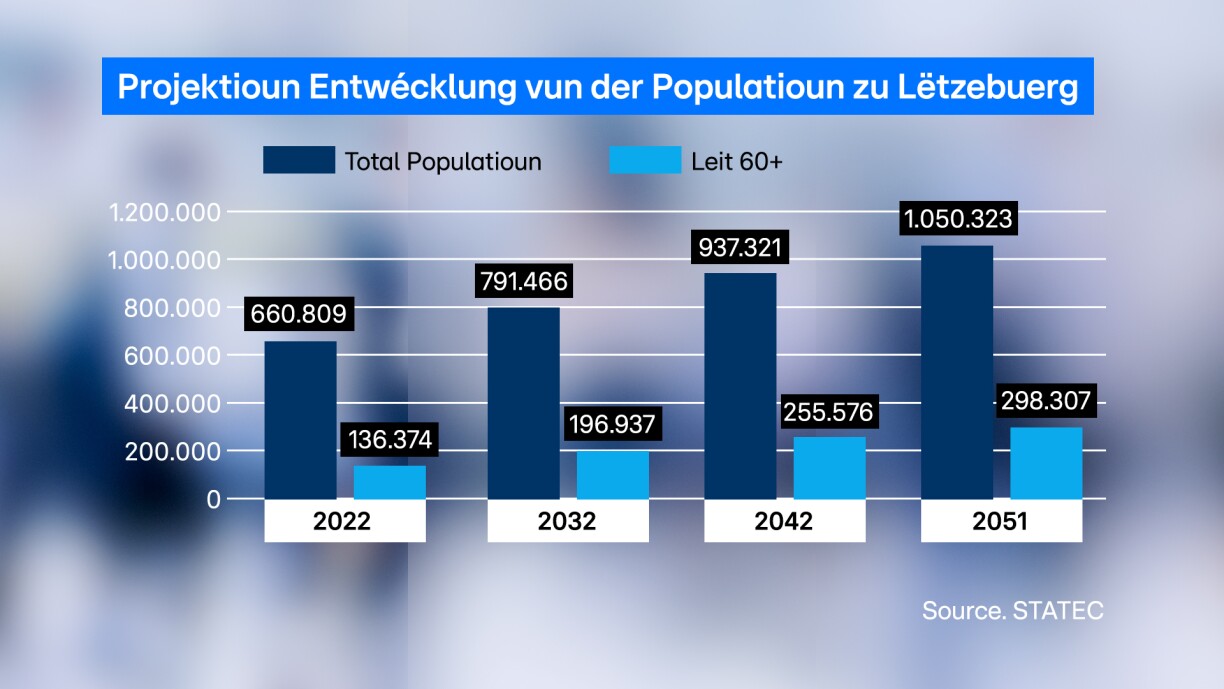
Statec has compiled a report based on a macroeconomic demographic forecast extending up to 2051. The report indicates that while our population is expected to grow, so will the percentage of individuals aged over 60. As of 31 December 2022, the population was reported to be 660,809, with 20.6% comprising individuals over 60, totalling 136,374 people. Looking ahead to 2042, Statec predicts a population increase to 937,321, with 27.3% (255,576 individuals) over 60, and 60,342 predicted to be over 80.
We spoke about 'age' to two individuals who are set to celebrate their 80th birthdays next year.
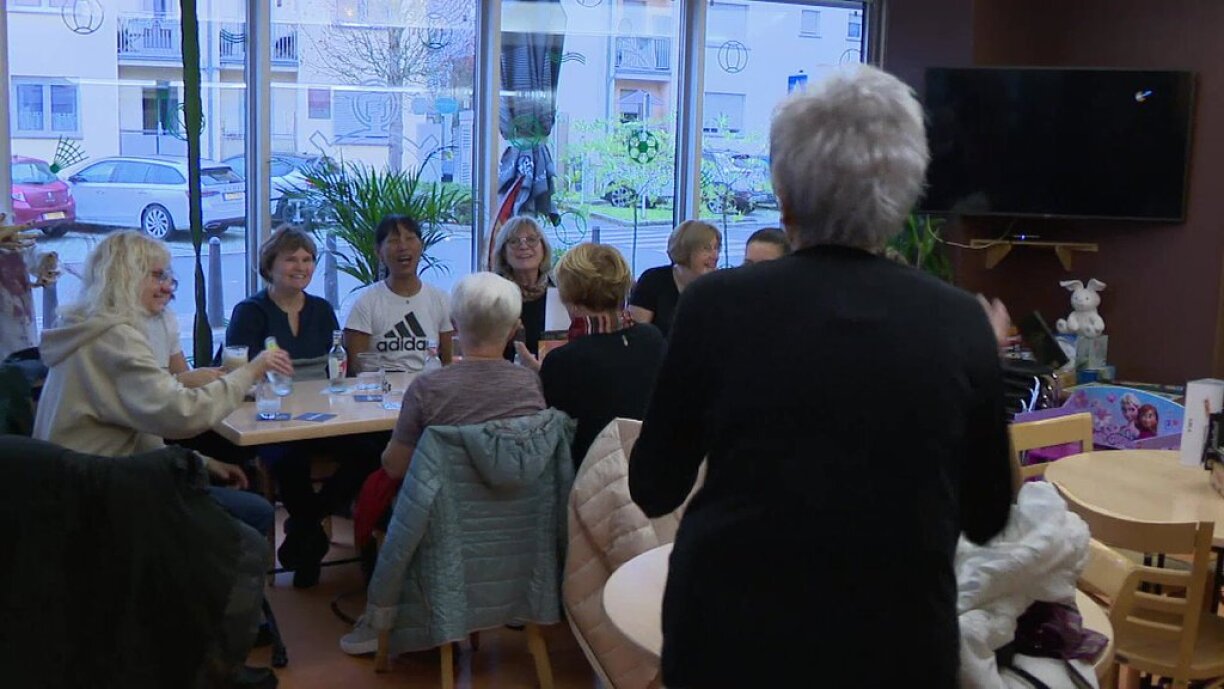
Former gymnastics teacher Idette Cattivelli has led an active life, working for the Le Travail Schifflange athletics club, among many others. Although she planned to give up teaching when she quit the world of work, she was asked to give classes to the over-50s just six months into her retirement. Now, and for the past 19 years, Idette has held gymnastics classes aimed at older people at the "Beim Kiosk" clubhouse in Schifflange.
"This keeps me young," she says. "It's not just sport on its own, but everything associated with it."
For Tony Tintinger, a former star chef, retirement also did not represent the end of his passion. After retiring from the Restaurant Clairefontaine, he continued to work as a gastronomy consultant until the age of 75, helping to plan and open new restaurants. When the pandemic hit, he turned to woodworking, and now produces unique pepper and nutmeg mills from reclaimed furniture in his studio. Tintinger has maintained his entrepreneurial spirit, selling his pieces in four stores across the country, as well as a stand at the Niederanven Christmas market.
He sees many positives in old age: "You're wiser, you become more comfortable and quiet, you learn to take joy in more things. Another positive for me is you eat less, you need less. Today, I'm very satisfied with regular home cooking, I don't feel the need to seek out very elaborate meals. Instead I enjoy simple yet well-made cooking, which I often cook for myself."
Video report in Luxembourgish:





