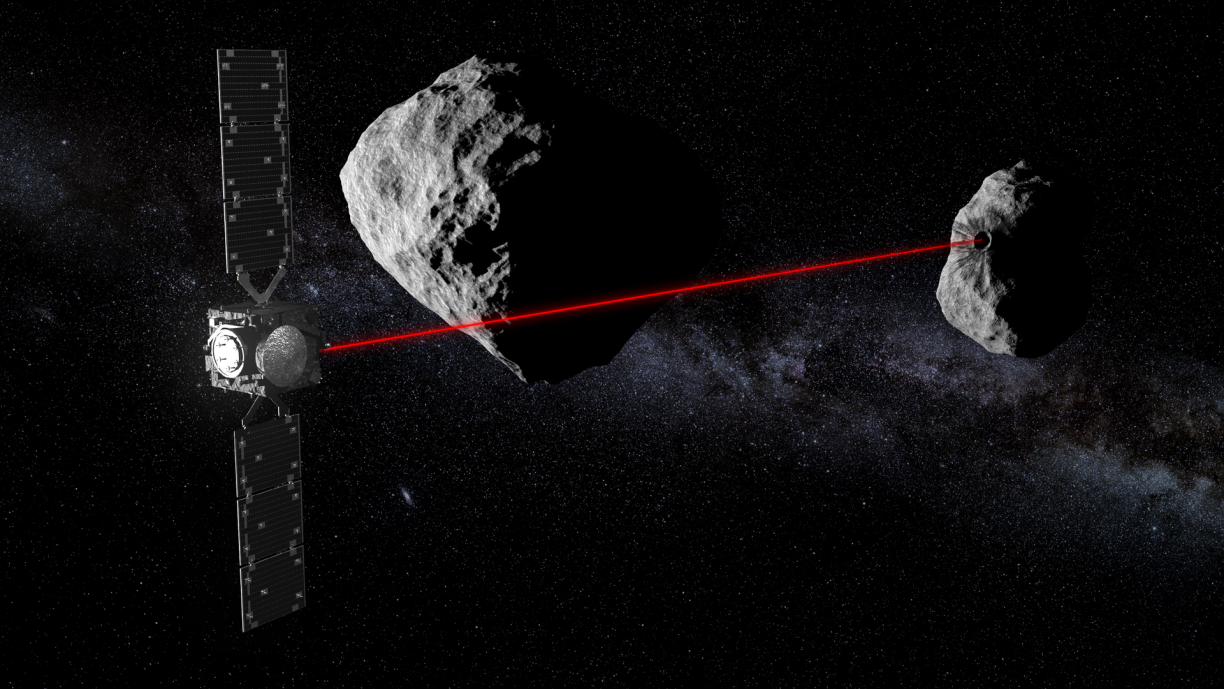
On Monday evening, the European Space Agency (ESA) launched the Hera mission, a pioneering project aimed at enhancing Earth's planetary defence capabilities.
What might sound like science fiction–a mission to prevent an asteroid from colliding with Earth–has been the focus of years of research by ESA and NASA. Both agencies have invested significant resources into developing technology to counter potential asteroid threats.
Hera was launched aboard a SpaceX rocket on Monday, following years of preparation. The probe's primary purpose is to study the impact effects of NASA's DART mission on the asteroid Dimorphos. On 26 September 2022, NASA attempted to alter the asteroid's orbit through a deliberate collision, marking the first time that humanity tested this deflection technique.
The Hera mission aims to conduct a comprehensive analysis of the asteroid Dimorphos. It will also explore the potential of new technologies, such as autonomous navigation around an asteroid and operations in low-gravity conditions.
The mission's main goal is to assess whether the asteroid's trajectory was successfully altered and to evaluate how similar strategies could be employed in the future if planetary defence measures are required. The probe is expected to reach its destination in approximately two years, with the mission set to officially commence in December 2026.
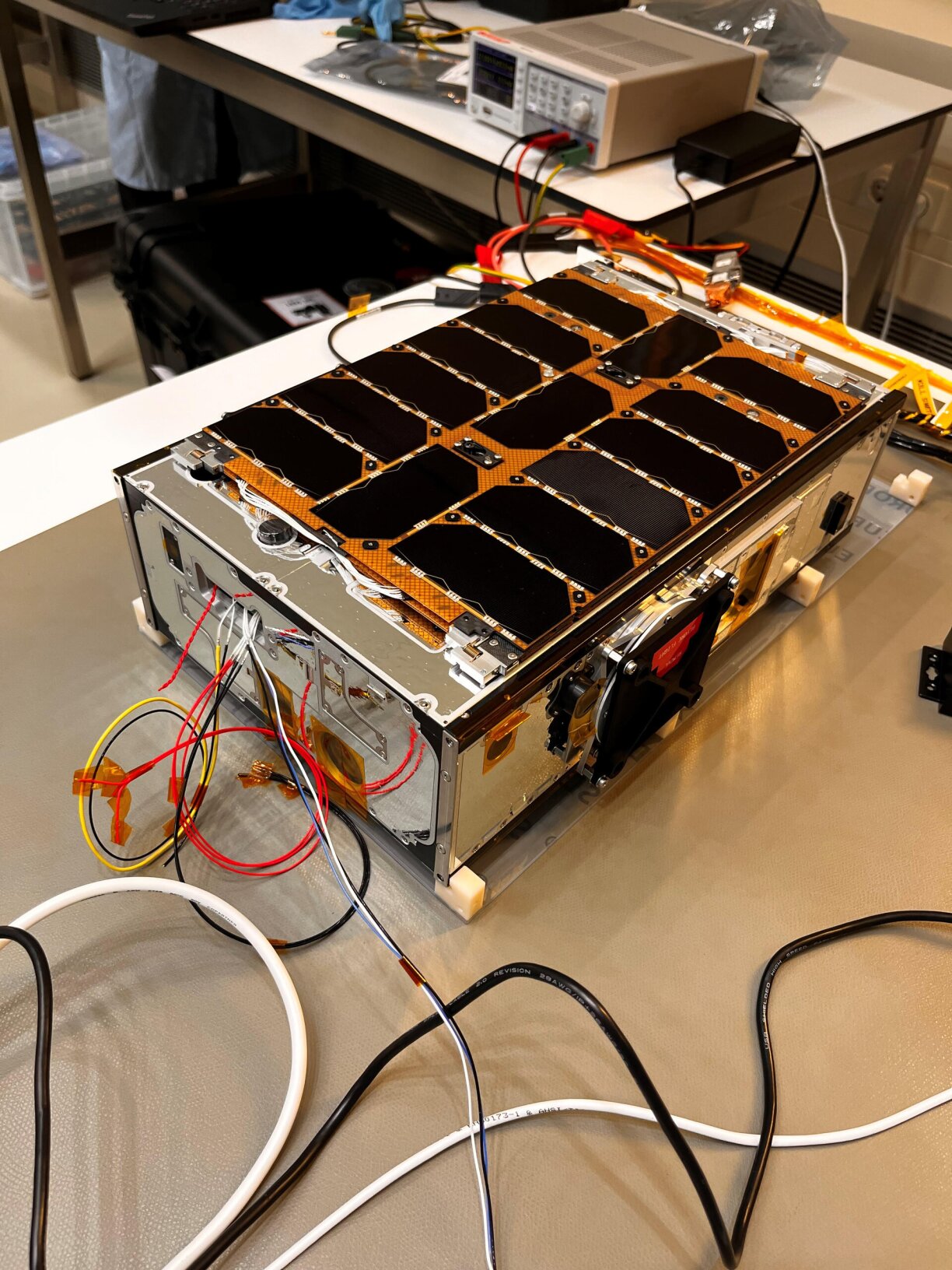
The Hera spacecraft includes two CubeSats designed to gather additional scientific data and support the mission's objectives. One of these, known as the Juventas CubeSat, measures 37 x 23 x 10 centimetres and was developed with contributions from Luxembourg.
The Luxembourg company GomSpace was contracted by ESA to oversee the development of Juventas. The company specialises in CubeSats. The spacecraft integration took place at GomSpace's headquarters in Denmark.
The name Juventas was inspired by Roman mythology, where she is depicted as the daughter of Hera. Juventas houses the smallest radar system currently in space, developed through a collaboration between the Grenoble Institute of Planetology and Astrophysics, the University of Grenoble Alpes, and the Technical University of Dresden. The electronic components were provided by the Luxembourg company EmTroniX.
Hera probe: Mission to probe smashed asteroid launches despite hurricane





