Negotiations over the future salary agreement for Luxembourg's civil service are underway, with the General Confederation of the Civil Service (CGFP) seeking a pay rise of over 8% across two years, according to information obtained by RTL.
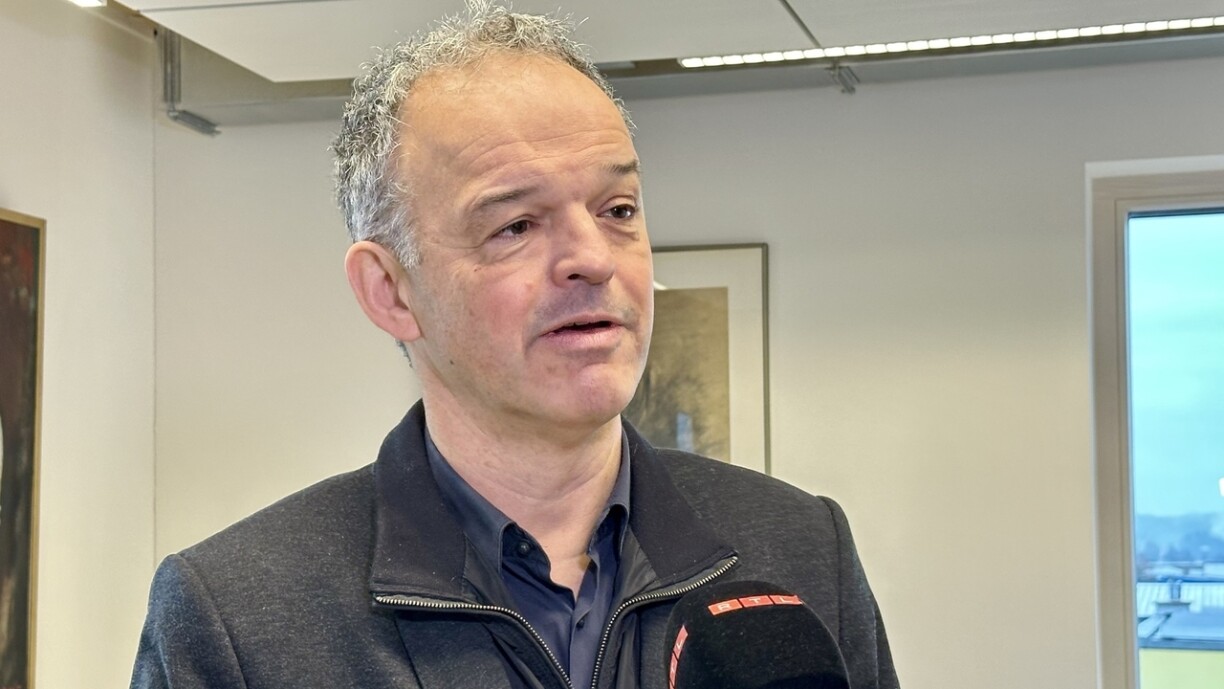
Michel Reckinger, President of the Luxembourg Employers' Association (UEL), expressed surprise at the demand, calling it "somewhat out of touch with the present day." He argued that the CGFP's proposal fails to align with Luxembourg's current economic realities.
Reckinger pointed to several concerning economic indicators, including a stagnating GDP growth rate of just 0.5%, declining business productivity, and dwindling pension and sickness funds. Romain Schmit, Director of the Federation of Craftspeople, echoed these concerns, with both him and Reckinger emphasising that wage indexations already compensate for inflation.
"Where are the productivity gains that would justify such a wage increase? We don't see them – certainly not from the government," Reckinger stated. He criticised what he described as a growing trend of ministers demanding additional civil service staff without addressing the need to boost government productivity. Schmit added that Luxembourg may need to consider reducing government departments and staff to improve efficiency.
Both Reckinger and Schmit also pointed out the rollback of measures designed to align the private and public sectors, such as individual performance assessments and the 80-80-90 rule. These measures had previously sought to bridge gaps between the two sectors but have since been abandoned, they noted.
A significant increase in civil service salaries would create additional challenges for private sector employers, critics argue. Private sector employees, seeing the improved conditions and higher wages in the public sector, would likely demand similar benefits. However, many private companies simply cannot afford to match these terms.
Reckinger warned that "adding yet another layer will be detrimental to the entire private sector, whether it's about attracting new employees or retaining existing ones." Schmit echoed this concern, emphasising that all sectors – industry, commerce, and even the financial sector – are struggling. "Sorry, this is no longer normal. The world has turned upside down in Luxembourg," Schmit remarked.
Schmit also noted that the state already offers some of the highest salaries across all sectors, coupled with the guarantee of lifelong employment. "And then the others, who are not part of the club, will have to work even harder to generate more tax revenue to fund these increases," he added. He urged the CGFP to approach the negotiations with a sense of proportion, pointing out that it is the private sector, not the state, that generates capital gains. These profits are then redistributed through taxes to finance public spending.
Neither Romain Wolff, President of the CGFP, nor Serge Wilmes, Minister for the Civil Service, have responded to the criticisms raised by Reckinger and Schmit. It is worth noting that the demand for an 8% salary increase is just one of the CGFP's proposals, and unions often begin negotiations with ambitious demands.
Nonetheless, the potential financial impact is significant. Estimates suggest that every 1% increase in point value would cost the state an additional €40 to €50 million annually.
The Luxembourg Confederation of Christian Trade Unions (LCGB) and the Independent Luxembourg Trade Union Confederation (OGBL) declined to respond to the CGFP's demands at this stage. Frédéric Krier, responsible for the civil service at the OGBL, pointed out that the OGBL's demands were not respected and the union is not involved in the negotiations – for this reason, the OGBL does not have any further information. The union representative highlighted some of the OGBL's main demands, including an increase in point value that would be capped at 200 points. According to the OGBL, this would benefit all levels of the civil service, but especially the lower-level positions. The second main demand of the OGBL regarding salaries is the standardisation of point values between civil servants and public employees.





