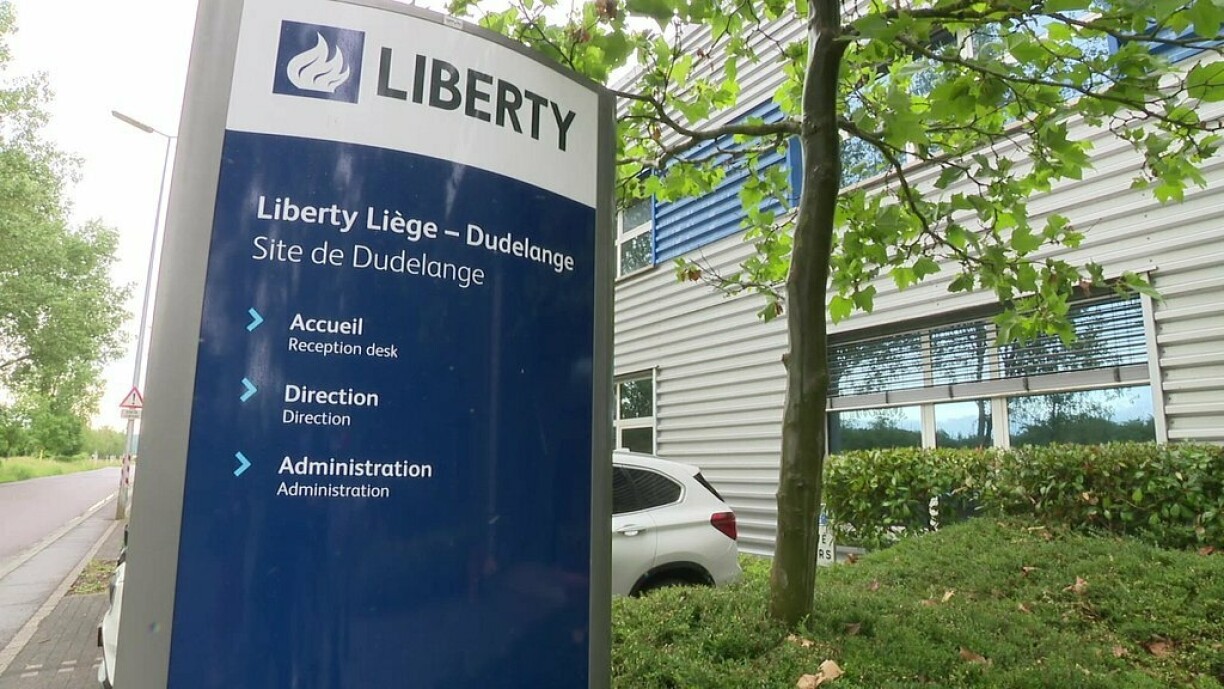
This is because the plant lacks the raw material to continue production. As the future of the steel plant in Dudelange is uncertain, there is no funding to purchase the raw material. Recently, MP Laurent Mosar from the Christian Social People's Party (CSV) submitted a parliamentary question on the subject in the Chamber of Deputies.
Speaking to our colleagues from RTL.lu, the employees in question stated that they were told that they would receive their salaries until August. But since many of the workers know that "it will be the end at some point", they are afraid and looking around for new jobs.
Sylvie Gambini has been working at Liberty Steel in Dudelange for over 30 years. She was there when the Galvalange enterprise was founded. The site has never been as empty as it is now, says the president of the staff delegation.
According to Gambini, Liberty Steel needs emergency funding and someone "trustworthy" willing to deliver the materials. Gambini remembers that when the company was still part of Mittal, the necessary materials ultimately never arrived. The raw material, she stresses, is the "main problem".


In the future, there is a chance that the raw material could potentially come from a Romanian steel mill. However, MP Laurent Mosar stated that he is sceptical whether the quality would remain the same. Minister of the Economy Franz Fayot replied that for the time being the authorities would like to keep all options on the table. Discussions are underway with potential industrial partners in order to be prepared for any eventuality.
Nevertheless, Fayot also stated that the government's trust in the Gupta group, which owns Liberty Steel, has significantly decreased, as the group has displayed a tendency to make big promises but not deliver on them. The government is increasingly becoming impatient regarding Liberty Steel, Fayot stressed.
An analysis of the National Credit and Investment Society (SNCI) shows that the Dudelange plant can operate "profitably with the usual occupancy rate and in a normal environment", the Minister explained. The analysis also stressed that the economic situation for these types of products is "very good" at the moment. Fayot described the report as "a positive conclusion [from SNCI] and a positive signal as far as Dudelange is concerned."
David Araba from the Luxembourg Confederation of Christian Trade Unions (LCGB) also thinks that there is plenty of work and that customers are still interested in the products made in Dudelange. Araba has worked at Liberty Steel for the past 24 years.
According to Araba, the workers know of "several customers" who agree to buy the coils themselves and deliver them to the Dudelange plant for processing.
So far, the steel mill has not lost any customers. But this situation cannot go on forever, particularly in light of Fayot's statement that the patience of the Ministry is "running out". And the Minister has already hinted that the market "offers many alternatives".
The full report in Luxembourgish:





