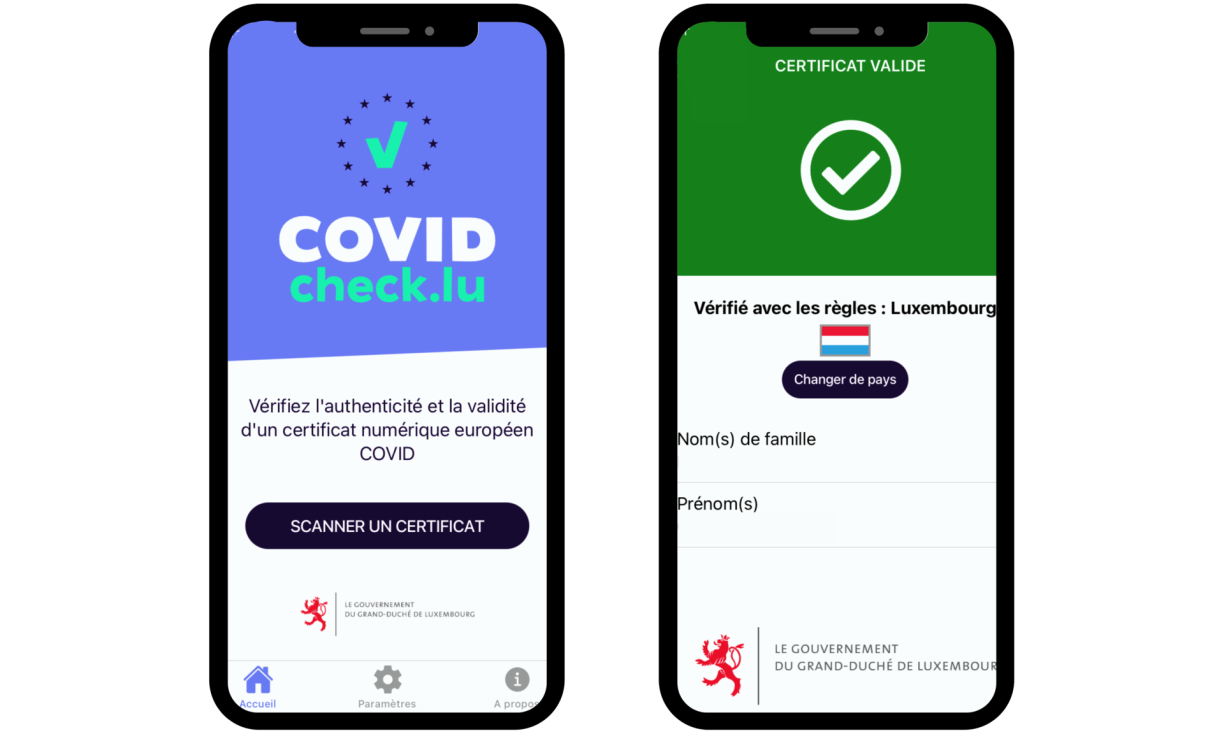
Next week sees stricter measures in place, as the self-administered rapid test will no longer count towards the CovidCheck procedure. However, civil service minister Marc Hansen says this has unfolded without issues in the departments which have already adopted the new CovidCheck for employees in the office.
Audio in Luxembourgish:
Many employees have welcomed the opportunity to return to work as normal, said Hansen. 87% of government employees resident in Luxembourg are vaccinated. The majority are appreciative of the CovidCheck system, but have declined to speak about it openly, according to Hansen.
The trade unions, in contrast, are not as welcoming towards the introduction of these restrictions at work, choosing instead to issue the government with an ultimatum before taking legal action against the new measures.
Read also: Civil service union labels Minister Hansen "unreasonable"
The Ministries of State, Cooperation, Digitalisation and Civil Services have already brought in CovidCheck, with others joining them shortly. The law allows for the process to be used flexibly, covering whole offices or just parts, or used only for meetings or at specific times depending on the business.
The government currently allows employees to work from home three days a week. Staff cannot add more teleworking days if they refuse to submit to the CovidCheck, meaning they must work in the office for a minimum of two days a week. Unvaccinated staff must either present proof of recovery or a negative test result. Starting on Monday, the system will only accept certified PCR and rapid tests.
Hansen clarified that the government would not be funding the costs for these tests, as vaccination was free of charge.
If a member of staff refuses to go to work, for example, refusing to take a test, then the usual procedures will be applied.
The government has very clearly defined procedures for employees who refused to work, including a written warning, or withholding part of their paycheck. In extreme cases, employees could risk losing their jobs. Out of around 32,000 civil servants, an average of seven to eight lose their job each year - however, these refer to very serious cases, according to Hansen.





