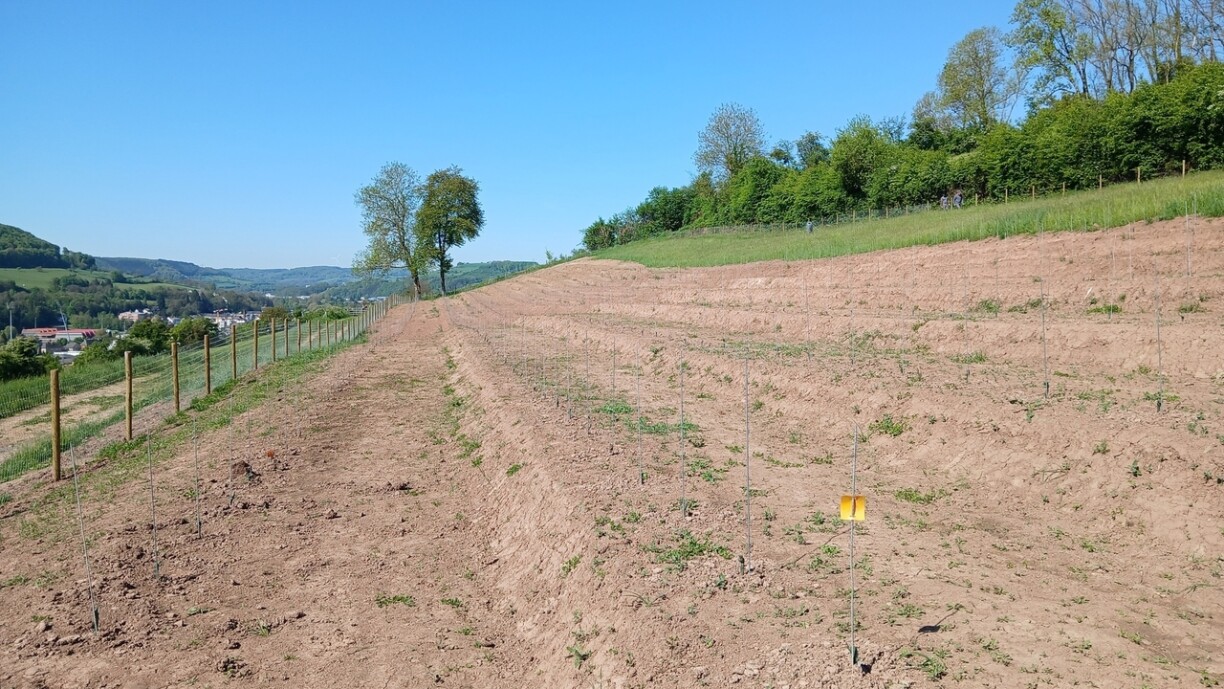
Diekirch is widely known for its carnival, donkeys, and of course, beer. Wine, however, hasn’t traditionally featured in its image but this may soon change. Since last week, a vineyard has taken root just below the historic slopes where vines once thrived centuries ago. Local place names around Diekirch still bear testimony to the area’s winemaking past, especially on the sun-drenched hillsides of the Herrenberg.
Charel Konnen, president of Dikrecher Wäifrënn, explained that the location is ideal for viticulture thanks to its full southern exposure, allowing sunlight from dawn to dusk. The hillside benefits from natural air circulation, with wind sweeping through from the Sauer valley. To enhance this airflow and reduce the risk of fungal diseases, the group installed mini-terraces across the slope.
He also noted the exceptional soil conditions, rich in limestone – a key factor for grape cultivation. The vineyard spans 30 acres and features four grape varieties, including Souvinier Gris, Divico, Pinot Nova, and Johanniter. Although the names might sound unusual, they are all part of familiar grape families, crossbred to boost resistance to disease.
These varieties are known as fungus-resistant grapes, meaning they require little to no pesticide treatment and therefore qualify as organic – with Germany leading the way in their development. The surrounding cover crops further contribute by acting as a natural CO₂ sink, reducing the vineyard's environmental impact.
Konnen also highlighted additional ecological benefits: the vineyard creates a habitat for bees and other insects, while increasing soil worm populations. Due to the reduced need for spraying and machinery, pesticide use is expected to drop by 80% compared to conventional vineyards – helping to protect both soil and groundwater. For these reasons, the wine will be marketed under the new “Bio Triple Plus” label.
The project receives financial and material support from the municipality of Diekirch and the Ministry of Agriculture. Vineyard labour is managed by the association Gaart an Heem, while the local association Al Dikkrich will handle promotion once the wine is bottled. Konnen is confident that within three years, the roughly 1,000 vines will yield enough grapes for a first batch of new wine, followed by a rosé the year after. Although a wine-making facility isn’t yet in place, he believes one will be found.
For now, the project is operating under the working title “DiWäin”, though it remains to be seen whether that name will appear on future labels. And in a nostalgic nod to local heritage, it’s worth noting that donkeys, long associated with Diekirch, were once used to keep the vineyards tidy.






