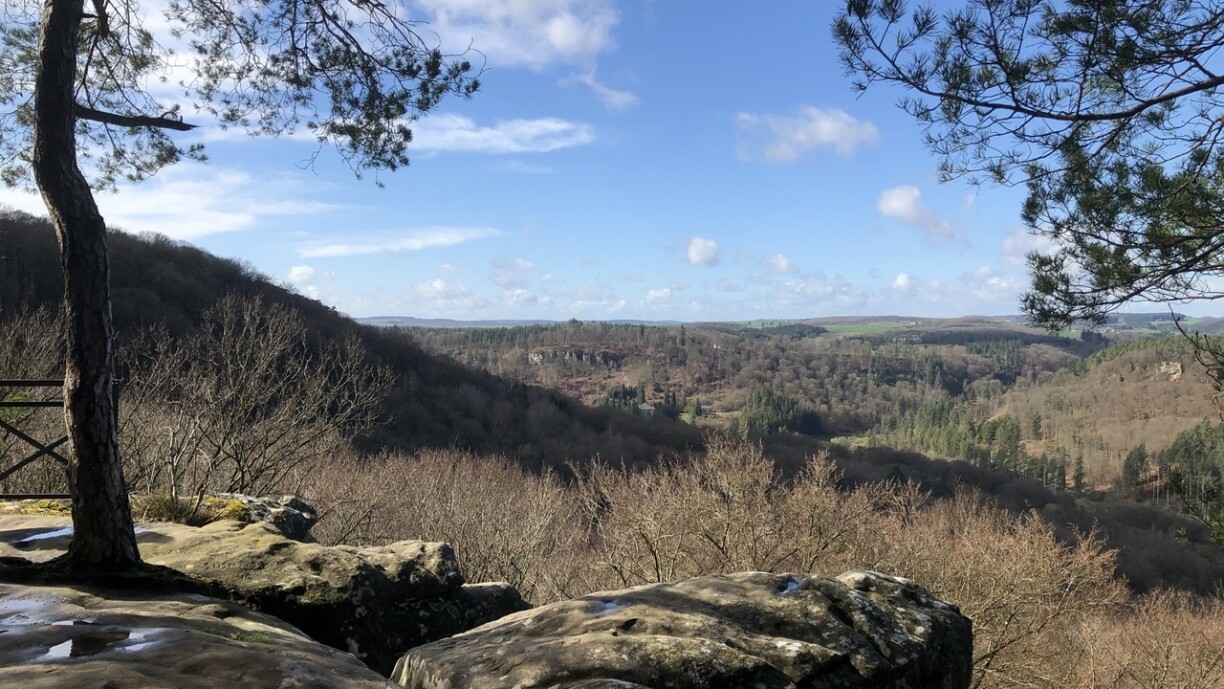
In 2022 alone, a staggering 200,000 visitors were recorded on the Mullerthal Trail, which Christophe Origer, president of the regional tourist office, considers proof that the symbiosis between nature conservation and tourism seems to be working well: "This is mainly the result of good cooperation with the relevant authorities to raise visitors' awareness. We have indeed seen a decrease in littering in recent years. People's respect for nature has therefore not completely disappeared."
To reach an even wider audience, including people who are less sensitive to nature conservation, information boards are being put up all over the different nature protection areas.


Despite all these efforts, the state of Luxembourg's forests is worrying. Bark beetles, diseases, and repeated droughts are considerably weakening the trees. For authorities, it is unacceptable that vegetation is sacrificed to make way for new infrastructure, as is the case between the A1 motorway and Findel airport in the context of the tram extension.
"Even if compensation is provided, a hundred-year-old forest cannot be replaced by young and freshly planted trees," says Gilles Biver from the Ministry for the Environment, Climate and Sustainable Development. "So, a larger area must be compensated, which is part of the ideas that authorities have. All alternatives are examined when designing a new project to do everything possible to protect the forest in its entirety."
As about half of Luxembourg's forests are privately owned, the Nature and Forest Administration and the non-profit 'Luxembourgish Private Forests' are working together to raise awareness among owners about woodland management and the replanting of different tree types.





