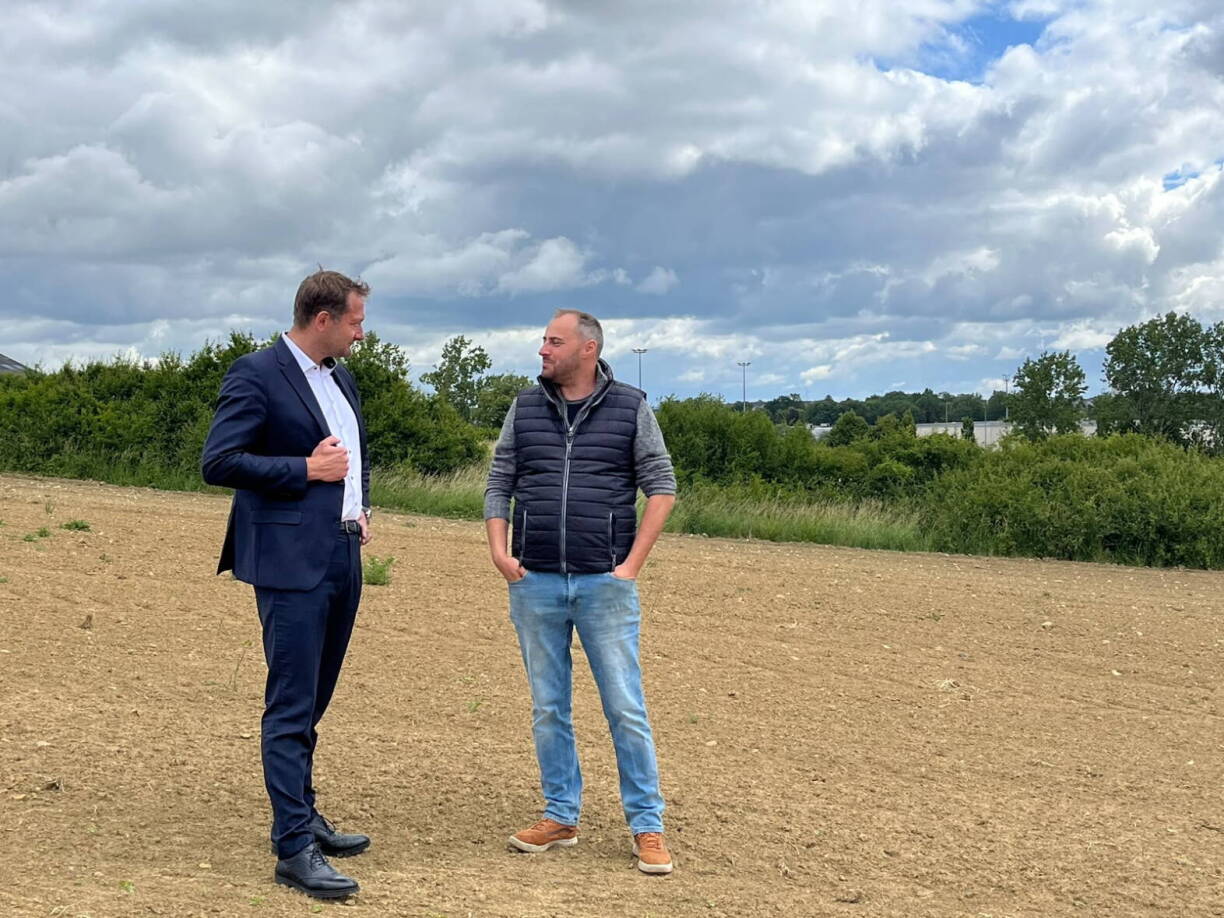
For eight years, Gehaanshaff, a local, multi-generational farm in Bettembourg, has been producing quinoa; since 2025, the farm has also added chia to its crop rotation. Both are high-protein crops and reflect the European Union's increasing focus on expanding plant-based protein sources.
Christophe Hansen, European Commissioner for Agriculture and Food, visited the farm to observe how such crops are cultivated whilst evaluating how the EU's policy ambitions compare to the realities on the ground.
In the coming weeks, the European Commission is set to present an EU protein plan aimed at making the bloc's protein supply more resilient and sustainable. One of the plan's key goals would also be to reduce imports of protein-rich animal feed by encouraging the domestic cultivation of alternative crops such as quinoa and chia.
As Hansen explained, these crops are relatively new to the region and are not yet fully accounted for in current EU legislation.
The Commissioner also spoke of a new fertiliser plan to tackle excessive fertiliser dependence, through financial aid. He vowed to put "around half a billion euros on the table" to help farmers directly.
In light of current geopolitical tensions, farmers feel a growing financial pressure, according to Gilles Biver, owner of the Gehaanshaff. While dealing with unpredictable weather plays a part in the field, Biver sees the fluctuating prices for fertiliser and machinery as additional, less predictable challenges:
"The price of diesel has exploded, and that affects us as well. In our other crops, we have also been hit by fertiliser costs", Biver said.
He added that machinery costs have not gone down over the past few years, with wage indexation on top of those additional costs. However, Biver hoped that the planned support will reach farmers quickly.
Hansen stressed that increased financial assistance is essential to motivate young farmers to stay in agriculture and to develop innovative ideas. "There will also be a so-called transition payment for farmers who want to switch from one traditional type of production to another", he added.
Beyond financial support, the Luxembourgish Commissioner hopes to strengthen advisory services and push them into specialisation, "not only in terms of what farmers should grow in their fields, but also on issues such as how to market, package, and process a product".
Hansen pointed to a shortage of young professionals in the sector, making it all the more important to engage directly with them to better understand the concrete needs in Luxembourg, but also across Europe and beyond.





