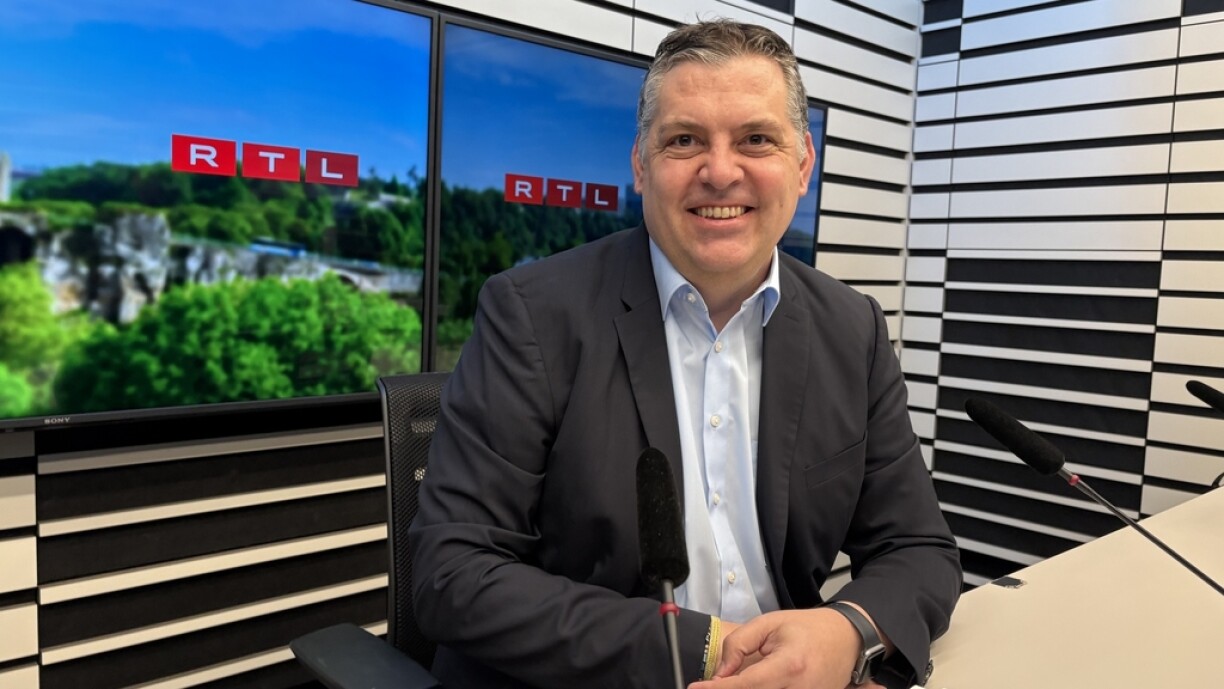
In the context of recent negotiations between trade unions, employers, and the government, Chamber of Employees director Sylvain Hoffmann expressed his satisfaction that the collective bargaining system will remain unchanged. He added that Luxembourg’s unions are aligned with a European directive which aims for 80% of workers in EU member states to be covered by collective agreements.
Hoffmann stated that labour law cannot seriously be considered an obstacle to the country’s economic success so far. As the Permanent Committee on Labour and Employment (CPTE) prepares to examine how working time is organised, he warned that the discussions must not turn into a platform for pushing through employers' demands. Instead, he stressed that existing labour regulations serve to protect workers and put forward a series of proposals to strengthen safeguards, such as improved protection from psychosocial risks, more rights to access training, and better mechanisms to protect workers during company restructurings.
He also challenged the employer narrative that the economy is struggling, pointing to record profits in the financial sector as evidence to the contrary. He argued that current difficulties in areas like construction cannot be blamed on labour standards. Furthermore, he highlighted that existing collective agreements already offer companies the flexibility they seek in organising working time.
To promote wider adoption of collective agreements, Hoffmann suggested that public contracts could prioritise companies that have signed such agreements. In response to concerns that this could disadvantage smaller businesses, he countered that these companies could also negotiate agreements, either directly or through sector-level arrangements.
On the issue of pensions, Hoffmann refrained from commenting on the current state of pension reform talks or potential government backtracking. He reiterated the CSL's position: if the pension system starts to become financially unstable, then more revenue should be channelled into it. Extended working life, in his view, should remain voluntary. He also advocated for new mechanisms such as part-time pensions or an "age pact" encouraging older workers to stay on longer, supported by their employers.
The CSL is particularly focused on preventing what Hoffmann called "degradations" in the system – cuts triggered by the 2012 reform that are expected to come into effect next year. These include the possible removal of the end-of-year allowance and a reduction of the pension adjustment mechanism, which aligns pensions with wage development alongside indexation.
Turning to tax reform, Hoffmann characterised Finance Minister Gilles Roth's proposal to replace the current three tax classes with a single tax bracket as a logical update that reflects today’s realities. He criticised the current system for creating unfair scenarios – for example, someone moving from class 2 to class 1A after divorce or the death of a partner can face a sharp tax increase.
Responding to the criticism stemming from the Alternative Democratic Reform Party (ADR), which argues that single-earner couples would be penalised, Hoffmann clarified that the change wouldn’t eliminate choice, but rather reduce the preferential treatment currently afforded to households with only one income. The proposed single bracket, he explained, would better reflect the structure of dual-income families.
Still, he questioned whether the 20-year transitional phase for tax class 2 is long enough. He also expressed concern that future tax tables won’t be adjusted automatically with each indexation, potentially reducing fiscal revenue. Without such adjustments, he estimated that individuals in tax class 1A could end up paying around €700 more annually in taxes by 2028.
Similarly, the expected tax relief for single people might fall short of expectations, he stated. For Hoffmann, real relief for the middle class would require a more graduated tax scale, combined with increased taxation on high incomes and capital gains. "I don’t believe this proposal should be the final version", he concluded.





