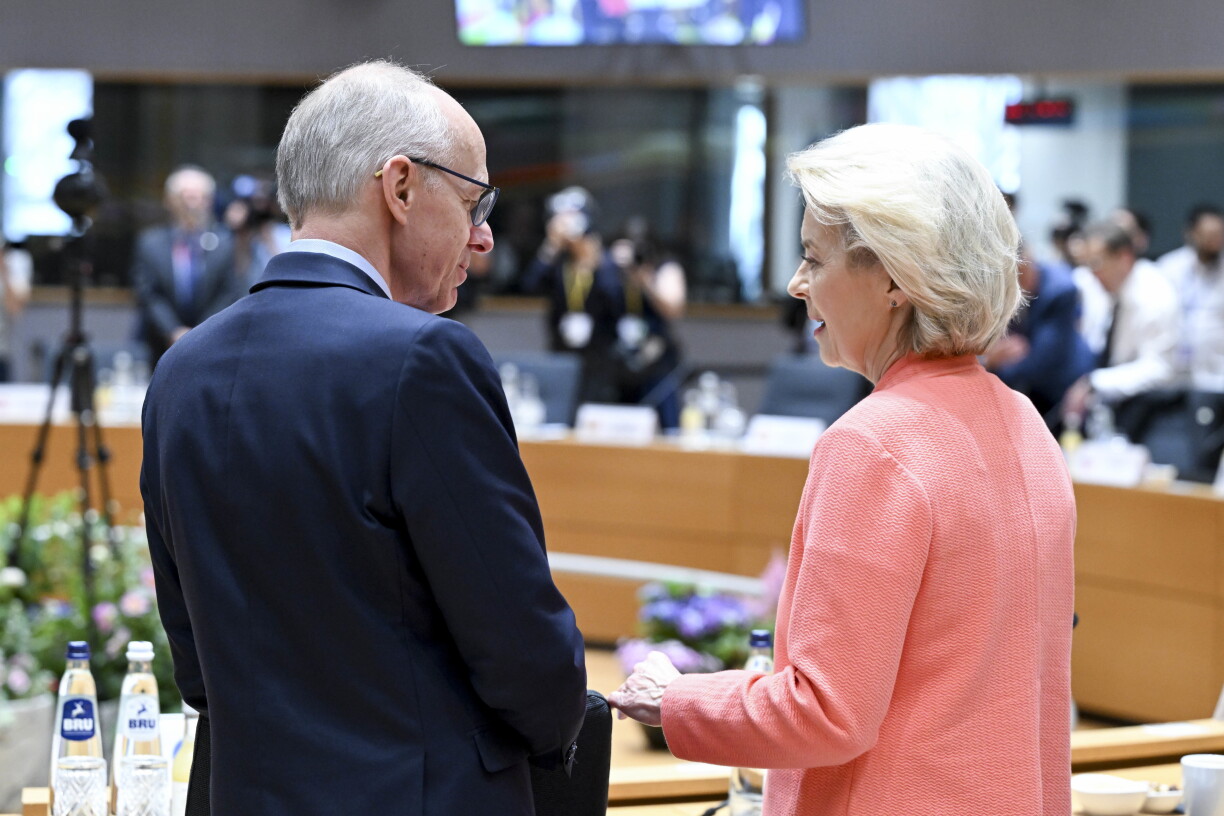
After a first day centred on the war in Ukraine and Europe's trade deficit with China, Friday's talks shifted to the next multiannual EU budget, spanning the years 2028 to 2034 – an issue widely regarded as one of the most contentious facing the Union. The agenda also included the ongoing conflict in the Middle East.
Cyprus, which currently holds the rotating EU presidency until July, has proposed a budget totalling €2 trillion. This suggestion immediately met resistance from several more fiscally conservative member states – namely Germany, Austria, Sweden, and the Netherlands.
German Chancellor Friedrich Merz made Berlin's position clear as he arrived at the summit on Friday morning, insisting: "We have to discuss the size of the budget. The current proposal is significantly too high. The numbers must be reduced. We also need to address the European Union's revenues, because we can only spend as much money as we have."
Merz further advised his European Council colleagues against taking on new debt, underlining long-standing divisions between the so-called "frugal" northern countries and a group of roughly 16 southern and eastern member states. The latter, including Spain, Italy, Poland, and Portugal, support a more ambitious budget, potentially funded through joint borrowing.
Where does Luxembourg stand? Prime Minister Luc Frieden positioned the country in the centre ground following the conclusion of the summit on Friday afternoon. "We place ourselves between those who believe the budget is much too large, and those who feel it is much too small", said Frieden, adding that the new proposals from the Cypriot presidency are "moving in a good direction".
For Luxembourg, the "right direction" means focusing on research, innovation, new technologies, the energy transition, and security, according to Frieden. He also stressed that traditional areas of EU spending cannot simply be abandoned, as many jobs are linked to these sectors.
Frieden described budget negotiations as always being a matter of compromise, while emphasising that it remains too early to discuss specific details.
In the afternoon, the summit turned to the Middle East, with leaders debating whether and how the European Union might restrict imports of goods produced in Israeli settlements located in occupied territories. The European Commission has now been tasked with drawing up concrete proposals, Prime Minister Frieden confirmed.
"It is clear that Israel's current approach is not regarded positively by the majority of countries", said Frieden. However, he cautioned that it is too early to define what concrete measures might follow, noting that foreign ministers and the Commission will discuss the matter further in upcoming meetings.
Frieden also welcomed recent agreements between Iran and the United States, as well as the current ceasefire between Israel and the Iran-backed Hezbollah militia based in Lebanon. However, he added that Iran remains under close observation.






