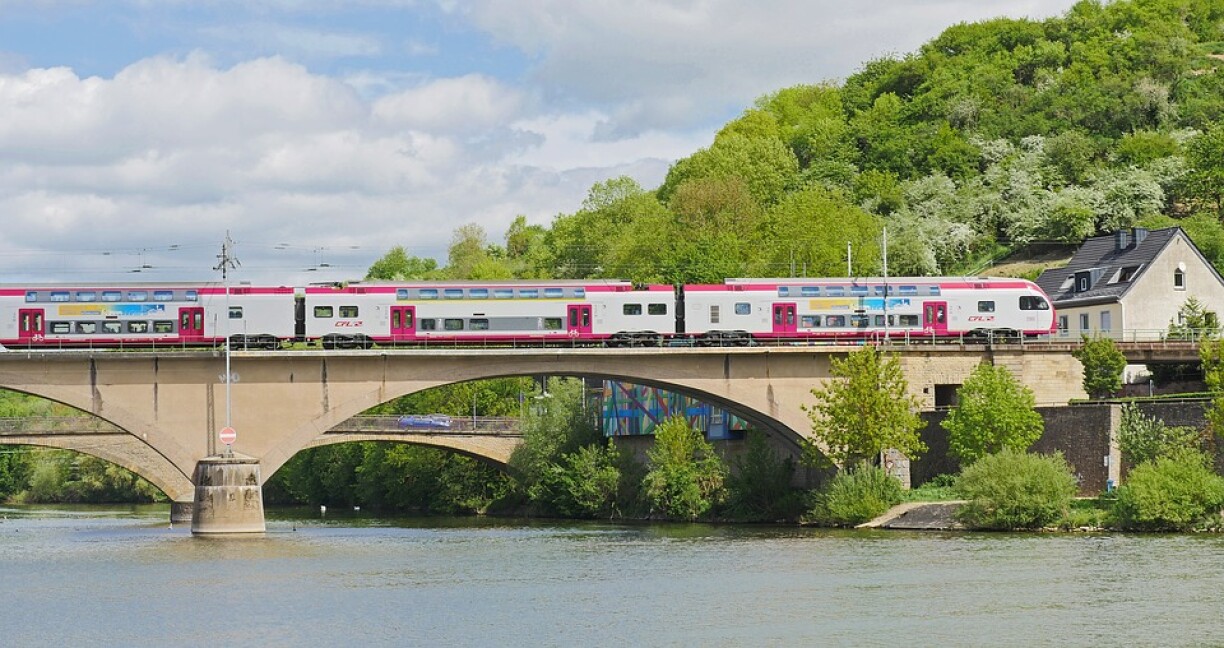
Currently, the trip between both capitals takes a tedious 3h20 on regional trains, often subject to delays, with nine stops inbetween. There have been calls for the modernising of the concerned lines 161 and 162 for a long time.
The line connects the capitals of the Brussels-Luxembourg-Strasbourg European rail axis, a project already adopted in 2004. Whereas the Luxembourg-Strasbourg leg is achieved in under two hours with a fast TGV, the Brussels-Luxembourg route remains slow, particularly given that EU officials frequently travel the route between institutions.
"The works on a 175-kilometre long section in Belgium are highly complex...and involve all types of works (civil engineering, catenary tracks, signalling and voltage changes). This link is a symbol of the freedom of movement between our countries, a freedom that is dear to the heart of our Member States", wrote Gilkinet in a letter to Commission Vice President Frans Timmermans, who is leading A European Green Deal.
Bausch reminded the EU of its ambition to bolster sustainable transportation and efficient mobility: "This project is perfectly in line with the logic of cross-border investments financed by the Commission", he said.
The line does not only concern passenger traffic, however, as the route is also part of the North Sea-Mediterranean rail freight corridor, shifting a substantial part of all European freight.





