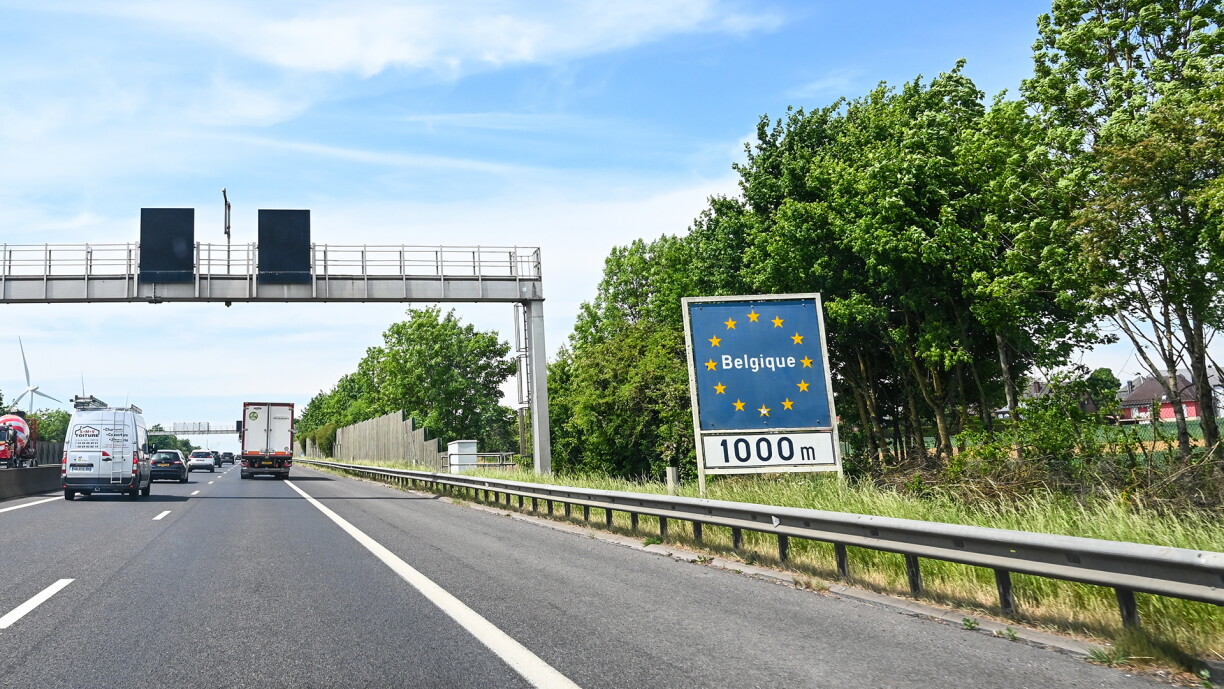
The government is not keen on the idea of a vignette on Belgian motorways and national roads, was Mobility Minister Yuriko Backes's response in an RTL interview on Wednesday. The three Belgian regions have agreed to bring in a digital vignette for vehicles up to 3.5 tonnes from 1 May next year.
The vignette would be tiered according to vehicle class and duration. Five different time bands and three vehicle categories are envisaged, with electric cars paying the least, combustion-engine cars a little more, and pre-2005 vehicles more still.
Since Germany's toll scheme was struck down by the European Court of Justice in 2019, the Belgian regions want to apply the vignette to everyone rather than just to non-residents.
Even so, a mechanism is said to be put in place to allow Belgian residents to offset the additional bill. However, if Belgian residents were to get a discount, Backes said, that could already amount to discrimination.
Backes fears the vignette could have a negative effect on cross-border traffic, including commuters, students, and companies. As a committed European, she labelled the situation "sad".
She said her federal Belgian counterpart Jean-Luc Crucke saw it in similar terms. She has not yet been contacted by representatives of the three regions, though Crucke has encouraged them to reach out.
She also pointed to the ongoing consultation phase and said she would like to know whether the Belgian regions have carried out studies on the social, economic, or environmental impact of the vignette, as well as on road safety. She expects that many drivers will simply take detours through roundabouts and smaller roads to avoid it.
Backes has also been in touch with her French, German, and Dutch counterparts. Once the legislative texts are known in detail, the next steps will be decided, she noted.





