The good news for swimmers is that none of Luxembourg’s official bathing waters will be closed this weekend due to blue-green algae. Swimming remains possible at Remerschen, Weiswampach, Echternach and at the Upper-Sûre lake.
Recent tests at the lake and at Weiswampach confirmed normal water quality, explained Tom Bechet from the Water Management Authority. No abnormal algae blooms were detected, although he cautioned that the situation can change quickly depending on the weather. Up to four tests per month are carried out during the summer.
Algae growth is known to be favoured by sunshine and high temperatures, while wind can accelerate their spread. Bechet, however, stressed that the root cause is excess nutrients in the water, both from natural sources and from human activity such as agriculture or wastewater. Luxembourg’s rivers and lakes remain in poor ecological condition overall, with significant work still to be done, particularly in the Upper-Sûre basin.


In the Nature Park, staff members like Frank Richarz and Tom Schmit are dedicated to protecting habitats across the park’s five municipalities. Their work ranges from monitoring protected areas to restoring natural waterways.
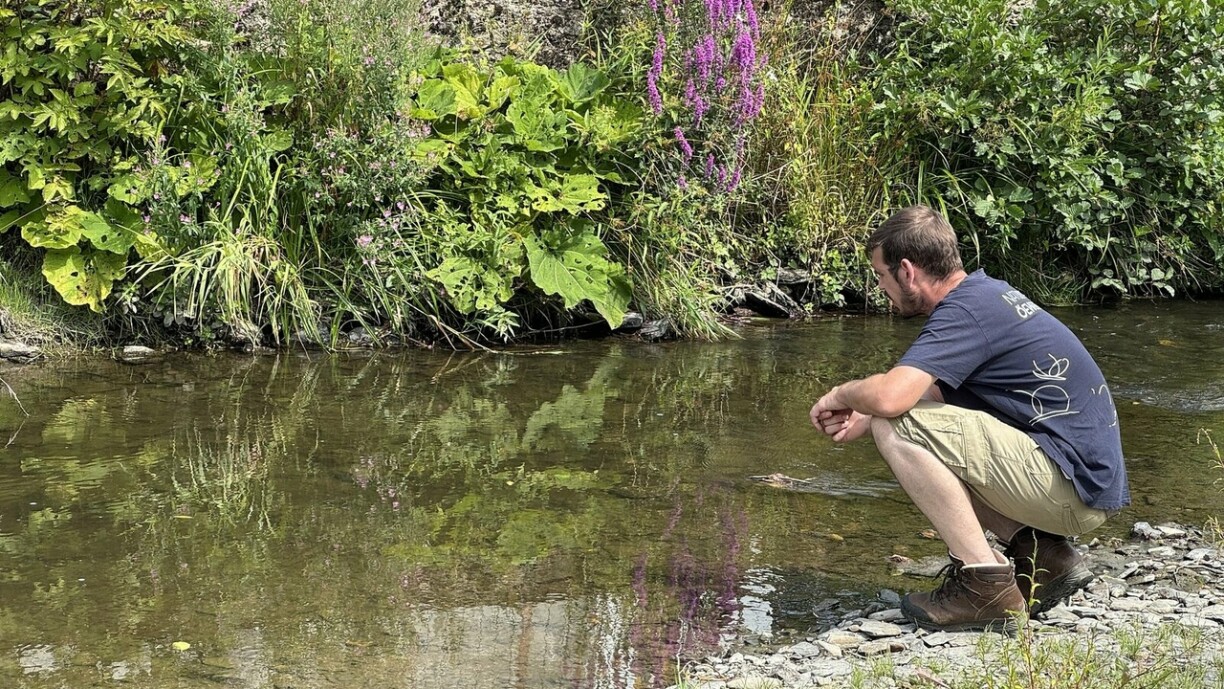
One of the park’s recent renaturation projects near Winseler involved creating a small side arm of the Wiltz stream. The new watercourse helps retain water during the summer months, provides habitat for fish, and improves overall water quality by increasing oxygen levels and reducing nutrients. Similar projects are already being planned in other areas.
Within the lake’s catchment area, farming and nature protection are closely intertwined. According to Frank Richarz, agriculture has become more efficient in its use of fertiliser, even as production has increased. At the same time, population growth in the region leaves its mark through wastewater. While there is no clear evidence that nutrient levels are rising overall, challenges remain. Some older treatment plants still discharge untreated water into streams – a lingering problem despite the progress made elsewhere, Richarz acknowledged.
The catchment area of the Upper-Sûre lake extends beyond Luxembourg’s borders, with two-thirds lying in Belgium. On both sides, wastewater and agriculture affect water quality. According to Bechet, it is essential that measures set out in management plans are respected.
Another growing challenge is the sheer number of tourists who head to the lake on hot summer days. Ranger Tom Schmit warned that mass tourism leaves its mark, whether through disturbance of wildlife or pressure on water quality. He reminded visitors that the reservoir is also the country’s drinking water supply.
To help manage traffic, a new parking guidance system has been introduced around the lake. On weekends and public holidays, visitors can leave their cars in overflow car parks and take a free shuttle bus to the beaches. A separate shuttle circuit also serves hikers.
Alongside practical measures like this, raising awareness about nature conservation remains a core mission of the park. Hiking trails are actively promoted, including the “Sentier de la mémoire” at Schumannseck, where walkers can learn about the area’s wartime history.





