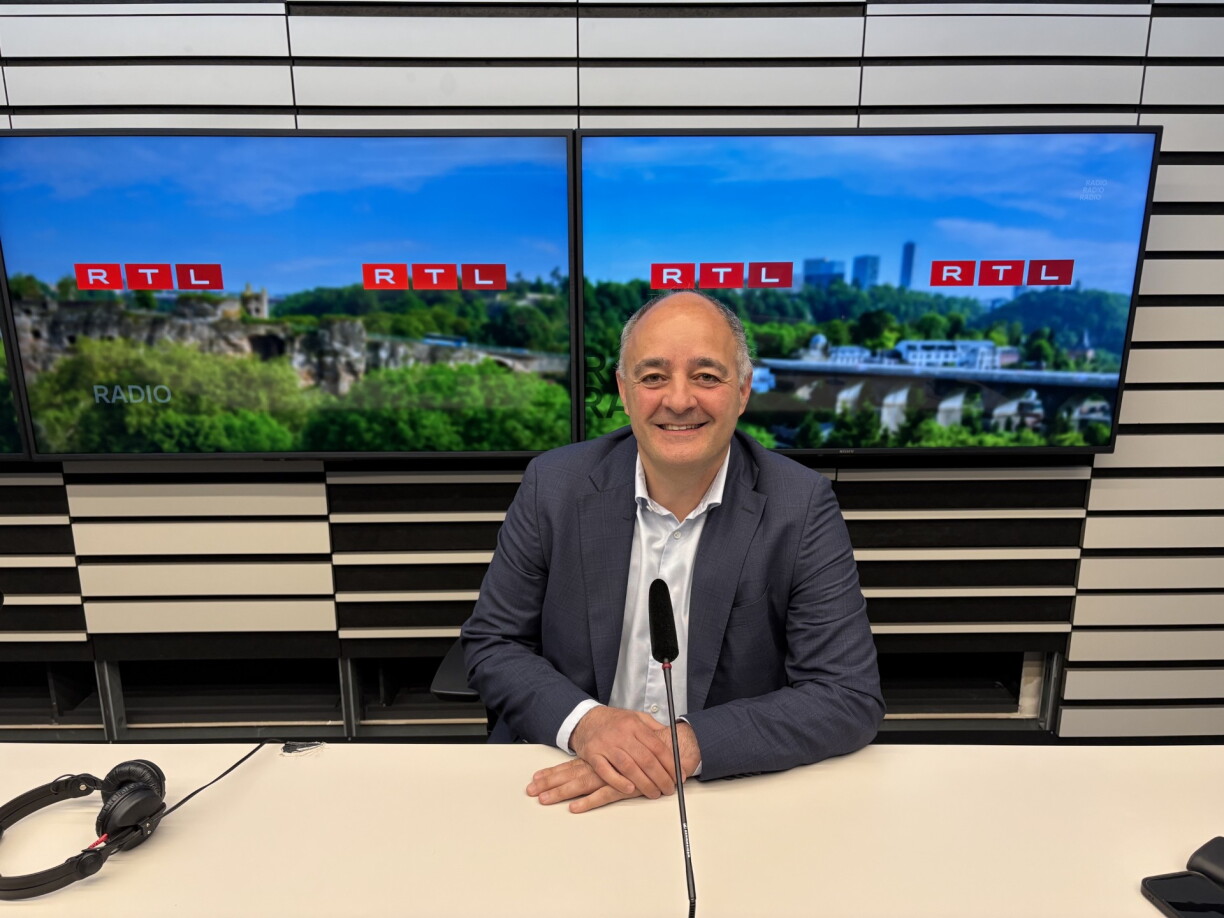
Speaking with RTL Radio on Friday, Luxembourg City alderman and MP Patrick Goldschmidt first addressed the opening of the Schueberfouer. He emphasised the importance of unity and community, even amidst ongoing political debates.
Luxembourg's housing shortage and high prices remain pressing issues. Goldschmidt pointed to major upcoming developments, including the transformation of Hollerich, which covers 20 hectares with a utilisation coefficient of 1.9, corresponding to 380,000 square metres of new development – 50% of which will be residential housing.
He indicated that intensive construction is underway and that people will see the results in the coming years. On national housing incentives, Goldschmidt praised government measures announced this summer.
He supported the reintroduction of accelerated depreciation for investment in housing but argued the scheme's caps could be improved. "Perhaps as a liberal, I would have gone a little further, but I think the measures announced are going in the right direction. And I hope that we can use them to boost construction again", he said.
He explained that the previous depreciation regime was abolished when there was an overheated market, but now "almost nothing is being built. If the state and municipalities didn't invest, there would be no new construction".
He stressed the importance of private investment for a healthy rental market, stating: "If I have that, then rental prices go down. That's extremely important."
Responding to criticism that Luxembourg City's population growth is lagging behind neighbouring communes, Goldschmidt countered that when new urban development plans add hundreds of units in smaller towns, their growth rates naturally appear higher.
He attributed the city's slower expansion to multiple crises since 2020 and a lack of sales for new developments, which has discouraged private developers. However, he listed several major city projects that together could house over 30,000 people if realised.
Mobility is another central issue for Luxembourg City and the nation as a whole. Goldschmidt expressed relief that construction work on key infrastructure, like the Schuman underpass and the tram extension, was completed in time for the Schueberfouer.
He emphasised the great collaboration between Luxtram, the National Roads Administration teams, and the City to finish the construction in time for the Schueberfouer opening.
Discussing the city's mobility goals, Goldschmidt was optimistic, highlighting that in the urban area, with excellent public transport, bus and tram, plus free rides and higher fuel prices, statistics show that people increasingly use the bus and the tram, reducing vehicle traffic.
He highlighted ongoing efforts to expand cycling infrastructure, mentioning projects on Boulevard F.D. Roosevelt, Boulevard Prince Henri, and in Merl, as well as an upcoming cycle bridge and a focus on better infrastructure around it.
Goldschmidt also acknowledged challenges posed by increasing commuter numbers and pointed to improved national-local cooperation, particularly with the extension of the city's bus network beyond municipal borders.
With Luxembourg City's population forecast to reach up to 180,000 residents, Goldschmidt discussed the importance of expanding infrastructure like the Boulevard de Merl.
"We've been asking for decades for the Boulevard de Merl. It's becoming even more crucial now, especially since the tram line on Route d'Arlon was approved", he argued.
He said the new boulevard would help redirect traffic from the west. He added that recent progress in acquiring the necessary land was promising, and he hoped for "positive news" this autumn so the long-delayed project could finally start.
However, Goldschmidt was realistic about the limits of road expansion inside the city. "The number of cars entering the city is not increasing and cannot increase. We do not want more cars in the city", he stated bluntly.
Instead, he advocated for national-level solutions, such as improving ring road capacity and especially encouraging carpooling: "If instead of one person per car, we had three, we would have much less traffic. Maybe the municipality and the state need to provide financial incentives to support this", he suggested.
As the municipal term reaches its midpoint, Goldschmidt declined to comment on whether he would run again as a lead DP candidate in 2029.
"I was elected for these six years to work hard for the city, and that's what I'm doing. When it comes time to discuss candidates, the party bodies will decide together. Today, I can't say anything", he concluded.
Goldschmidt invited everyone to enjoy the Schueberfouer, promising a welcoming atmosphere and plenty of opportunities to engage with local politicians about the city's future.





