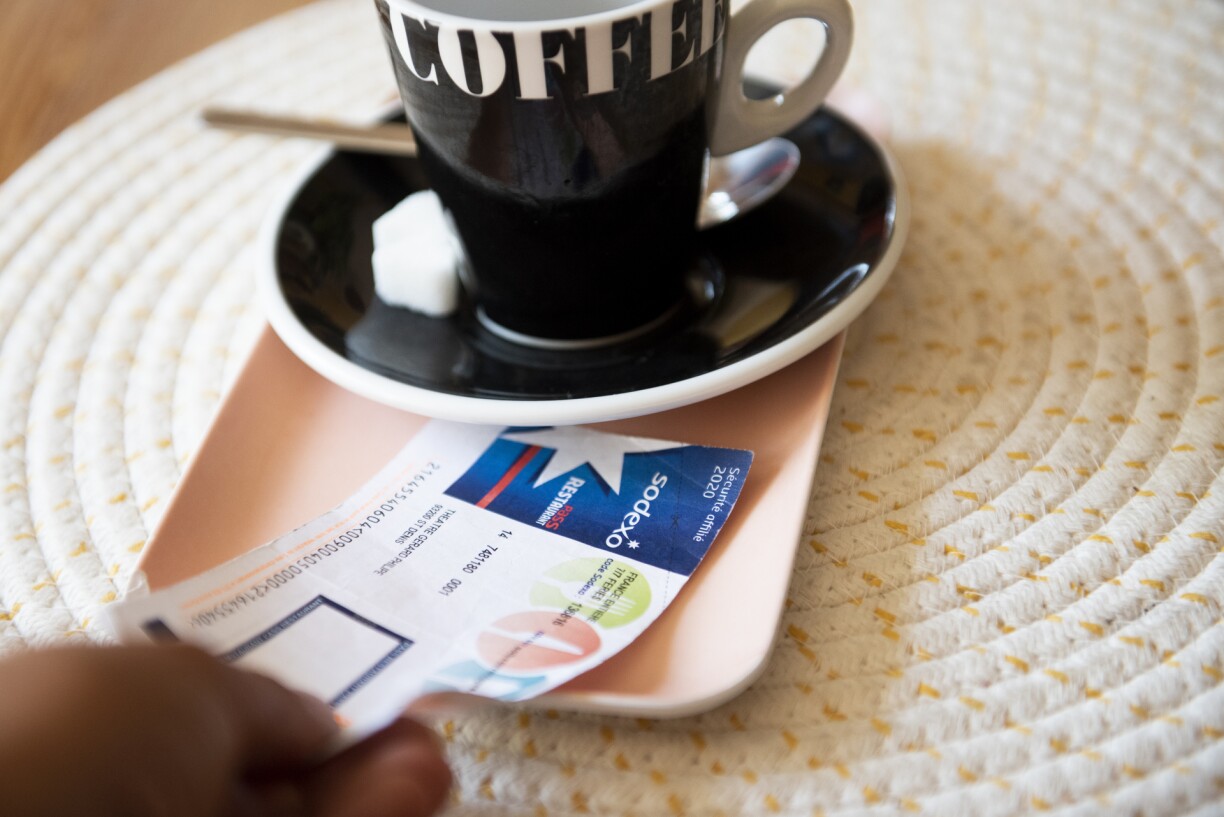
In June 2023, then-Minister of Finance Yuriko Backes announced the overhaul of the meal voucher (or "chèque repas") system in response to rising inflation and demand from the hospitality sector.
Starting 1 January, the maximum value of the vouchers will go up from €10.80 to €15, although employees' contributions will stay unchanged at €2.80.
However, as the Luxembourg Consumer Association has pointed out, the new limit is not mandatory. In response to Backes' announcement, ULC chairman Nico Hoffmann commented that: "for those who will continue to receive meal vouchers valued at €10.80 or €8.40 from 2024 onwards, there is a legitimate concern that their purchasing power may decline, as certain restaurants may need to adjust their prices, at least partially, to accommodate the higher voucher value."
In a further step, the traditional paper cheques will be replaced by a digital card, allowing users to transfer funds to the card itself or to their smartphones.
The old time limits to the system have been removed, meaning the new digital vouchers can be spent outside of working hours, on weekends, and when employees are on annual leave. The paper vouchers can still be used up throughout 2024.
Furthermore, the Grand Ducal regulations have been amended to update the definition of a meal in response to ever-changing eating habits, which means the vouchers no longer need to be spent at meal times and in restaurants, as per the 1993 directive. Employees may now spend up to five vouchers per day for a maximum of €75, up from the limit of one voucher, in places such as supermarkets, butchers', or bakeries, as well as more conventional eateries, as long as they are affiliated with the company issuing the voucher.
However, merchants may opt to limit the number of vouchers to less than five, or even refuse to take the vouchers as payment altogether.
At the time of the announcement, Backes told the media that the digitalisation of the vouchers aimed to prevent consumers from "abusing" the system, saying "people will no longer be able to buy televisions with meal vouchers". In 2022, it was reported that abuse of the meal voucher system cost businesses up to 50 million euros a year.
Two RTL reporters even went undercover to test the limits of the system, finding some shops accepted the vouchers for purchases of electronic goods. Reports also emerged of people using the vouchers to pay for petrol, cigarettes or alcohol. The new system is designed to reduce such violations.
The digitalisation of the system promises to reduce the administrative burden for businesses by eliminating the need for manual distribution of paper cheques, as well as speeding up and simplifying verification procedures for merchants.
François Koepp, secretary general of the National Federation of Hoteliers, Restaurateurs and Cafetiers (Horesca), said the new system would also guarantee 100% reimbursement of meal vouchers, bringing the process in line with reality and corresponding to restaurant needs. Businesses will no longer have to collate the paper cheques and send them on to issuing companies for reimbursement thanks to the new digital system.





