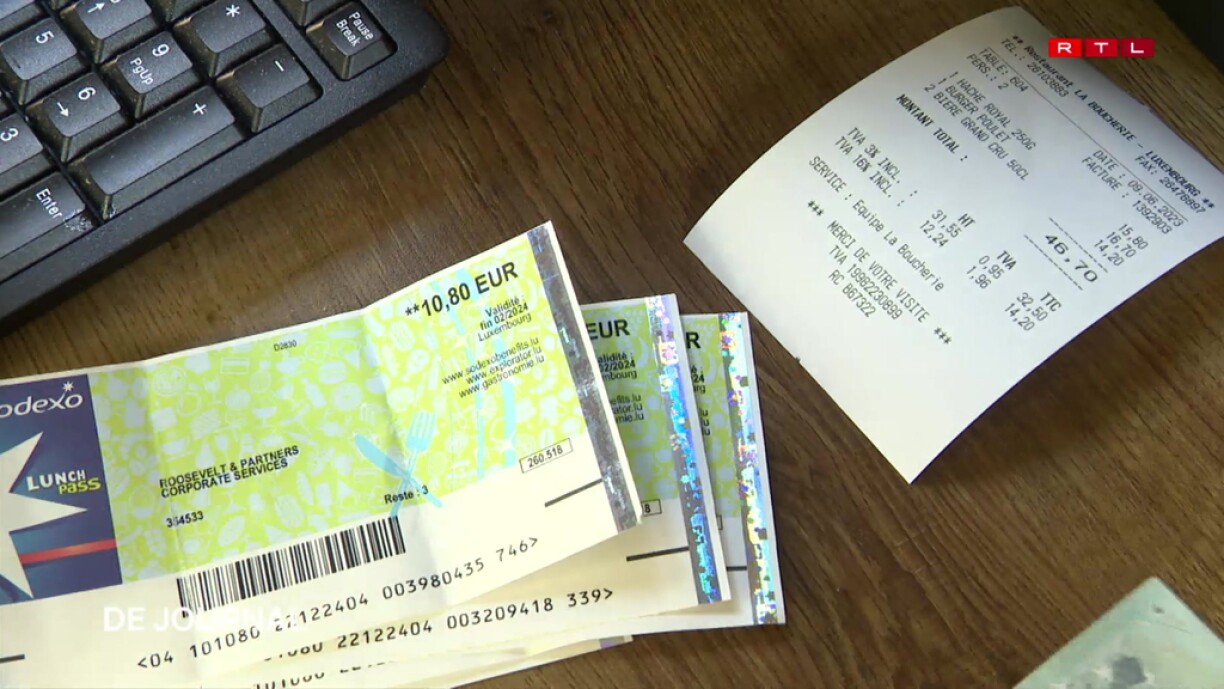
"The food that users buy with their meal vouchers is nobody's business, neither the government's nor Horesca's." In a press release sent out this Wednesday morning, the Luxembourg Consumer Association (ULC) denounces the announced reform plans for Luxembourg's meal voucher system.
Starting from 1 January 2024, the revamped format aims to provide greater flexibility and increased purchasing power for users, as the value of the vouchers will rise from €10.80 to €15.
While this may sound good in theory, ULC Chairman Nico Hoffmann points out that the actual amount remains determined by the employer, with €15 representing an upper limit and not a mandatory minimum. Hoffmann warned, "for those who will continue to receive meal vouchers valued at €10.80 or €8.40 from 2024 onwards, there is a legitimate concern that their purchasing power may decline, as certain restaurants may need to adjust their prices, at least partially, to accommodate the higher voucher value."
As part of the transition, the meal vouchers will be digitised, replacing the conventional paper cheques with cards. While this transition presents practical advantages, the ULC identifies several pitfalls associated with the all-digital approach, which it finds concerning from a data protection perspective.
"While the ULC supports the notion that meal vouchers should only be used for their intended purpose of purchasing meals or food, this should not lead to consumers being subjected to monitoring, which raises data privacy concerns," stated the ULC.
Consequently, the association is urging the abandonment of planned controls and advocating for the retention of paper meal vouchers.
To ensure compliance with the system, the ULC proposes an alternative method of conducting test purchases in supermarkets to detect any violations, rather than implementing monitoring measures.





