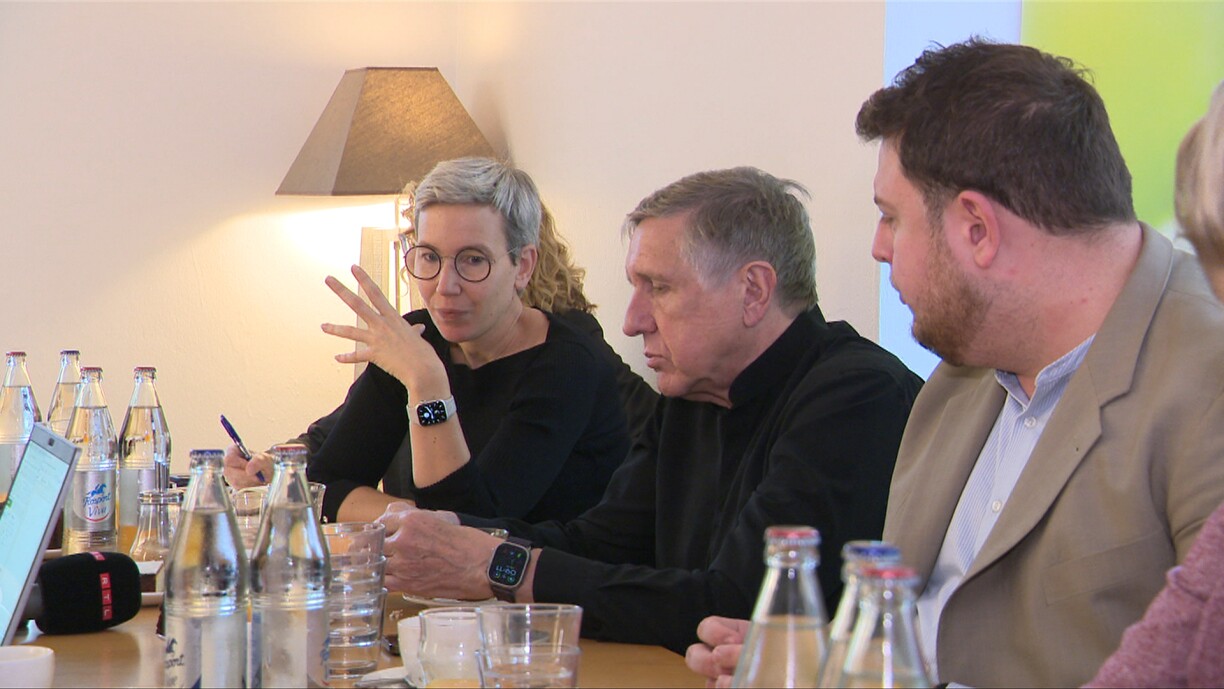
Over the past two and a half weeks, the party has been engaged in a thorough examination of the factors contributing to its significant setback in the recent legislative elections. The term "multifactorial" has consistently emerged during these discussions, acknowledging the complexity of the situation. However, the party is now looking to learn from its past experiences to shape its future strategies.
Sam Tanson noted that the Greens have somewhat lost their connection with grassroots supporters. During the two elections held this year, the party's focus was "too one-sided." Consequently, the party is committed to engaging more intensively with its members and has sent out a questionnaire to this end.
On a positive note, Djuna Bernard, the co-president of the party, announced that new members "are joining every week," with the number now surpassing 1,200.
In addition to internal introspection, the Green Party is conducting an external analysis to evaluate the past five years in government and the recent election campaign.
The party is keen on improving its external communication, particularly in translating complex issues, like climate change, into more understandable and emotionally engaging messages.
François Bausch highlighted the party's prior intellectual approach and expressed the need to connect with the public on a deeper emotional level.
The politicians noted that Luxembourg's Green Party is not the only one wondering how to address this issue. Green parties throughout Europe currently face the same challenge.
"There was a desire for change, people wanted a different government," Tanson acknowledged. Luc Frieden, however, knew that the situation is not favourable for the promises he has made, she argued.
Tanson expects that some pledges, like a universal tax break, may be temporarily suspended. However, she stressed that immediate steps need to be taken to address fundamental inequalities.
For the former lead candidate, doubts persist about the new government's capacity to accomplish this goal, particularly in addressing housing issues.
Tanson raised concerns about the composition of the negotiating delegation for housing within the Christian Social People's Party (CSV), noting that 40% of its members work in the real estate sector, "which may lead you to question, what does that mean?"
The primary challenge within the housing market, she stressed, is the shortage of affordable housing, and she lamented the absence of representation from these sectors at the negotiation table.
Bausch pointed out that his party may have shown "too much solidarity" while in government, unlike the Democratic Party (DP) and the Luxembourg Socialist Workers' Party (LSAP). He believes it is essential to reevaluate and strike a better balance.
Bausch noted, "Perhaps, in general, we have attempted to overly emphasise moralising individuals rather than pointing the finger at those standing in the way of progress."
He stressed that in roughly 80% of cases, it was not conservation concerns but rather municipal barriers that hindered housing projects, such as the stalled "Kuebebierg" initiative in Kirchberg.
He also referenced a dispute over a car park near the Athénée secondary school in Luxembourg City, where the municipality opposes converting the space into affordable housing.
The Green Party's upcoming focus lies on the European elections, a pivotal juncture according to co-president Meris Šehović, who pointed out that this too is an increasingly challenging terrain for progressive politics advocating environmental conservation and social justice.





