Until now, only three species of ticks were known to roam Luxembourg's forests and grasslands.
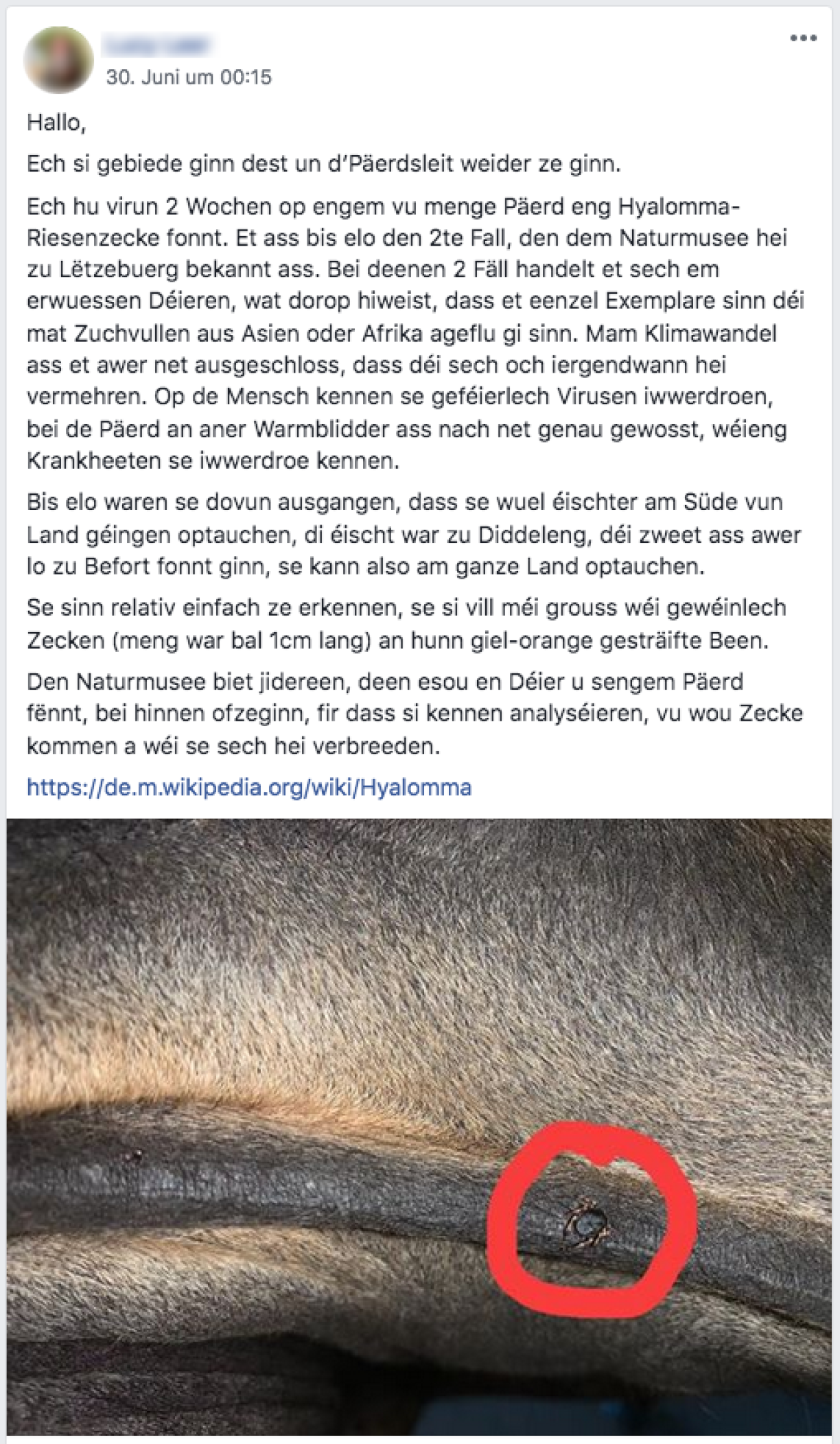
The hyalomma tick, which usually lives in regions with warmer temperatures, was brought to Luxembourg by migratory birds. So far, three cases have been recorded.
The tick, which can grow up to two centimetres in size, can be easily identified by its red and white striped legs. However, its size is not the only thing that differentiates it from other tick species.
According to Alexander Weigand, zoological curator at Luxembourg City's Nature Museum, the native species of the Ixodes genus, e.g. the wood tick, are for instance lurking hunters while the species of the Hyalomma genus are "real" hunters.
When they detect CO2 from their prey, i.e. from their host, they go hunting for the animal. When they get close, i.e. about 10 metres, they use their exceptional eyesight and meticulously search for the host animal. They need to do this because the species comes from a dry climate, especially deserts, where it is rare to meet a host. Thus, they have to move and not just wait for, e.g. an antelope to pass them.
The hyalomma tick generally prefers to target animals, such as horses. However, there have also been cases in Germany which confirmed that the tick can transmit typhus to human hosts.
Video in Luxembourgish:
Due to the effects of climate change, researchers are unable to eliminate the possibility that the species will further spread across Europe, which is why the animals are currently being analysed in the National Museum of Natural History (Natur musée).
Anyone who happens to find such a tick can contact the museum and hand the animal over to them, either alive, frozen, or preserved in a container of alcohol.
News of the new species of tick has also been shared on social media