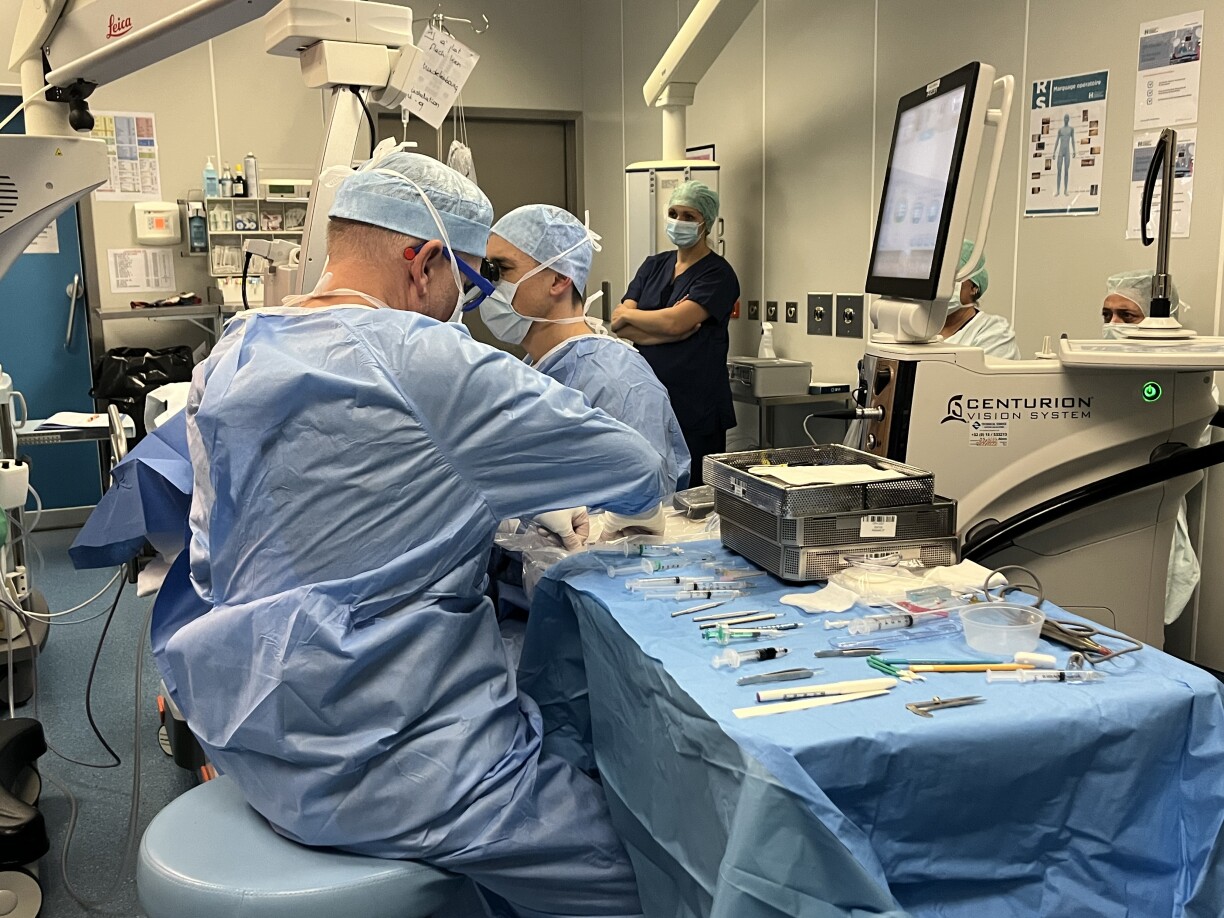
RTL followed the journey of a woman receiving a cornea transplant after being diagnosed with Fuchs endothelial dystrophy, a condition affecting the innermost layer of the cornea. This layer, the endothelium, is responsible for regulating the movement of water in and out of the cornea. In patients with Fuchs dystrophy, this mechanism no longer functions as it should, explains eye surgeon Dr Christian Eulufi: "When the endothelium does not function properly, water accumulates. Over time, this causes the cornea to become less clear and lose its transparency. Eventually, patients may even go blind".
The transplant in this case was provided by a donor bank in Germany. During the procedure, the surgeon removes only the endothelium and the thin membrane above it, a delicate layer just 0.015 millimetres thick. The risk of the body rejecting the transplant lies relatively low, at around 1–3%, which is significantly lower than for organ transplants. This is because the cornea contains no blood vessels, reducing the likelihood of an immune reaction.


The procedure itself generally takes around 15 minutes. The patient receives an anaesthetic injection in the eye to prevent any pain, but she does not see what is happening during the operation. The surgeon removes the patient’s endothelial layer and replaces it with the donated tissue. Once the graft is positioned correctly, a small bubble of air is placed underneath it, pressing the membrane against the cornea so the two layers can heal together. To ensure proper adhesion, the patient must remain lying on her back for the following 48 hours.
Since November 2024, Dr Eulufi has performed 30 DMEK cornea transplants. Offering the procedure in Luxembourg has clear advantages: fewer journeys for patients, shorter hospital stays, and consistent follow-up care with the same ophthalmologist.
The only drawback, Dr Eulufi notes, is that he does not get to perform transplants every single day. However, with his extensive experience and the expertise he gained at the Charité hospital in Berlin, one of the pioneers of this technique, he equally believes that performing less frequent procedures also means approaching each one with even greater focus and motivation.





