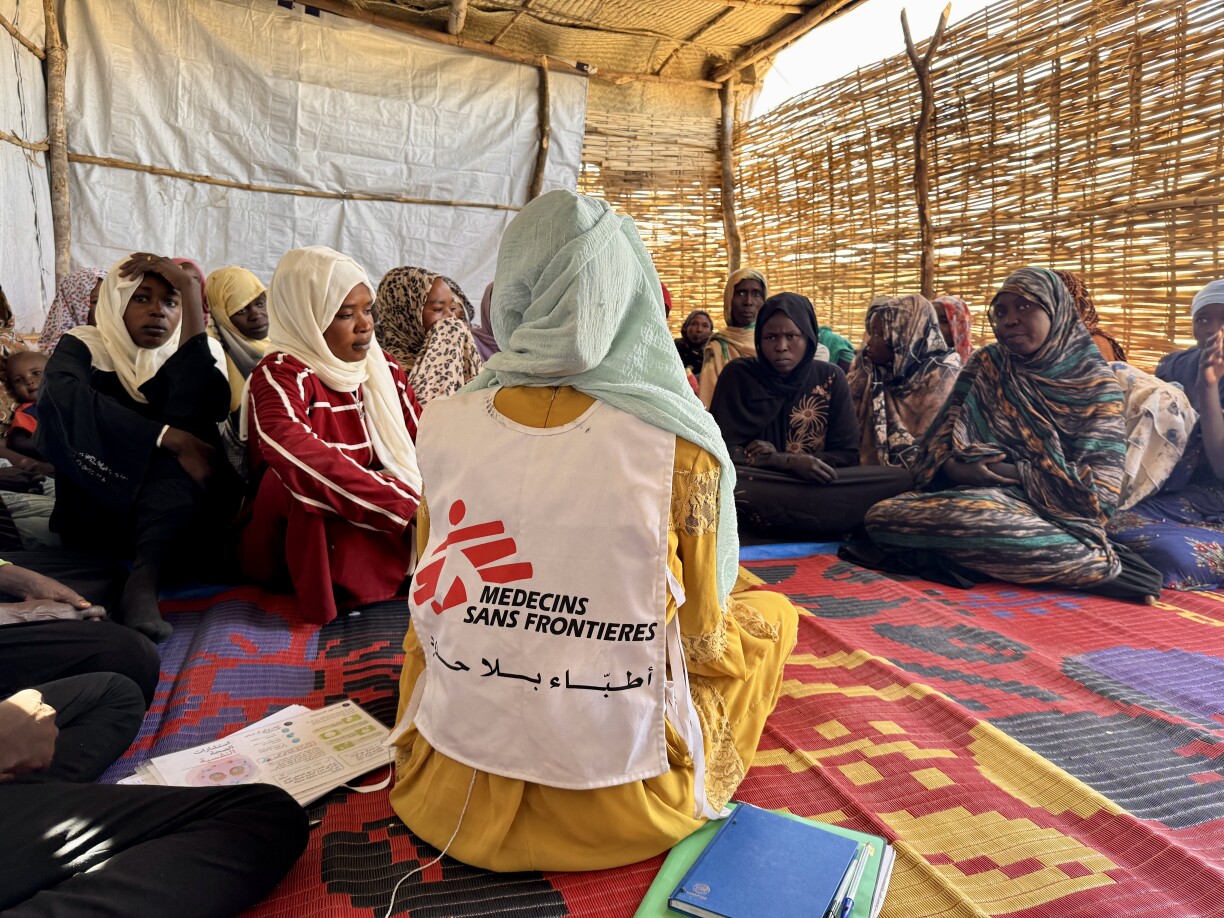
As global attention remains focused on conflicts in Ukraine and the Middle East, humanitarian organisations such as Médecins Sans Frontières are warning that the war in Sudan is escalating largely out of sight, with devastating consequences for civilians. They are calling on the United Nations to take action.
While war in Iran and Ukraine dominate the headlines, the war in Sudan has largely faded from public attention. In Sudan, the army and a rebel militia have been fighting for power for three years, with sexual violence playing an increasingly central role. On Tuesday, Médecins Sans Frontières (MSF) drew attention to the issue during a press conference.
Since April 2023, Sudan's de facto leader Abdel Fattah al-Burhan and his former deputy Mohammed Hamdan Dagalohave been locked in a power struggle. More than 150,000 civilians have already lost their lives, and around 14 million people have been displaced.
MSF reports that sexual violence, particularly against women and especially in the Darfur region, is increasingly being used as a weapon. Between January 2024 and November 2025, nearly 3,400 survivors of rape were treated by the organisation, although this figure represents only a fraction of the true scale of the violence, according to MSF.
Adrêza Trajano, head of MSF's programme against sexual violence, explained that such violence has become omnipresent. She said that women report that they cannot safely fetch water, work in the fields, or travel to markets, yet they have no choice but to do so, knowing they risk being subjected to sexual violence.
During the press conference, several MSF staff members shared testimonies from victims. Women are often raped in front of family members, including their own children or grandchildren, both to instil fear and to signal that the children could also be targeted if the women resist, MSF stated.
The consequences go far beyond the immediate violence. Trajano highlighted not only infections, but also unwanted pregnancies, complications during pregnancy, and increased mortality among both mothers and children, stressing that entire communities are affected.
There is little sign of the conflict ending. On the contrary, it is intensifying and taking on new dimensions, according to Gloria Endreo, who is working in North Darfur.
She described how most of the healthcare system and critical infrastructure have been destroyed. She added that access to water is now extremely limited, and that electricity, food, and basic services are largely unavailable across much of Darfur.
Endreo said that drone attacks have become almost daily occurrences, targeting not only military positions but also schools, healthcare facilities, and markets, with civilians dying every day.
Although the UN is present in Sudan, MSF argues that its response falls far short of what is needed, describing the situation as a complete failure.
Sudan has a population of around 50 million people and, with an area of 1.8 million square kilometres, is the third-largest country in Africa.





