
A common assumption is that individuals must live in Luxembourg, or companies must be registered there, to secure a Luxembourg internet address. That is not the case. Until 2009, the administrative contact for a domain name was required to have a Luxembourg address, but this rule was dropped for practical reasons, according to Restena director Gilles Massen.
Today, applicants must still comply with a number of technical constraints. These include rules on formatting, such as domain names being between one and 63 characters long, made up of numbers or letters, as well as the “first come, first served” principle. There are, however, no restrictions “as regards the situation of the holder”.
Restena holds the technical monopoly for managing the database of .lu domains in Luxembourg and is responsible for guaranteeing their uniqueness. “Every .lu name is therefore registered in our database,” Massen confirms.
This does not mean, however, that applicants must register directly via Restena’s platform, my.lu. “A person or company wishing to register a domain contacts a registration office, which acts as the visible interface to the client. There are around 50 such registration offices that can also register .lu names.”
Regardless of the route taken, a domain only becomes definitive “once it has arrived in our registry database”, Massen adds.
Seeing a .lu web address on a shopfront or vehicle abroad can come as a surprise, but it is far from unusual. Around 54,000 .lu domain names are registered to individuals or entities outside Luxembourg, according to Restena. That represents roughly 45 percent of the 119,000 internet addresses ending in .lu.
Among legal entities alone, the proportion is slightly higher. Some 42,500 company websites are registered abroad, accounting for around 47 percent of all legal entities holding a .lu domain.
The majority of .lu domains remain registered in Luxembourg. France follows with around 10 percent, or roughly 12,000 sites, followed by Belgium with 9 percent, Germany with 7 percent, and the Netherlands and the United States with 4 and 3 percent respectively. Beyond that, the numbers drop off quickly. This ranking has shifted in recent years, as Belgium previously held the second-highest number of registered .lu domains after Luxembourg.
China also features among the countries where .lu domains are registered, a point Massen stresses is a subjective observation. The appeal of the Luxembourg extension there may be linked to the fact that Lu is a common family name in the world’s second most populous country.
Restena is a foundation based in the Grand Duchy whose mission is to connect people. It provides network and security services for research and education in Luxembourg, as well as for the health, cultural and administrative sectors. The foundation is also responsible for managing the infrastructure of .lu domains.
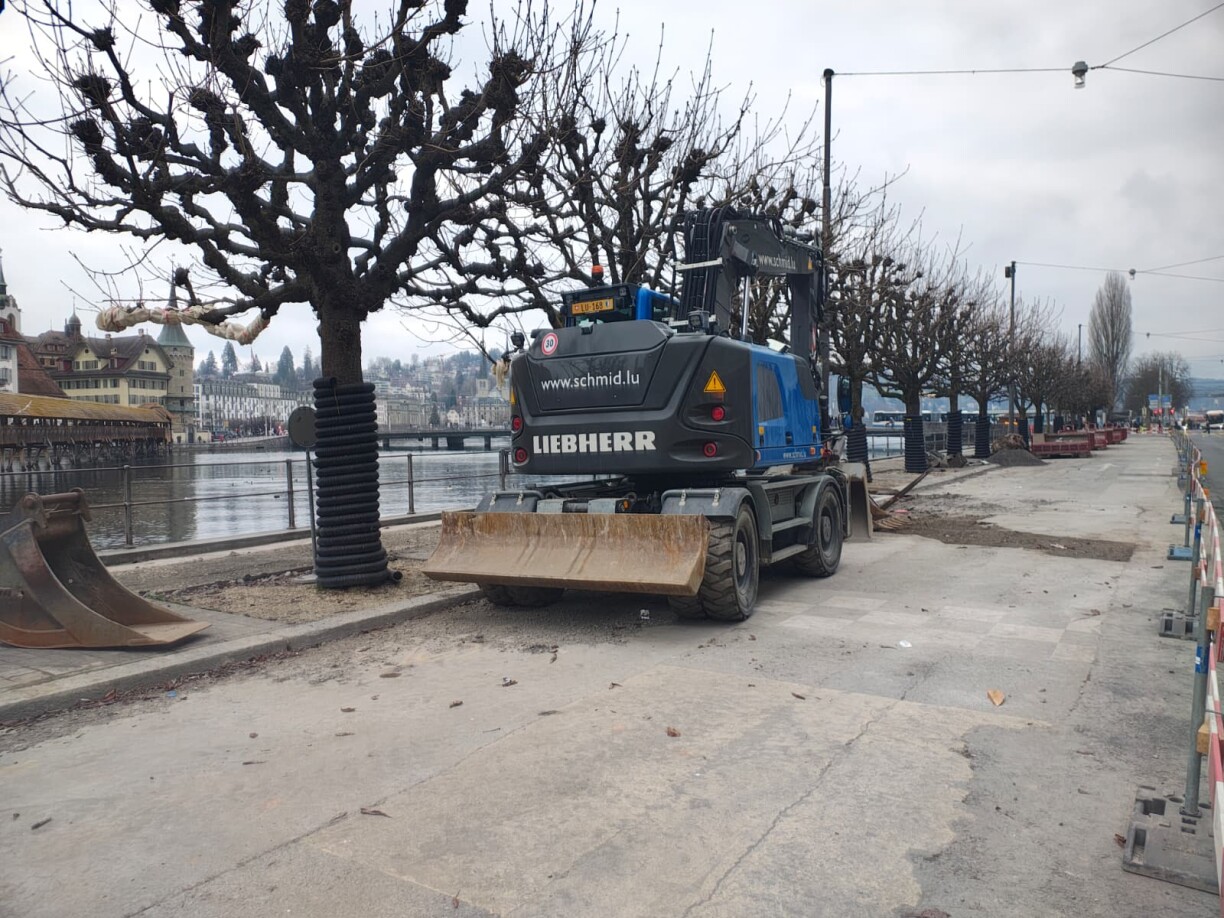
One example can be found in Central Switzerland, where a construction company operates under a Luxembourg domain name. The company Schmid told RTL that another business with the same name had been quicker to secure schmid.ch, prompting them to look for an alternative.
In that search, they came across the Luxembourg extension. “The .lu ending suited us perfectly, because we actually focus on the marketing area of Central Switzerland, especially Lucerne,” explains Karin Frauenlob. It proved to be the most sensible solution for the company. “Today, we are well known not just as Schmid, but also as schmid.lu,” she adds.





