Celebrated on the 27 of April each year, the International Day of Girls in ICT highlights the necessity of promoting technology-based career opportunities for girls and young-women within the world's fastest-growing sector.
2023's theme was "Digital Skills for Life" and is particularly important, as digital skills are vital for women and girls who want to excel in STEM ( science, technology, engineering and mathematics) careers. Digital skills are also essential to becoming educated ICT (Information and communication technology) users and creators in an increasingly digital world.
Overall digital skills refers to five set areas: Safety skills, problem-solving skills, digital content creation skills, information and data literacy skills, and communication and collaboration skills.
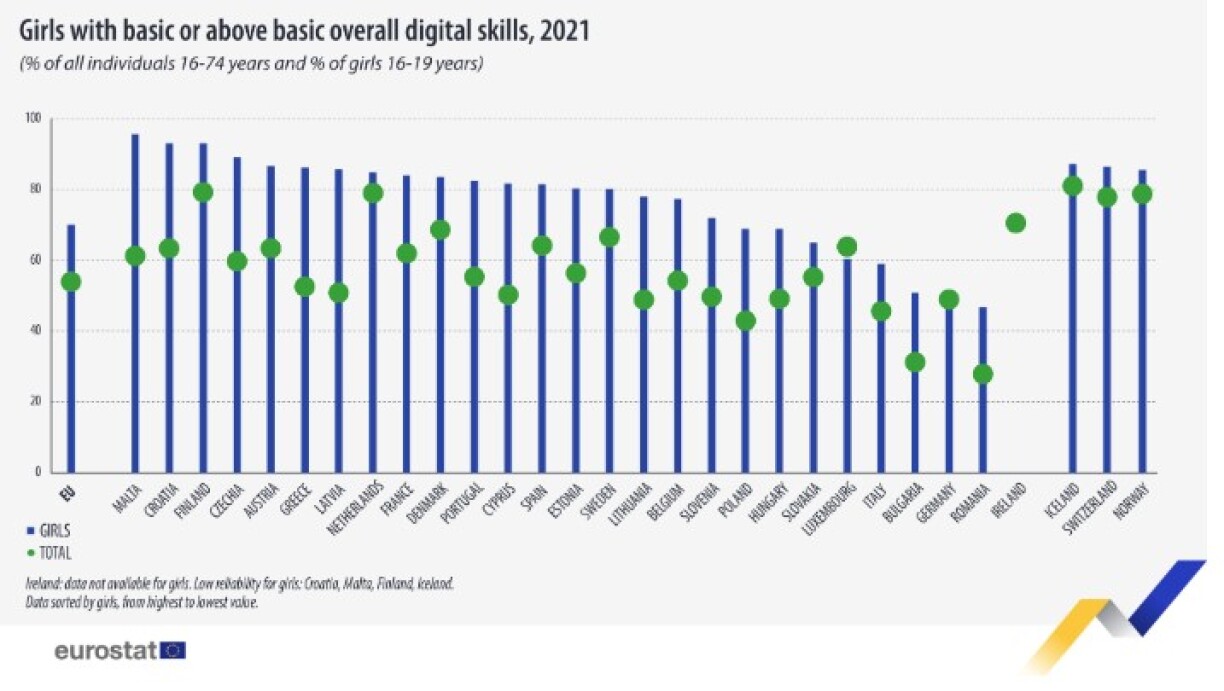
In 2021, 52% of all women within the European Union scored basic or above basic in overall digital skills. This percentage was significantly higher among girls aged 16 to 19, coming in at 70%.
The largest shares of girls in 2021 with basic or above basic overall digital skills in the EU were Malta (96%), Finland and Croatia (93% for both), Czechia (89%) and Austria (87%).
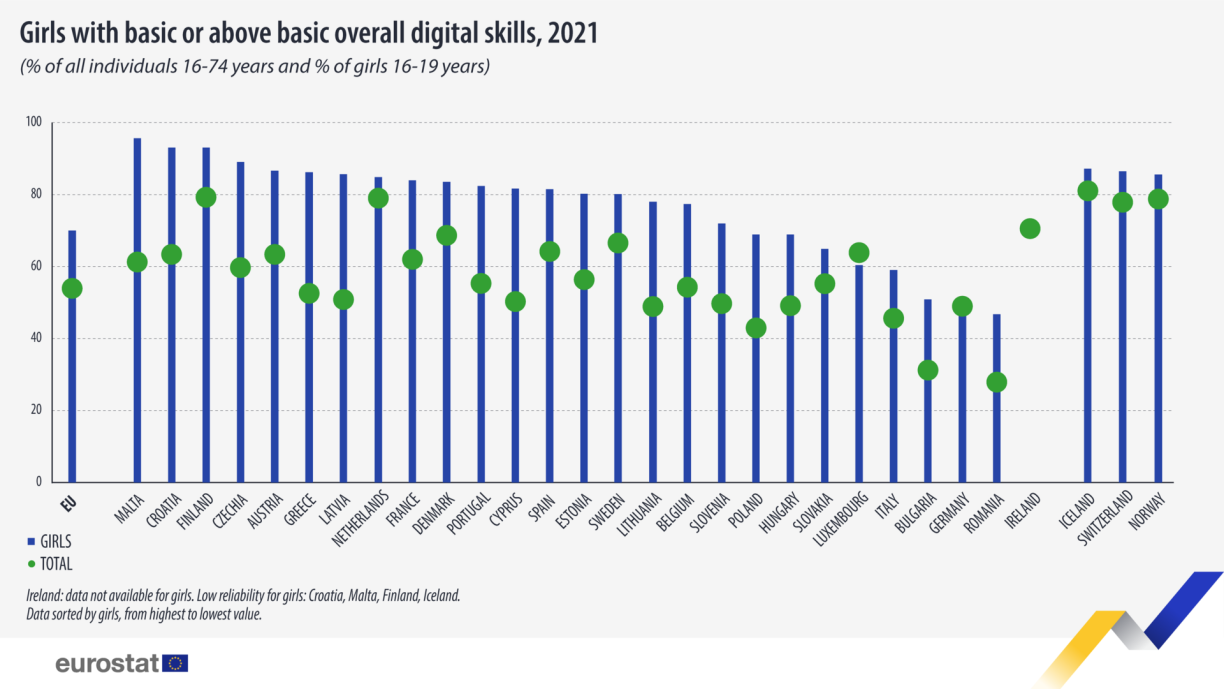
In the same year, the smallest shares were registered in Romania and Germany (47% for both), Bulgaria (51%), Italy (59%) and rounded off by the Grand Duchy of Luxembourg (60%).
The data collected, revealed that the percentage of girls possessing basic or above basic overall digital skills was higher in all EU member countries than the share of all individuals harboring the same level of digital skills.
The Grand Duchy of Luxembourg was one of two exceptional countries. In Luxembourg, 64% of all individuals compared to just 60% of girls recorded basic or above basic overall digital skills.
Germany was the other exception, recording 49% of all individuals with basic or above overall digital skills compared to 47% of girls.
Within the 15 EU members, the disparity between the percentage of girls with basic or more overall digital skills compared to the percentage of all individuals was 20 or more percentage points for women and girls.
Digital skills indicators are some of the key performance indicators in the context of the Digital Decade, in which Europe aims to empower people and businesses in a human-centered, sustainable and more prosperous digital future. The digital compass aims for 80% of European union citizens between the ages of 16 and 74 to have basic or above basic overall digital skills by 2030.





