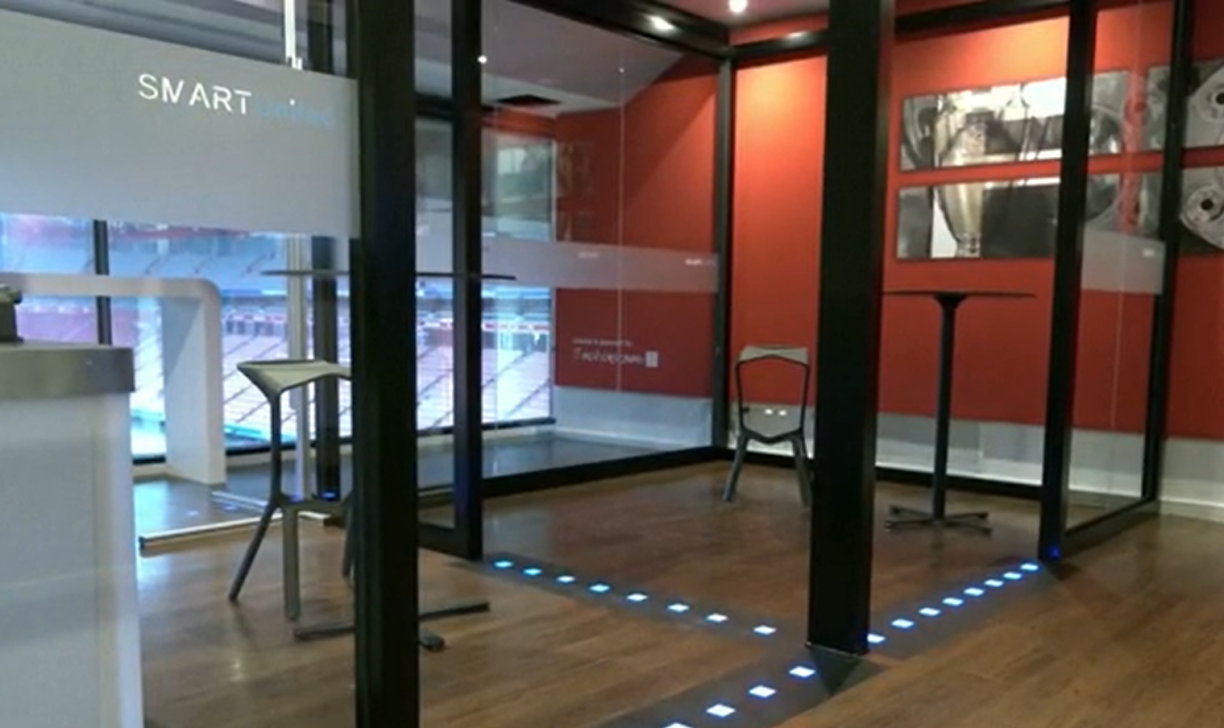
A UV barrier that kills 99% of a virus in enclosed spaces is what they promise. "The virus is unable to cross the barrier alive even in the case of someone sneezing", explained Prof Andreas Wieser, scientist at the Division of Infectious Diseases and Tropical Medecine in Munich. "The result is a gate that can neither be seen, nor heard, nor smelt, but which can still separate air spaces for which you would normally need glass."
A motion sensor deactivates the barrier when a person approaches similar to the way in which slide doors react and open according to human motions. If installed in enclosed spaces, the UV lights offer protection that is considered superior to FFP2 masks.
Prof Wieser elaborated on the infrastructural details: "Our system can be installed on the roof like a lamp to divide spaces. The UV-C rays shine downwards in a focalised manner, acting like a curtain through which no pathogenic agents can make it."
Prof Christoph Haisch from the Munich department of Analytical Chemistry and Water Chemistry also commented on the invention: "Our system also disinfects the air by continuously orienting it towards the light, which prevents infectious air clusters from building up inside."
The invention is expected to hit the markets in April 2022





