When the cheesemonger sends you a jolly smile from a Christmas stall in Luxembourg it is worth the walk over to say, Hi! His grey woolen gloves were fingerless, yet much more nimble in the cold. He sliced a bit of a white-ish cheese and spoke in a language I was not familiar with. He tried to explain, “All of the area, all hill area. This is our cheese.”
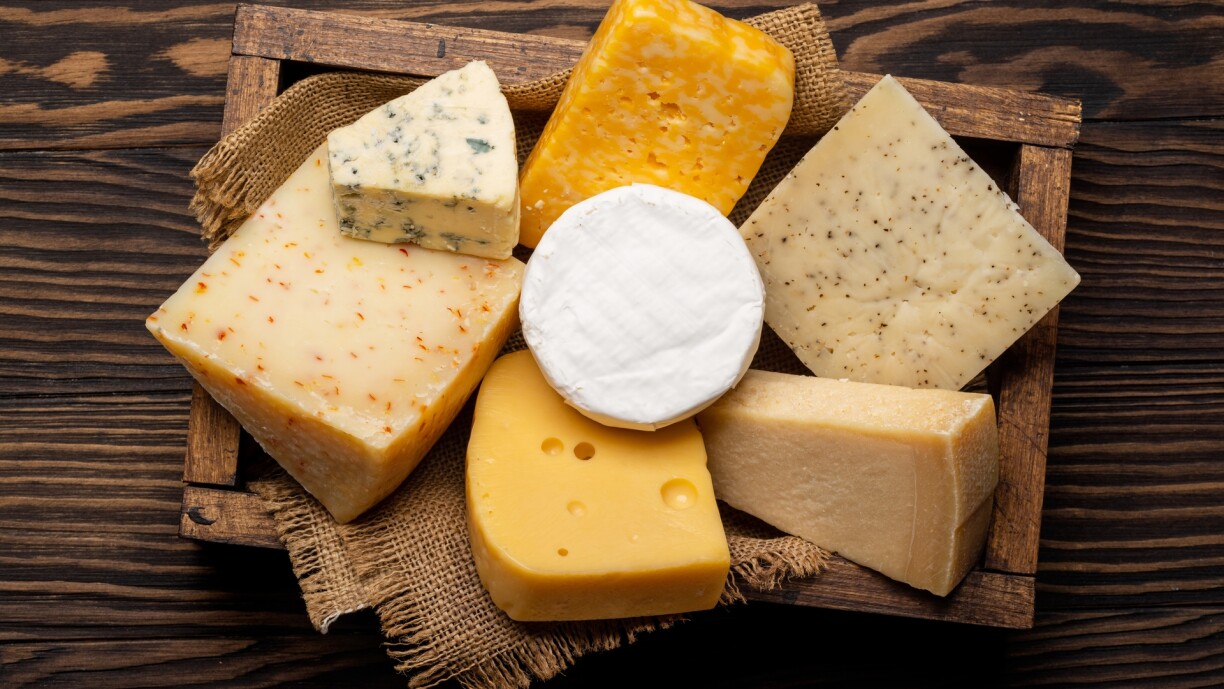
I had never tasted a cheese like this. If you are a stinky-cheese-lover this one is not for you. If you are looking for a gooey, soft, and sticky cheese… again, not for you. This one, this cheese, is firmer than camembert, and softer than a Cheddar. It was a Tomme. If you would like to learn more about Tomme cheese check it out here
Luxembourg has three kinds of cheese that date back to “time immortal”. One was an unfermented fresh cheese, which English speakers would call a farmer’s cheese or cottage cheese. The other two cheeses were fermented. The fermented cheeses were produced in three different qualities; extra cream, standard cream, and low cream. The quality of the cream was reflected in the sale price to customers.
The simplest of these ancient cheeses is an unfermented fresh cheese called stoffi. This is probably one of Luxembourg’s oldest cheeses. Stoffi’s texture is lighter than cream cheese… lighter than sour cream. You can also think of stoffi’s flavor as a cross between cream cheese and sour cream. It would make a great addition to soups or mashed potatoes. Stoffi is also referred to in old Luxembourgish and Belgian texts as a “cheese for the pie”.
After the milk has been collected, a farmer’s wife would place it in a Speicher stoneware pots (from the villages Speicher and Herforst) to cool in a cooling room or the cellar. This time allows the cream to float to the top of the pot. Some adventurous cheesemakers placed it right next to the hearth to speed up the separation of the cream from the whey.
Once the creme separated, it was skimmed off the top of the pot and used for butter making. These women would have had an expert sense of temperature and timing.
The liquid that remains in the pot is called whey. The whey was left in the pot to ferment “spontaneously”. This fermentation process uses natural microbes to create curds. No rennet was added to force the milk to curdle. The cheese maker would have had the skills to recognize when the process produced a good product or if it spoiled.
The curds would float to the top of the Speicher stoneware pots. This was collected in a cloth. The cheese maker preferred to sell the curd at the cheese market and use the money to cover the costs of her stables and cows. Sometimes she fed the stoffi to the farm staff or mixed egg yokes with it to make a pie. Today you can still buy stoffi in grocery stores.
You may have seen an interesting round little wheel of soft cheese in grocery stores. It is the "BIOG Klenge Mëllen" a soft cheese with a white mold rind. It is tender but not too soft. Similar to a mild camembert.
Plus it tastes amazing smeared on a baguette. Adding apple slices makes this sandwich pop. I served this sandwich in hand-sized pieces to guest and their kids during playdates. The moms are always surprised when the kids eat them all.
You may be surprised to learn that Luxembourg has been making a small, round, fermented, soft cheese for over 150 years. Though this was a “new cheese” for Luxembourg it became poplar quickly. During the 19th-Century, Dr. Decker gave frequent lectures on how to improve agriculture in Luxembourg.
In 1878 the industrialists in Luxembourg were looking to expand business at the crafts person scale. Both the government and Dr. Decker promoted the production of a camembert made with Luxembourgish fresh cheese curds. Their goal was to encourage farmers, mostly female farmers, to produce a Luxembourg camembert-style cheese en mass.
Fra. Fumal, a farmer in Altlinster, was the first to take up camembert-style cheese making. She did her apprenticeship in 1878 and 1879. Fra. Fumal’s success sparked others to become professionals too. Next was Herr. Huberty, a farmer in Munschecker who apprenticed in 1879. Other Luxembourgers included the Lambert-Mangen family from Bourglinster, Fra. Job a farmer in Folkendange, and the Metzler sisters from Hivange. Historically, females dominated cheese-making in Luxembourg. The year 1879 is the earliest record of a male becoming a professional cheese-maker.
If you are standing in front of the entrance door of St. Michels church you will be standing in what was historically called Altmarkt, or Old Market. The Altmarkt acquired this name about the year 1120AD because a second New Market was established near St. Nicholas church (now demolished) located outside the old part of town. The New Market is also called the Krautmaart.
Part of the Altmarkt was a Keesmaart, or Cheese Market. A property deed from 1623 and another from 1679 confirms the presence of the Keesmaart. The Keesmaart was next to St. Michel’s church. Next to Keesmaart was the Bottermaart (butter market). Across from the Keesmaart and Bottermaart was the grain market, and next to the grain market was the Fëschmaart (fish market).
However, when you walk around the old part of town you might be wondering why all the place names in the City Center have French names. After the French Revolution, where French people gained their freedom from overlords, their military came to Luxembourg. Many Luxembourgers were killed. After the French military took control of the city, they began renaming the streets, markets, place names, etc..
So, each time you learn and refer to a location by its pre-occupation name, you pay respect to all the people who died during the attack. Each time you choose a Luxembourgish cheese, you pay homage to the ancient cheese makers who preserved an important part of Luxembourg culture.





