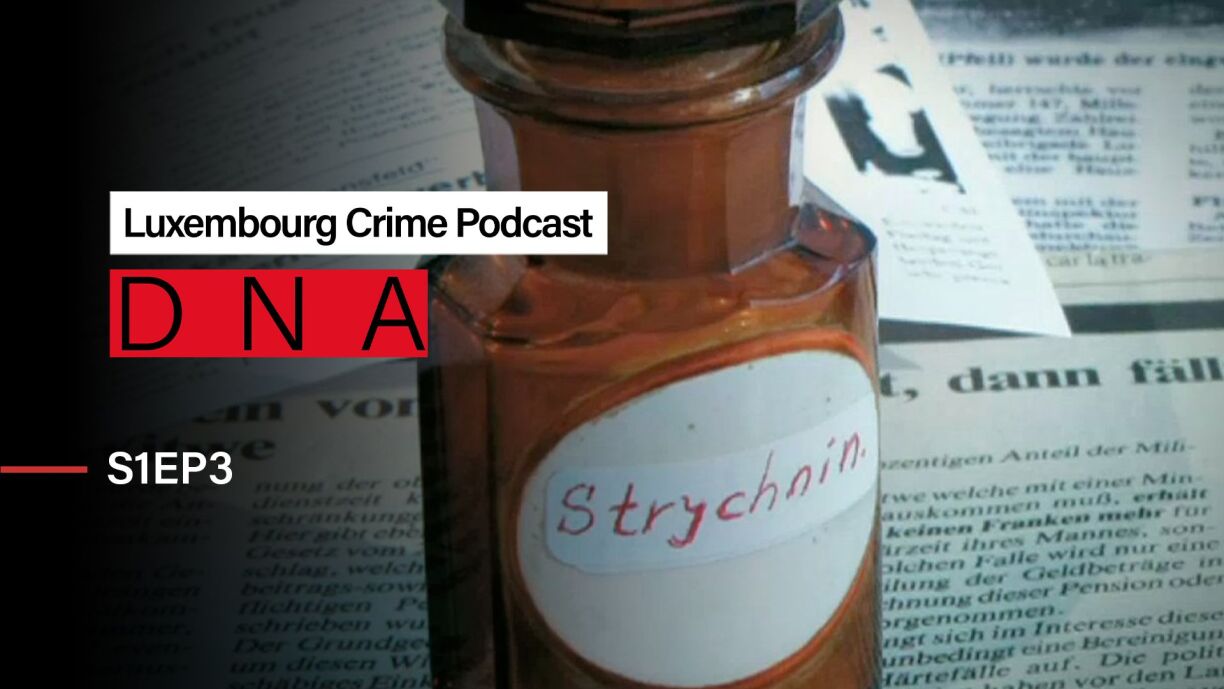
Their son, the 22-month-old Philippe, died mysteriously after being poisoned with strychnine, commonly used as rat poison. Then, a year and a half later, in a separate case, a 42-year-old man was found dead in the basement of a house, buried into a thick layer of concrete. The autopsy finds traces of strychnine. Incredibly, to this day, both cases remain unsolved.
Who could have taken the lives of these two innocent individuals, let alone a child? And how does it feel, after nearly four decades, to live with the thought that you may never know who took your baby away from you?
Why was strychnine found in the bodies of Philippe Bernardo and Jose Cordeiro?
On 4 March 1984, Chantal and Georges Bernardo had just finished eating dinner with their two sons, Eric, who was five, and their youngest, Philippe, who was just about to turn two.
Suddenly, Phillipe started getting severe diarrhea. His mother gave him the contents of two “Ultra Levure'' capsules, which is commonly used in treating and preventing diarrhea. Despite frequently having taken the medicine, this time, Philippe fought back at his mother. She had to force her son to take the powder.
Shortly after, poor Philippe got severe cramps and lost consciousness. His mother immediately called 112 and Philippe was rushed to the children’s hospital by ambulance. His condition was deteriorating very quickly. But after two days his heart stopped beating.
The initial diagnosis of an "encéphalite foudroyante", the medical French term for a sudden inflammation of the brain, was abruptly refuted when the desperate parents released their child's kidneys for transplant. The analysis that is required for such a transplant to take place showed that Philippe had been poisoned with strychnine.
Chantal Bernardo was initially convinced that a fatal mistake in the manufacturing process of the drug was to blame for the death of her son and began calling pharmacies and pharmaceutical wholesalers in panic to warn them about the product. Both the parents were scouring the house to see if the poison had been hidden somewhere, but nothing was found.
As Phillipe's parents and the two closest individuals to their son, Chantal and Georges were both interrogated. But investigators found nothing incriminating and ended up removing the parents from the list of suspects. Police then went to all pharmacies in the country to check up on any medicine or product that was out of place, to no avail.
The family's situation deteriorated. Their other son Eric was completely disturbed by the death of his brother and the subsequent visits by the police. “He didn't want to let me touch him anymore because he believed I had killed his brother,” said Chantal.
To save his wife from utter despair, Georges Bernardo made a bold decision and did everything possible to adopt another child. “I had to somehow take her out of the situation, otherwise she would jump off the bridge,” he recalls. In the following years, Chantal Bernardo adopted several more children, but not a single day passes without her thinking about Philippe. “I don’t want to die before I know what happened to him”, she says.
The family and investigators were left completely in the dark for a year and a half. Until a second case popped up 19 months later.
José Cordeiro was found dead in October 1985. But there is a connection: José Cordeiro’s wife, her name shortened as M.T., was the cleaning lady for the Bernardo family.
In the two years leading up to his death, José Cordeiro was frequently feeling unwell after eating lunch prepared by his wife. Later questioning by police of some of Cordeiro's colleagues found that he was suffering from violent convulsions, twitches and speech disorder at work which only stopped after he had thrown up. One of the colleagues jokingly told Cordeiro that his wife was probably poisoning him because he was not being loyal towards her. Indeed, Cordeiro was said to have had a relationship with his sister in law, his wife’s sister.
But it was actually his sister in law who pointed out that José was not around for weeks on end. She was also not getting along very well with José’s wife, her own sister, and this led her to alert the police that Cordeiro had been missing for four weeks.
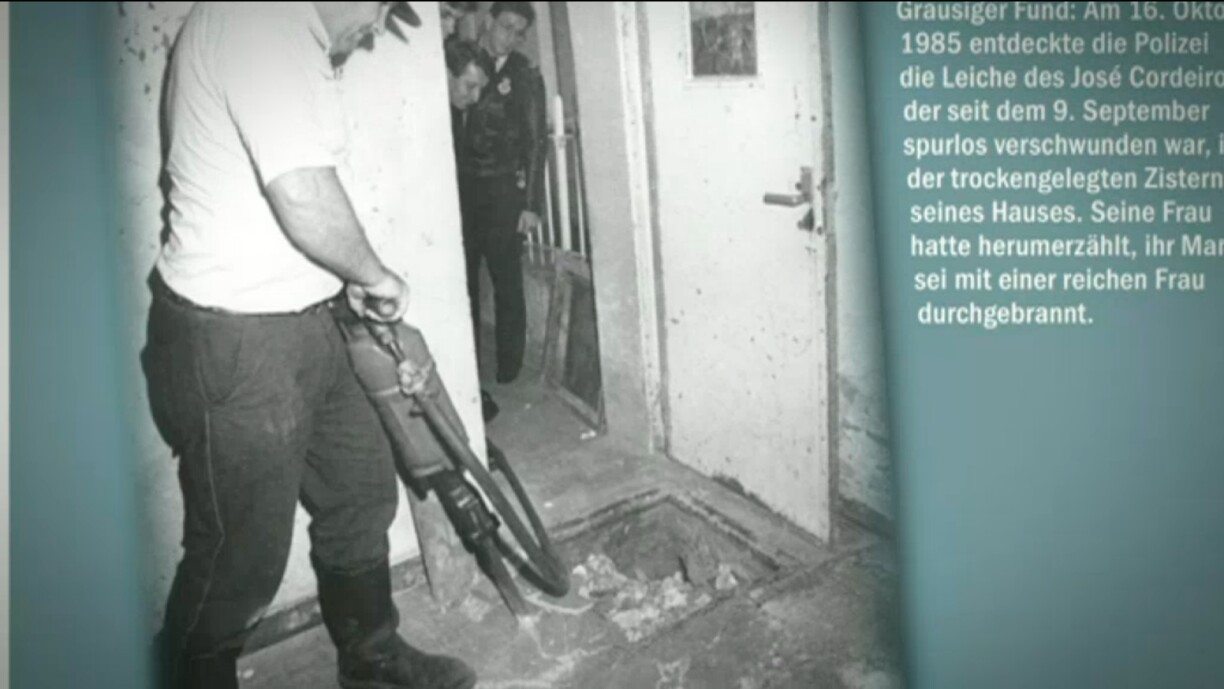
Police decided to take a look at the home of José Cordeiro. At some point while searching the house, they made their way down into the basement, where they noticed that a particular area of the floor was covered by a carpet, and on top of the carpet stood a table with chairs. When police moved the objects aside, they noticed a septic tank right in that spot in the ground.
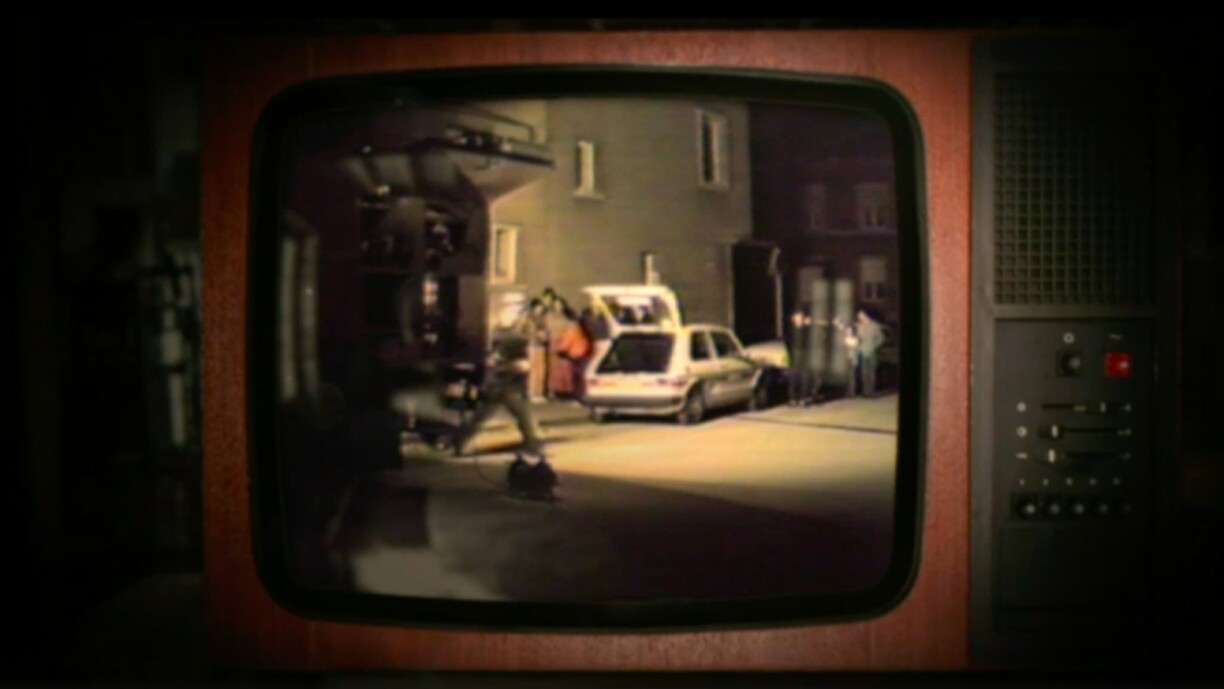
Police wanted to take a closer look and ordered for the tank to be opened. But it could not be opened manually. Firefighters were called in with heavy machinery to drill open the tank. As soon as they got through, there was a horrible smell. They had come across the body of José Cordeiro.
Before Cordeiro disappeared, he was very ill and had spent several days in hospital. Doctors were unsure as to what his illness was, however. Only later, after his death, did they conclude that the symptoms could have pointed towards strychnine poisoning. But because homicides with strychnine were very rare at the time, and still, luckily, remain very rare, nobody had considered it as the cause of death.
M.T. was clearly the main suspect at this stage, and the suspicion arose that she could also be to blame for Philippe's death. In the time period between both deaths, which were over a year apart, M.T. continued to work as a cleaning lady for the Bernardo family for a period of six months.
When the body of her husband was discovered, M.T. had already left the country and been living in Portugal with her children. Following her husband’s disappearance or murder, she separated the annex in which the drained septic tank was located and built a wall between the annex and the rest of the house. The annex was still accessible from outside and now broken off from the main house. She changed keys to the annex, then began the process of selling the main house. Her plan was to return to Portugal, but to set up a small room as accommodation if she were ever to visit Luxembourg.
The police were very smart in luring her back to Luxembourg. A real estate agency was asked to contact the wife and tell her that there was a potential buyer in Luxembourg for her home, but that she would have to come over to meet them. She arrived at Luxembourg station on 20 October 1985, with police waiting for her at the central station. She was arrested on the spot. She was taken in for interrogation through the night, but there was no clear evidence to prove her guilt, despite some shocking revelations.
Investigators assumed that José had been poisoned continuously in the years leading up to his death before being “disposed of”.
His wife had told friends and colleagues that José had met a rich woman, cleared his accounts and left for Switzerland. She even informed his work that he was on vacation. Shortly after, a letter magically arrived from Switzerland to back this story up. José’s daughter, however, immediately noticed that it was not her father’s handwriting. Turns out that the wife had asked her brother, who indeed lives in Switzerland, to write the letter, which he later confessed to. It was the wife who had emptied the accounts and opened new ones. She even planned her return to Portugal, making it seem like it was shortly after her husband had apparently “ left her”.
Of course the Bernardo family was informed about the case. “The police told us to keep quiet,” remembers Chantal Bernardo. First they would settle the Cordeiro case, then that of young Philippe. They were also warned of a “Portuguese mafia”.
Meanwhile, the Bernardo family asked a lawyer for help. Jean Minden, who represented the Bernardos, was convinced both murders were related. Two murders in Luxembourg within 18 months, both with strychnine, and in both cases one connected individual. Possibly, the anti-diarrhea capsules with strychnine had been moved or replaced, it was speculated. Maybe M.T. was cleaning the house and accidentally hid them there. The bitter taste of the poison would also explain why the child resisted taking the drug in such a way.
So what if it was not murder? Could it have been suicide? T problem with this theory is that the septic tank was so small and was filled up with concrete that somebody, or even more than one person, must have aided Jose Cordeiro in the process. It may also have been asphyxiation, that somebody wrapped him up in his sleep and dumped him down there, then filled up the tank with concrete.
The issue was that only 0.04 milligrams of Strychnine was found in Coredeiro’s body, which is not enough by itself to kill a person. So the cause of death still remained unclear. However, the daughter of the couple had seen the mother with a white powder, but none of it was ever found in their home, and the powder could have been any another product.
After 150 days in prison, M.T. was released due to a lack of evidence in the case.
Could José Cordeiro have had any other enemies that we do not know of? Why would his wife leave the country and pretend that he had a secret lover in Switzerland, empty his bank accounts and send a fake letter without even making the effort to get his handwriting right? Her own children even believe something’s wrong, and M.T.’s sister was the one who noticed Jose Cordeiro had gone missing. And why would she otherwise sell the house but keep the annex, the place her murdered husband was dumped in?
After 30 years, there is no justice for young Philippe, or José Cordeiro. Chantal and Georges Bernardo said that they would like to look M.T. in the eyes one more time. They are not convinced of her innocence.
In this series, RTL Today dives into a Luxembourgish crime case. Some are solved, others continue to baffle investigators until this day. This week's story is a little different, but still involves the Grand Duchy – and crime. Find previous stories in our history section or here.





