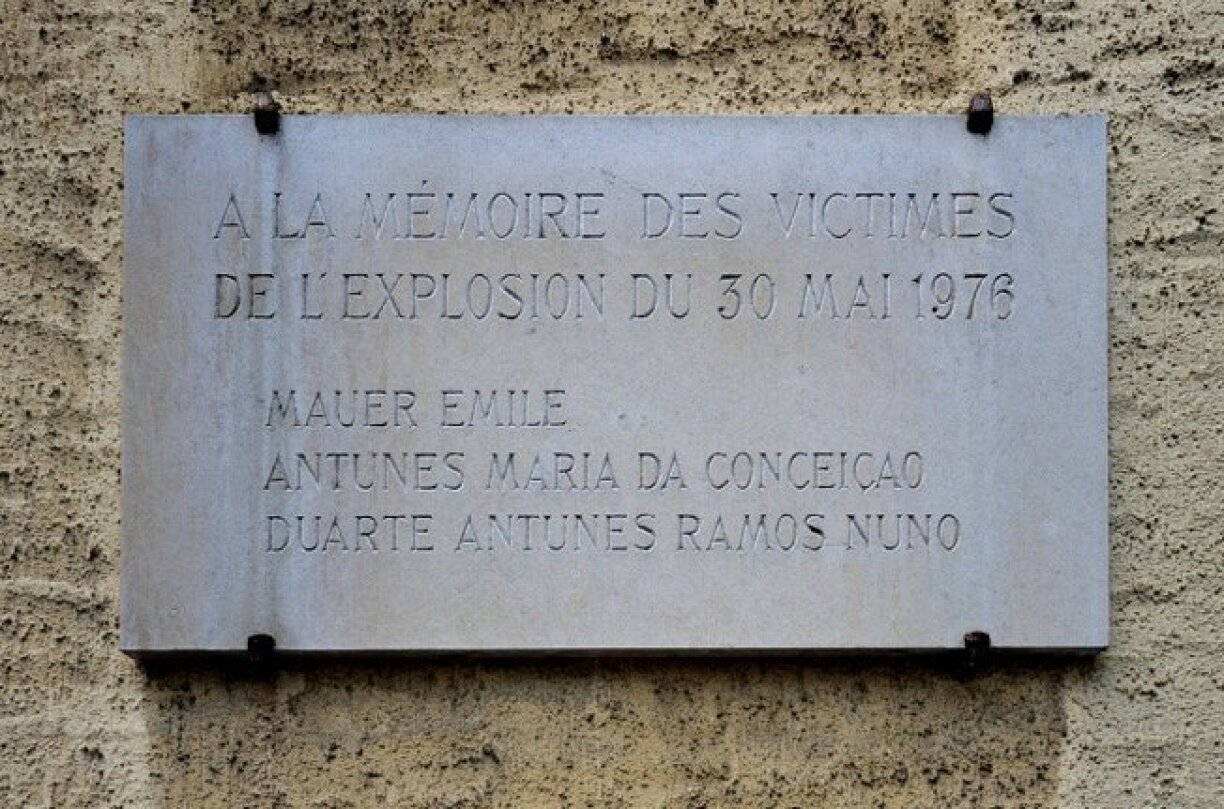
Not far from the panoramic lift in Pfaffenthal, on Rue du Pont, there is a house with a memorial plaque. It commemorates the three people who lost their lives in gas explosions in 1976.
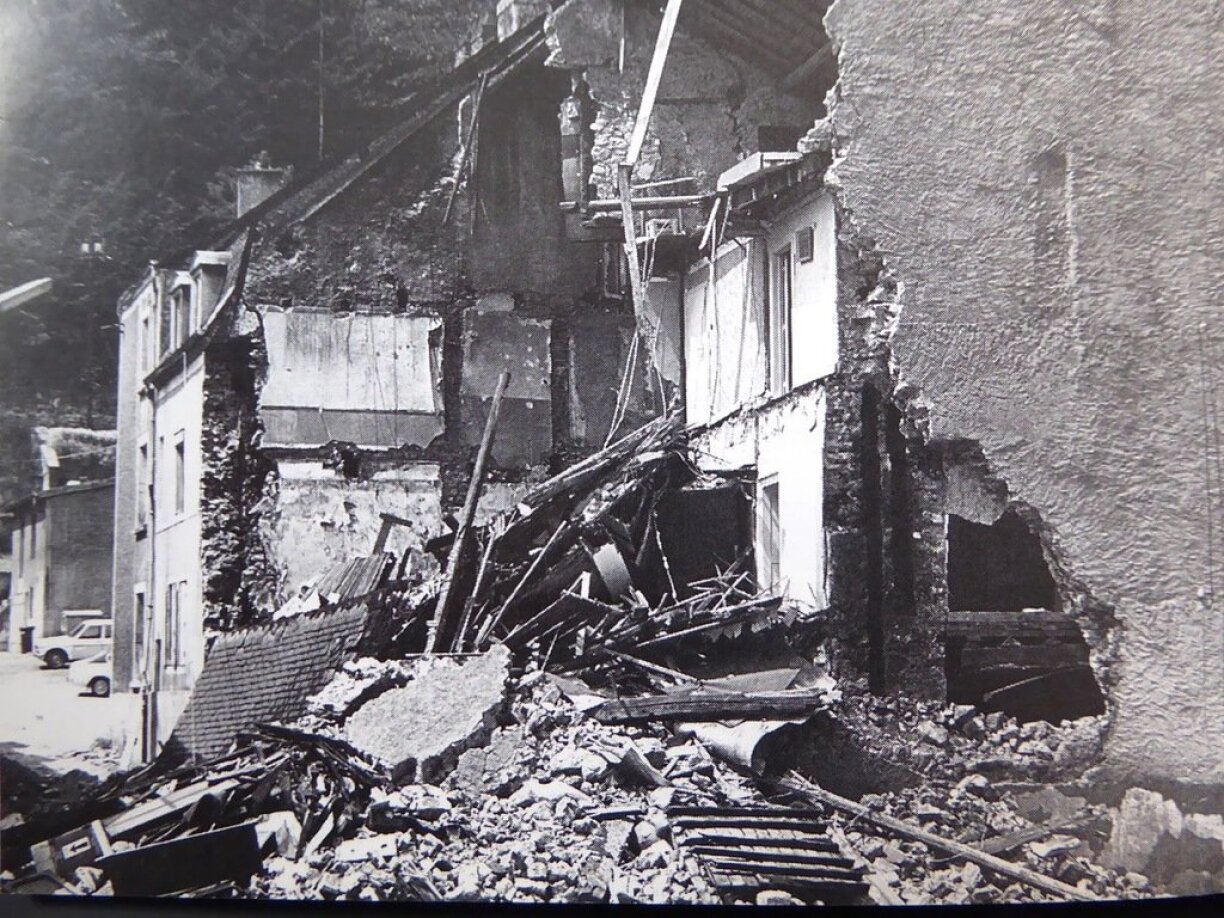
Colette Flesch, the mayor at the time, described the explosion as "one of the worst disasters in peacetime." In addition to the three fatalities, one being a toddler, there were 20 injured, two of them seriously, 20 destroyed houses, and 93 people left homeless. It was the worst catastrophe in the Grand Duchy since the end of WWII.
Watch historic video footage below (or via link if the embed doesn't show)
But how did this happen and what exactly occurred?
Earlier that evening, the residents of a house noticed a suspicious gas smell and notified the gas company. Shortly afterward, an employee from the gas company arrived, but determined that the smell could not be coming from the city gas. All the lines were intact. Ten minutes later, the first explosion occurred.
Half a dozen more would follow.
According to eyewitness reports, the first explosions seem to have occurred around 10.15pm at Café du Pont, followed by a fire breaking out in the same building. As responders organized, series of further detonations followed, during which manhole covers from the sewage system flew several meters into the air, windows shattered, and gables burst apart.
At that point no one knew what exactly happened. It was common during that time for gas cylinders to explode. In September 1973, three people were injured due to another gas explosion. A resident was busy connecting a gas cylinder in the courtyard. Since the apartments had no electrical connection at that time, the residents used candles for lighting, and it is believed that an open flame triggered a gas explosion.
Two gas cylinders burst, immediately igniting a fire that found ample fuel in the wooden stairwell and stacked crates. A man was thrown out of a second-story window by the force of the explosion and suffered serious injuries. Two other residents were also wounded.
Moving forward to 1976, the fire department, which was present with over 60 firefighters and 20 civil defense personnel who were deployed with the heaviest firefighting equipment available, quickly noticed that this was not the case here. The entire neighborhood was evacuated and 120 people found themselves in the youth hostel, waiting for answers.
According to Jean-André Stammet, acting secretary of the Syndicat d'initiative Pafendall-Sichenhaff, residents were thrown into chaos as explosions rocked Rue du Pont and Rue Laurent Ménager. Looking back on accounts from residents and emergency responders, he described scenes of panic and confusion, with many people fleeing the area without knowing what had caused the blasts.
In the immediate aftermath, the government introduced emergency financial assistance for those affected. Residents whose homes remained habitable received support payments, while those whose properties had suffered severe damage were eligible for larger amounts. The aid was distributed through Luxembourg City's social welfare office.
It did not take long before the city found out what happened: Hours before the explosions, a truck driver emptied 10,000 litres of gasoline from a tanker into the sewer system instead of filling a reserve tank at the Cessange fuel depot. Due to Pfaffenthal's geographical location as one of the lowest points in the city, the gasoline had accumulated there, setting the stage for a catastrophe.


The truck driver was questioned by judicial authorities. However, he was not kept in pre-trial detention, as the judge determined that the man had only been working at the company for a few weeks and had insufficient knowledge of the depot's installations.
In the aftermath, homes with minor damages underwent restoration, while those completely destroyed were acquired and demolished by the municipality. Progress came to a halt until October 1978, when local authorities launched 'Projet Béinchen' to rebuild the ravaged suburban area, adhering to its original layout.
With the exception of a small plot owned by the state, the land between Rue Laurent Menager and the Alzette River is entirely owned by the city, designated in the development plan for construction according to a single comprehensive plan.
A decade later, only eight families were able to return and reside in the area.
Fifty years later, the explosions remain one of the defining events in Pfaffenthal's history. A commemorative ceremony is scheduled to take place on 13 June near the memorial plaque honouring the three victims. The event will also feature the screening of a documentary by cameraman Claude Pauly, commissioned by the Syndicat d'initiative Pafendall-Sichenhaff to preserve the memory of the disaster.