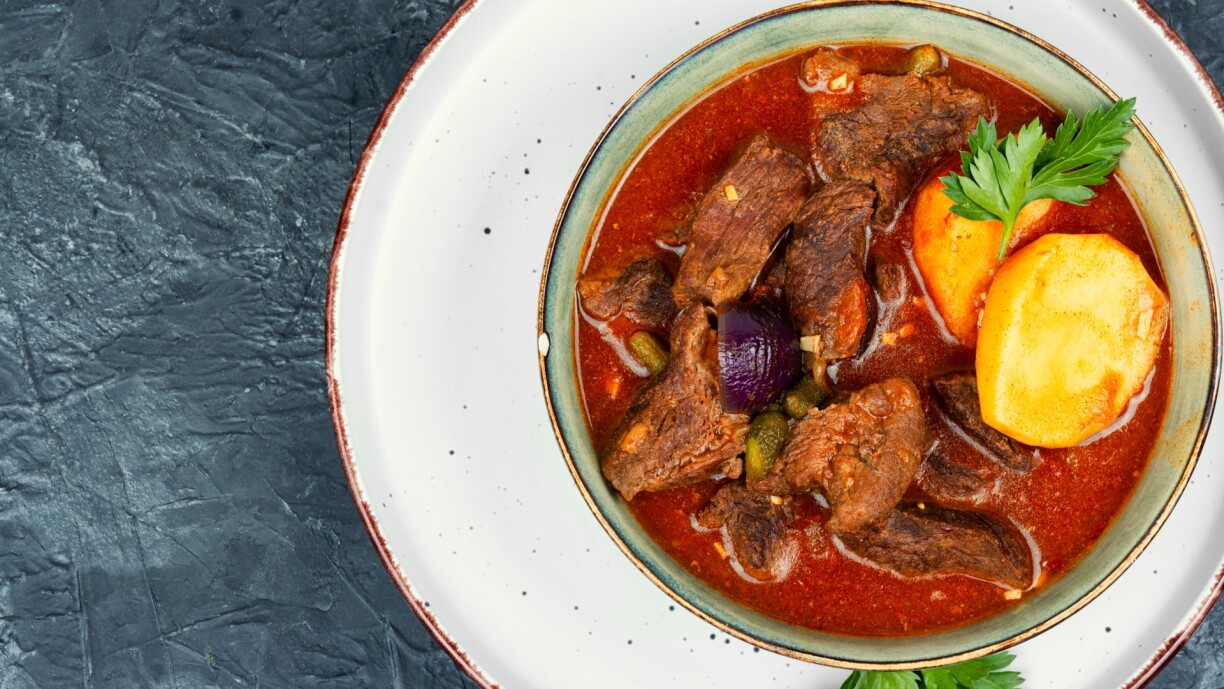
When Charles Campbell traveled through Namur on his way to Luxembourg in 1815, he found that the condition of the road from the northwest was crumbling and the toll and taxes expensive. Upon arriving in Luxembourg his mood changed. He found the traditional bread desirable and the meat from farm-raised animals flavorful.
However, the epitome of experiences he notes, “The winged fowl, and the game with which Luxembourg abounds, are objects of research among all the connoisseurs in good eating.”
By the 1960s, game meats in Luxembourg became scarce. Anne Willan, was a popular chef who wrote multiple cookbooks and opened a cooking school in France. The famed Julia Child was one of the investors in the school. Willan lived in Luxembourg the two years before she opened her school. Willan mentions she used these two years to develop the recipes she would use at her school.
However, she was concerned that, “… mountain trout came from hatchery; game seemed to have fled over the border into the French and Belgian Adrennes.”
Foreigners have loved Luxembourgish games meats since at least the 17th Century. For 400 years, Luxembourg exported its fish, bird, mountain goat, and other game meats to other countries. Additionally, when land that was owned by Luxembourg was seized and stolen by France, Belgium, and Germany… so too were the wild animals.
The remaining wild animals would have helped feed Luxembourgers during the world wars, depleting the forest further. So, by the time modern chefs arrived in Luxembourg much of the game meats were gone.
Since the 1960s, Luxembourg has been working to bring back its wildlife. With help from people like you and good conservation, Luxembourg will reach its goals.
In early 17th-century books, the most common observation made by travelers to Luxembourg was its fort and the wild bore, deer, mountain goats, and game birds.
In 1672, the Ardennes was described as having somewhat infertile land, “But nature has compensated for this infertility with a great abundance of wildfowl of various strengths, even in all the other provinces of the Netherlands, we do not find any of the same kind,.. Deer, Wild Goats, Rabbits & Hares, even various species of Birds, which are not found in other Provinces.
There is among others a flock of birds that they call in their language [Luxembourgish] Cauretets, resembling Quails, but variegated with feathers, red feet, and eyes. The flesh is very white and so pleasant that it would not be necessary to make something more delicate to the taste”. - La guide universelle des tous les Pays-Bas, A. Boussingault, Jan 1672, Clouzier.
The small winged fowl mentioned above is the Red-legged partridge, native to Luxembourg. Other fowl include the Gray partridge, Common quail, Ring-necked pheasant, Black grouse, and Hazel grouse. These were not the only birds that were used for food, but they stood out to travelers. For lovers of bird, whether eaten or photographed, here is a list of over 100 birds native to Luxembourg.
The boar was also of particular note. In the 17th Century, there was very little difference between the wild boar and the farmed boar of Luxembourg. Both had an arched back with raised bristles from head to tail, very long legs, and a long thin snout with white bristles on the face.
One could tell the difference between the wild and domesticated boars because the farmed boars had big floppy ears like dogs. Floppy ears are a known indicator of domestication. In 1903, Luxembourg was described as being a great place to hunt wild boar.
Also, did you catch the comment earlier… there used to be wild mountain goats in Luxembourg. These were likely the same kind that we find in mountainous regions in the Swiss Alps and in Italy. In fact, these countries still have mountain goats in their national parks roaming free and in the wild.
Ingredients for Luxembourg liver sausage:
Instructions:
1) Cut raw liver into cubes and cook in a small amount of water. Remove from water and strain the liquid for later use. Cook the cheeks in salted water until well done. Cool the liver and cheeks.
2) Peel 6 onions and grind together with the meat with a fine blade. Add the seasonings and enough liquid to make a smooth mixture. Mix very well.
3) This can be put into casings or in the freezer containers and frozen. If using casings, fill, tie securely and put in water in which the cheeks were cooked.
4) Boil long enough to heat through.
5) Remove from water and cool.
Original recipe by Mrs. Elizabeth Gengler, a Luxembourger in America.





